8 Technical Signals AI Parses to Cite Law Firms in Search Results
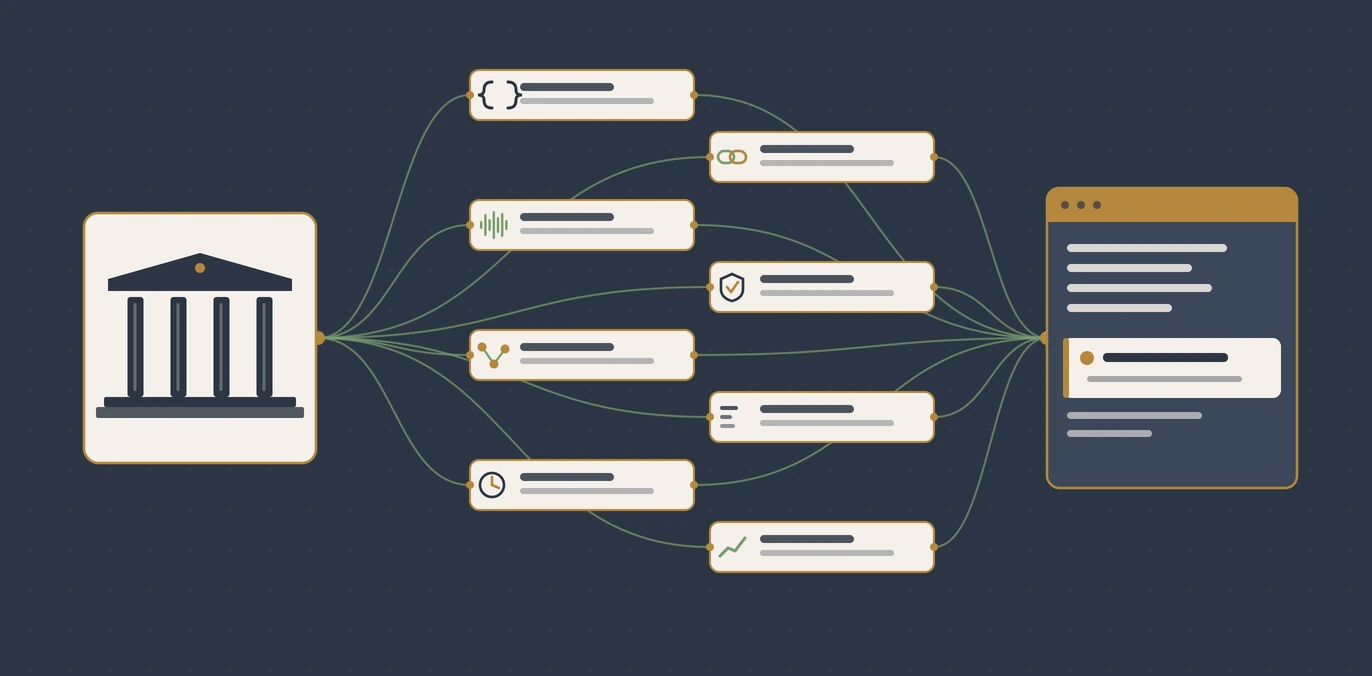
AI systems cite law firms when the firm is technically legible and legally credible: clear LegalService schema, verified attorney identities, answer-first practice pages, crawlable credentials, consistent business data, accessible pages and current local detail. Traditional ranking still helps discovery, but citation depends on whether the AI can extract and verify the firm's expertise with confidence.
The short version
- Schema gives AI the map. LegalService, Person, FAQPage and Article markup help define the firm, the lawyers, the practice areas and the page purpose.
- Credentials must be machine-readable. Bar admissions, jurisdictions, memberships, publications and case experience should appear as crawlable text, not only inside images or PDFs.
- Answer-first sections are easier to cite. Each major heading should give the direct answer before the caveats, examples and legal context.
- External proof decides close calls. Bar directories, legal publications, reputable directories and consistent local listings help AI confirm that the firm is real and recognised.
- Fresh local detail reduces risk. Legal content needs current dates, jurisdictional accuracy and regular review because stale information can become unsafe to quote.
Not long ago, a law firm's online strategy meant ranking somewhere on the first page of Google. Today, the same search can return an AI-generated answer above ads, maps and organic results. That answer names sources. It may recommend firms. If a practice is not among those sources, it may be invisible for that searcher.
Why technical signals matter for law firm AI visibility
AI search tools do not evaluate a law firm page only as a human reader would. They parse structure, entities, credentials, links, schema, dates and consistency across the web. A polished page can still be weak if the facts that prove expertise are vague, hidden or hard to verify.
Side by side
How your firm's page reads: to a client, and to an AI system
| A human client | An AI search tool | |
|---|---|---|
| What it reads | The visible page: design, tone and a reassuring headshot | Structure, entities, credentials, links, schema, dates and consistency across the web |
| What proves expertise | A confident bio and a polished practice-area page | Machine-readable credentials the model can extract and verify against outside records |
| What wins the mention | Feeling that the firm is credible and worth a call | Enough corroboration that the firm is real, recognised and safe to cite |
Legal content also carries more risk than ordinary marketing content. A page about a filing deadline, criminal charge, divorce process or injury claim can affect a reader's rights and finances. That is why a law firm needs stronger trust signals than many other industries.
Signal 1: detailed LegalService schema
LegalService schema helps AI understand what the firm does, where it works and which practice areas it handles. It should name real services and jurisdictions rather than relying on a generic organisation template.
Each major practice area should have its own page and its own clear structured context. A single page trying to cover every matter type gives AI less certainty than focused pages for divorce, business litigation, immigration, personal injury or estate planning.
Signal 2: verified attorney identities
Attorney bios should make identity and authority easy to confirm. Person schema, bar admission details, state bar profile links, publication links and professional profiles all help AI connect the lawyer on the page to credible external records.
Identity test
Can the AI confirm the attorney independently?
Ask
Does the bio expose bar admissions, jurisdictions and external verification links as crawlable text?
It can connect the lawyer to real records
Person schema, state bar profiles and publication links let the model tie the name on the page to credible external proof.
It has little to verify
A short biography with a headshot reads well for humans but gives AI almost no independent proof of practising status.
A short biography with a headshot is useful for humans, but it gives AI little independent proof. A bio with jurisdictions, years of admission, representative experience and external verification links is stronger.
Signal 3: answer-first content structure
AI systems favour sections that answer the implied question quickly. A heading such as 'How long do I have to file a personal injury claim in Texas?' should be followed by the plain answer before the background explanation.
For law firms, the answer must stay careful. It can state the general rule and then explain that exceptions, facts and jurisdiction matter. That format is more useful than opening with firm history or broad reassurance.
Signal 4: conversational long-tail topics
AI queries often sound like full client questions: 'Can I get my licence back after a DUI?' or 'What documents do I need before filing for divorce?' Practice-area content should mirror that language without stuffing keywords.
Long-tail legal content works best when it ties the answer to a jurisdiction, a client situation and a next step. Generic statewide overviews are weaker than specific pages that explain the local process accurately.
Signal 5: topic clusters that prove depth
A single article shows that a firm has covered one topic. A linked cluster shows that the firm understands the full problem set around a practice area. Pillar pages and supporting articles help AI see depth, not isolated commentary.
Internal links should use descriptive anchor text and connect related questions naturally. A divorce guide can link to child custody, property division, support modification and local court process pages, each answering a specific client question.
Signal 6: crawler access and content governance
AI cannot cite what it cannot access. Important pages should be crawlable, fast, free from broken scripts and readable without hiding the main answer behind interactive elements. Robots directives and emerging AI-crawler guidance should be reviewed with care.
Access checklist
Make the pages AI needs easy to reach and read
Keep important pages crawlable.AI cannot cite what it cannot access, so practice-area pages must be reachable.
Make pages fast and free of broken scripts.A slow or script-blocked page is harder for a crawler to read fully.
Do not hide the main answer.Keep the direct answer readable, not buried behind interactive elements.
Review robots and AI-crawler directives with care.Emerging AI-crawler guidance should be checked so it does not block useful pages.
Treat llms.txt as support, not a substitute.It can point AI at useful pages, but the pages still need clear structure and evidence.
An llms.txt file can point AI systems towards the firm's most useful pages, but it should support the site rather than compensate for weak content. The pages themselves still need clear structure and credible evidence.
Signal 7: authoritative external citations
AI systems cross-check what the firm says about itself against other sources. Bar directories, respected legal directories, earned media, local business profiles and publications all help confirm the firm's standing.
Name, address and phone consistency matters here. If directories use different office details or firm names, AI has to reconcile conflicting evidence. Clean listings make the firm easier to trust.
Signal 8: freshness and local specificity
Legal pages should show that they are current. Dates, reviewed-by details and updates to reflect statute changes, court procedures or local rules reduce the risk that AI treats the page as stale.
Local specificity also helps. A page that explains how a rule works in a specific jurisdiction, with current local context, is more useful than a broad summary that could apply anywhere.
Readable firms get considered; cited firms earn trust
These eight signals make a law firm eligible to be considered by AI systems. They do not promise a citation, and they do not replace legal skill, reputation or client service. They make the firm's expertise easier for machines to read and verify.
Selection path
How a readable firm becomes a cited firm
Technically legible
Clean schema, crawlable credentials and answer-first pages make the firm eligible to be considered.
Considered
The engine gathers the firm alongside other readable candidates for the query.
Corroborated
Bar directories, earned media and consistent listings confirm the firm is real and recognised.
Cited
When several firms are readable, outside recognition decides which one earns the mention.
When several firms are technically readable, outside recognition often decides which one gets named. The strongest AI visibility strategy connects both sides: a clean, answer-led website and third-party proof that the firm is credible beyond its own domain. Our guide to AI visibility for law firms covers how to build both.
For how structured data and on-page content actually interact in practice, see our measurement in structured data markup vs. on-page SEO for law firms.
FAQs
What technical signals help
AI cite a law firm?
The strongest signals are clean schema, verified attorney identities, answer-first content, practice-area depth, crawlable credentials, accessible pages, consistent business details and current local information. Together, they make the firm easier for AI to understand and safer to cite.
Does LegalService schema guarantee
AI visibility?
No. LegalService schema helps AI understand what the firm does, but it does not guarantee selection. The visible content, attorney proof, external corroboration and local relevance still have to support the structured data.
Why is legal content held to a higher trust standard?
Legal content can affect a person's money, rights, safety or major life decisions, so AI systems and search systems treat trust signals seriously. A law firm page needs clear authorship, jurisdiction, credentials and current information.
Should attorney bios include external verification links?
Yes. Attorney bios are stronger when they link to bar profiles, recognised directories, publications, LinkedIn profiles or other credible sources that confirm the lawyer's identity and practising status.
Do FAQs help law firms appear in
AI answers?
FAQs help readers and give a page more complete coverage, but they should not be treated as a citation hack. They work best when the answers are specific, legally careful and consistent with the main body of the page.
What is answer-first content for a law firm?
Answer-first content gives the plain answer immediately under a heading before adding context, caveats and examples. For legal topics, that means stating the general rule clearly while avoiding advice that depends on a specific case.
How often should law firm content be refreshed?
Key practice-area pages and high-traffic articles should be reviewed at least annually, and sooner when statutes, rules, fees, deadlines or local procedures change. Freshness matters because outdated legal content is a trust risk.
Do law firms need llms.txt for
AI visibility?
An llms.txt file can help point AI crawlers towards the most important pages, but it is not a substitute for crawlable, well-structured content. It works best as a guide layered on top of a strong site architecture.
Why does NAP consistency matter for law firms?
Consistent name, address and phone data helps AI confirm that multiple sources are describing the same firm. Inconsistent directory listings, old office addresses or mixed firm names reduce confidence.
What should a law firm fix first if it is invisible in
AI search?
Start with the foundations: make practice-area pages crawlable, add clear attorney credentials, fix inconsistent listings, use appropriate schema and rewrite key sections so each heading is answered directly before the detail.
Leave a comment
Thoughts on this post? Leave a comment below. Comments are moderated before they appear, so yours will not show on the page straight away.
Your email is used only to contact you about your comment if needed; it is never published.
Comments
No comments yet. Be the first to leave one above.