Your Business Showed Up in ChatGPT Last Week and Not This Week: Here's Why
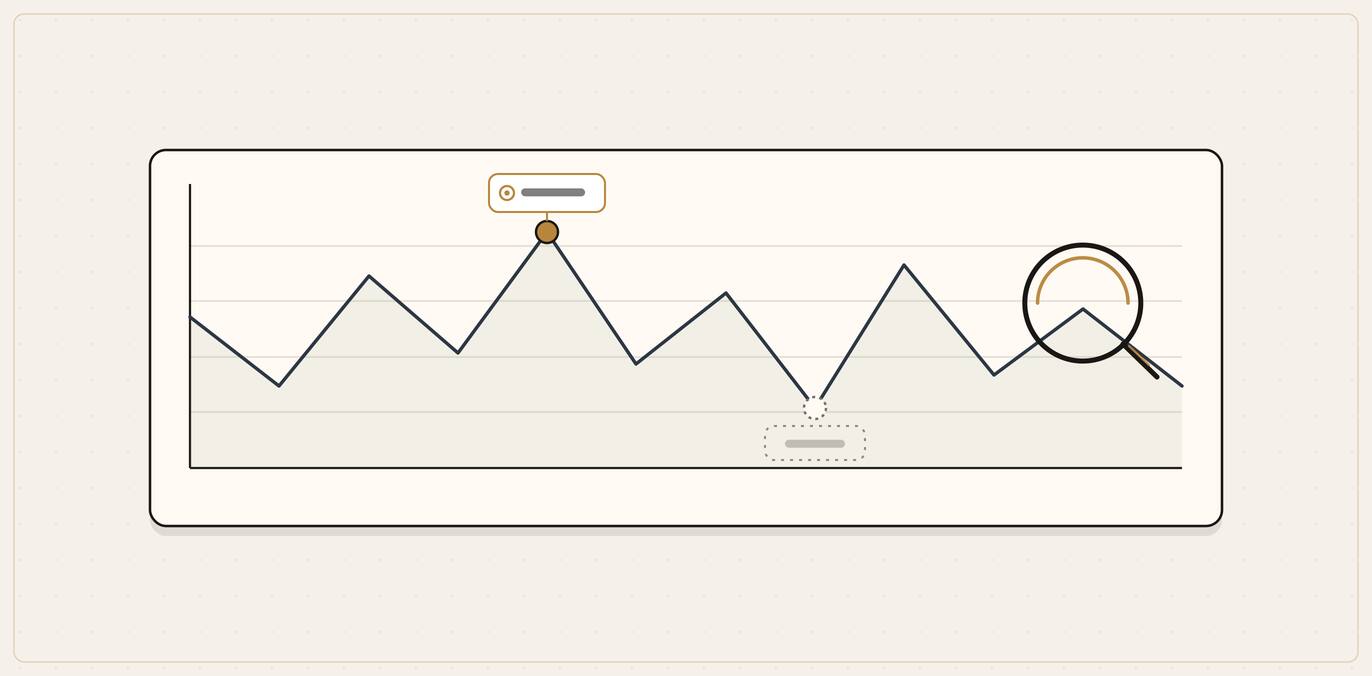
Because AI answers are meant to vary. These engines are probabilistic by design and read a web that changes daily, so the same question returns different names from one week to the next, even when you change nothing. Independent tracking found only about a quarter of the sources behind a Google AI answer stay the same between readings. A single disappearance is normal churn, not a penalty. What matters is how often you appear across many checks, which you influence by building durable signals: steady reviews, consistent business details, a genuine presence across the web, and a site AI tools can read.
You did everything right. You asked ChatGPT "best [your trade] in [your town]" and there you were, named in the answer. You took a screenshot, sent it round the team, felt the small thrill of being recommended by the thing everyone keeps talking about. Then a week later you asked again, and you were gone. Same question, same wording, no answer with your name in it.
The first reaction is almost always the same: panic, then a hunt for the mistake. Did Google change something? Did a competitor outrank me overnight? Did I get penalised? Did that website change I made break everything?
Here is the reassuring truth, and it is worth saying plainly before anything else. Almost certainly, you did nothing wrong, and nothing is broken. AI answers move around on their own, week to week, even when nobody touches anything. It is built into how these tools work. Once you understand why, the weekly wobble stops being a crisis and becomes background weather: real, worth watching, but not something to lose sleep over.
The essentials
- The variation is designed in. AI engines are probabilistic and add controlled randomness, so identical questions produce different answers by intent, not by fault.
- The sources rotate fast. BrightEdge found only about 24% of the URLs cited in Google's AI Overviews stayed the same between readings; roughly three in four turn over on their own.
- It happens to everyone. Even Reddit, one of the most-cited domains, saw its ChatGPT citation share fall from close to 60% to about 10% in a few weeks before recovering.
- One check proves nothing. Your real visibility is how often you appear across many checks over time, not whether you showed up once.
- Build durable signals, do not chase the algorithm. Steady reviews, consistent details everywhere, a real off-site presence and a readable site raise your odds on every roll of the dice.
Why AI answers are not meant to be the same twice
A traditional Google search is mostly deterministic. Type the same query twice in the same place and you get more or less the same list of blue links, in more or less the same order. The ranking is a fairly stable thing you can check and re-check.
Side by side
Why AI answers are not meant to be the same twice
| A traditional Google search | An AI engine | |
|---|---|---|
| How it answers | Mostly deterministic: the same query returns the same list | Probabilistic by design, with controlled randomness mixed in |
| Where it reads | A fairly stable ranking you can check and re-check | A fresh set of live searches over a web that changes daily |
| What you can rely on | A position you can screenshot once | A pattern across many checks, never a fixed ranking |
An AI engine does not work like that. It is probabilistic by design. When you ask a question, the model predicts a good answer one piece at a time, and it deliberately mixes in a measure of controlled randomness so its replies do not come out identical and robotic every time. The AI-visibility company Profound describes it directly: these models "predict what comes next while throwing in controlled randomness to keep responses from becoming repetitive or predictable" (Profound, AI Search Volatility, 2025)[1]. That is a vendor describing its own field, so weigh it as such, but the mechanism is not in dispute: the variation is designed in, a feature rather than a fault.
There is a second layer on top of the randomness. Before an AI engine answers, it usually rewrites and expands your question into several cleaner searches, runs those against the live web, and builds a reply from whatever comes back that moment. Google calls its version "query fan-out" (Google, 2025)[4], and the web it reads is changing all the time: new pages, new reviews, new discussions. We explain that mechanic in full in our guide to query fan-out. So even setting the randomness aside, the raw material the engine is reading this Tuesday is not the same raw material it read last Tuesday.
Put the two together. A system that intentionally varies its wording, reading a web that genuinely changes day to day, is never going to hand you a fixed ranking you can screenshot once and rely on. That is not a bug you can fix. It is the nature of the thing.
How much movement is actually normal
"It changes" is easy to say. The useful question is: changes by how much? If you know the normal range, you can tell an ordinary wobble from a real problem.
How much movement is normal
The list an AI answer leans on is a rotating cast
24%
of the URLs cited in Google's AI Overviews stayed the same between snapshots
60%
of ChatGPT responses cited Reddit in early August, before the swing began
10%
the share Reddit fell to weeks later, then it climbed part of the way back
BrightEdge, 2025; Semrush, 2025
Independent trackers have put a number on it. BrightEdge, which monitors AI answers every day, compared the sources cited in Google's AI Overviews from one snapshot to the next and found that only about 24% of the cited URLs stayed the same, with the rest rotating in and out (BrightEdge, 2025)[2]. Put plainly, roughly three of every four sources behind an AI answer can turn over between readings.
Read that slowly, because it reframes the whole problem. If three of every four sources behind an AI answer can change between two readings, the list it leans on is not stable; it is a rotating cast. And the gap only widens the longer you wait: the domains an engine cites in January may bear little resemblance to the ones it cites by mid-summer.
That is the context that should calm you down. If most of the cited sources can turn over between readings, then your business appearing one week and not the next is not a signal that something went wrong. It is exactly what a churn rate that high produces. You are watching normal weather, not a diagnosis.
It also explains why a single check tells you almost nothing. Asking once and seeing your name proves only that you can appear. Asking once and not seeing it proves only that you did not, that time. Neither is the truth about your visibility. The truth is the pattern across many checks, which is a different thing entirely, and we come back to it below.
A real example of the swing
If you want a concrete sense of how far this can move, look at what happened to one of the most-cited sources on the entire web.
Semrush tracked more than 100 million AI citations across ChatGPT, Google's AI Mode and Perplexity over thirteen weeks in 2025. Reddit is still one of the most-cited domains on all three tools, yet even it was not immune to the wobble: its share of ChatGPT responses fell from close to 60% in early August to around 10% by mid-September, before partly recovering (Semrush, 2025)[3].
Think about what that means. The biggest, most-trusted source in AI search lost most of its ChatGPT citation share in a matter of weeks, then climbed part of the way back. Nobody at Reddit broke anything, and nobody fixed it either. The platform with the strongest possible position rode the same swing your small business does. If it happens to Reddit, the week your plumbing firm slips out of an answer is not a story about your plumbing firm. We dig into why Reddit sits at the centre of AI search in our guide to Reddit and AI citations.
What this does not mean
It does not mean visibility is random and effort is wasted. The week-to-week movement is noise sitting on top of a real signal. Some businesses appear far more often than others across many checks, and that frequency is earned, not luck. Randomness decides which day you show up; your actual presence on the web decides how often. You control the second thing, and it is the one that matters.
It does not mean every disappearance is harmless. Most are normal churn. But a genuine, lasting drop to zero, where you appeared steadily for weeks and then never again across many tests over a long stretch, can point to a real cause: a website rebuild that AI tools cannot read, a Google Business Profile that went unverified, reviews that dried up, or details that no longer match across the web. The skill is telling ordinary wobble apart from a real trend, and that is a question of testing over time, not reacting to one bad afternoon.
It does not mean you should chase the algorithm. Because the sources turn over so fast, there is nothing stable to chase. Trying to reverse-engineer "what ChatGPT wants this week" is a treadmill, and next month's data would send you somewhere else anyway. The winning response to high volatility is the opposite of chasing: build the durable signals that keep paying off whichever way the dice land.
The durable levers you actually control
If the daily answer is partly down to randomness, the sensible move is to stop optimising for any single day and start building the things that raise your odds on every day. These are the signals that survive the churn.
The durable levers
Build for every day, not for any single one
Keep steady, recent reviews.A thick, current stream across the platforms that matter is hard for volatility to wash away.
Keep information consistent everywhere.Name, address, phone, hours and services identical across your site, Google profile and every directory.
Build a genuine presence beyond your own site.A business that exists only on its homepage has a single, fragile thread into the answer.
Make sure AI tools can read your site.Some crawlers skip JavaScript, so a script-driven rebuild can leave your pages blank to them.
Track the pattern, not the panic.Test your key questions on a set schedule and record how often you appear over weeks, not once.
1. Steady, recent reviews
Reviews are among the strongest trust signals an AI engine has for a local business, and a thick, current stream of them is hard for volatility to wash away. One brilliant week of reviews followed by silence is fragile. A steady trickle, every week, across the platforms that matter in your trade, builds a base of evidence that keeps you in contention no matter which sources the engine happens to favour that day. Ask every satisfied customer, keep it constant, and reply to what comes in.
2. Consistent information everywhere
Your business name, address, phone number, opening hours and services should be identical across your website, your Google Business Profile and every directory you appear in. When those details disagree, the engine is less certain who you are and less likely to name you confidently. Consistency is dull, unglamorous work, and it is exactly the kind of durable signal that holds steady while everything else moves. The complete local checklist lives in our pillar guide.
3. A genuine presence beyond your own website
AI engines read the wider web, and they build each answer from a mix of sources rather than one. These studies show engines pairing different domains together to construct an answer, blending your own pages with reviews, discussions and third-party mentions. A business that exists only on its own homepage has a single point of failure; one that turns up across directories, local press, trade bodies and genuine community discussion has many ways to be found, so a dip in any one source matters less. Which engine trusts which source is the subject of how AI engines pick their sources.
4. A website AI tools can actually read
None of the above helps if the engine cannot read your site in the first place. Some AI crawlers do not run JavaScript, so heavily script-driven site builders can leave your pages effectively blank to them. If your visibility did genuinely fall off a cliff after a site rebuild, this is the first thing to check, and it is a real cause rather than ordinary wobble. A clear, text-rich page for each service and area you cover gives the engine something solid to hold onto every time it reads you.
5. Track the pattern, not the panic
Because one check means almost nothing, the single most valuable habit is to test regularly and watch the trend. Ask your handful of "best [service] in [town]" questions across ChatGPT, Google's AI Mode and Perplexity on a set schedule, and record how often you appear over weeks, not whether you appeared once. That frequency is your real visibility, and it is the only number stable enough to act on. We walk through how to do this, free, in our guide to tracking AI mentions of your business.
How to tell normal wobble from a real problem
When you next vanish from an answer, run this quick check before you worry.
Wobble or real problem?
When you vanish from an answer, which is it?
Ask
Is the drop total and lasting across every engine over a long stretch?
It is weather
Short, scattered absences are exactly what a high source-churn rate produces; ignore them and watch the trend.
It is a signal
A steady presence that ends completely can point to a concrete cause: a site rebuild AI cannot read, or a profile that went unverified.
- Ask again, several times, across a few days. One miss is meaningless. If you reappear within a handful of tries, that was ordinary volatility. Move on.
- Ask on more than one engine. If you are gone from ChatGPT but still showing in Google's AI Mode and Perplexity, that is the engines disagreeing, which is completely normal. A real problem tends to show up everywhere at once.
- Look at whether the answer is still local. If the engine is still naming businesses in your town, just not you, then geography is fine and this is a visibility question, not a disappearance. If it stopped being about your town entirely, the question shape may have shifted.
- Check the obvious real causes only if the drop is total and lasting. Did you rebuild your website? Did your Google profile lapse? Did reviews stop? Did your details change anywhere? A genuine, sustained drop to zero over a long stretch is worth investigating. A one-week gap is not.
The rule of thumb: short, scattered absences are weather. A long, total, everywhere-at-once silence is a signal. Treat them differently.
Frequently asked questions
Why did my business disappear from ChatGPT after appearing last week?
Almost always because AI answers vary on their own. These engines are probabilistic by design and read a web that changes daily, so the same question produces different answers from one week to the next. BrightEdge found that only about 24% of the URLs cited in Google's AI Overviews stayed the same between snapshots, so most of the sources behind an answer turn over on their own (BrightEdge, 2025)[2]. A single absence is normal churn, not a penalty.
How much do AI search results actually change?
A lot. BrightEdge found that only about 24% of the URLs cited in Google's AI Overviews held steady between snapshots, so roughly three in four rotate in and out on their own (BrightEdge, 2025)[2]. Even Reddit, one of the most-cited sources overall, saw its share of ChatGPT responses fall from close to 60% to around 10% inside a few weeks before partly recovering (Semrush, 2025)[3].
Does this mean I have been banned or penalised?
Almost certainly not. AI engines do not work like Google's ranking penalties. A name dropping out of one answer is the expected result of how much the sources rotate. Only a complete, lasting absence across every engine over a long period suggests a real cause worth investigating, such as a website AI tools cannot read or a lapsed Google Business Profile.
Should I change my website every time I drop out of an answer?
No. Because the sources turn over so quickly, there is no stable target to chase, and reacting to a single week's result usually means changing things that were never the problem. Build durable signals instead: steady reviews, consistent details everywhere, a genuine presence across the web, and a readable site. Then test on a schedule and watch the trend.
How often should I check my AI visibility?
Regularly and on a fixed routine, rather than reactively. One check tells you next to nothing because of the day-to-day variation. Testing your key questions across the major engines on a set schedule and recording how often you appear over weeks gives you a real measure. Our guide to tracking AI mentions shows the free method.
Why does the same question give different answers on different days?
Two reasons stack up. First, the model deliberately mixes in a measure of randomness so its replies are not identical every time. Second, before answering it rewrites your question into several live searches and reads whatever the web is showing that moment, and the web changes daily with new pages, reviews and discussions. A varying system reading a changing web cannot hand back a fixed result.
Is a competitor beating me if they show up and I do not?
Not necessarily from a single check. On any given day the engine may simply have pulled a different set of sources. What matters is the pattern over many checks: if a competitor appears far more consistently than you across weeks, they have stronger durable signals worth matching, such as more recent reviews or a wider presence across the web. One appearance each proves little on its own.
Can I do anything to appear more consistently rather than sporadically?
Yes. You cannot control which day you show up, but you can raise how often you show up across the board. Consistency comes from the durable signals: a steady stream of recent reviews, business details that match everywhere, genuine mentions beyond your own site, and pages the engines can read cleanly. The more of those you hold, the more rolls of the dice land in your favour.
Does more volatility mean AI search is not worth the effort?
No. The movement is noise sitting on a real signal. Some businesses appear far more often than others across many checks, and that frequency is earned rather than random. The volatility just means you should measure over time and build for the long run instead of reacting to any single result. The channel is large and growing, so being consistently present in it is well worth the effort.
How long should a drop last before I treat it as a real problem?
Short, scattered absences across a few days are weather; ignore them. Treat it as a real problem only when the drop is total and lasting: you appeared steadily for weeks, then never again across many tests over a long stretch, and you are gone from every engine at once. That pattern points to a concrete cause such as a site AI tools cannot read or a lapsed Google Business Profile, and is worth investigating.
Where to start
If you take one thing from this, take the calm. AI search is noisy by design, and a week where your name slips out of an answer is almost always weather, not a wound. The businesses that win in this environment are not the ones who react fastest to every wobble. They are the ones who quietly build the signals that pay off on every roll of the dice: recent reviews, consistent information, a real presence across the web, and a site the engines can read.
The one number worth trusting is frequency over time, and that is hard to judge by asking once on a Monday morning. A free QBiz Leads AI visibility check does the groundwork: it scans your website in about thirty seconds and returns a clear pass or fail on the key signals that decide whether AI tools can find and recommend your business, so you fix the genuine gaps rather than guess from a single screenshot.
Get your AI Visibility audit →
Sources
- [1] Profound, "AI Search Volatility: Why AI search results keep changing," 2025: https://www.tryprofound.com/blog/ai-search-volatility
- [2] BrightEdge, "Volatility Patterns in AI Search: AIO vs AI Mode," 8 August 2025: https://www.brightedge.com/resources/weekly-ai-search-insights/volatility-patterns-ai-search-aio-vs-ai-mode (independent; AI Overviews retained 24% of citation URLs unchanged between readings vs 20% in AI Mode)
- [3] Semrush, "The Most-Cited Domains in AI: A 3-Month Study," 2025: https://www.semrush.com/blog/most-cited-domains-ai/ (independent; over 100M AI citations across ChatGPT, Google AI Mode and Perplexity over 13 weeks; ChatGPT cited Reddit in close to 60% of responses in early August, collapsing to around 10% by mid-September)
- [4] Google, "AI in Search: Going beyond information to intelligence," 20 May 2025: https://blog.google/products/search/google-search-ai-mode-update/ (primary; query fan-out defined as "breaking down your question into subtopics and issuing a multitude of queries simultaneously on your behalf"; AI Overviews "driving over 10% increase in usage" of Google for the query types that show them)
Leave a comment
Thoughts on this post? Leave a comment below. Comments are moderated before they appear, so yours will not show on the page straight away.
Your email is used only to contact you about your comment if needed — it is never published.
Comments
No comments yet. Be the first to leave one above.