Digital PR for AI Search on a Small-Business Budget
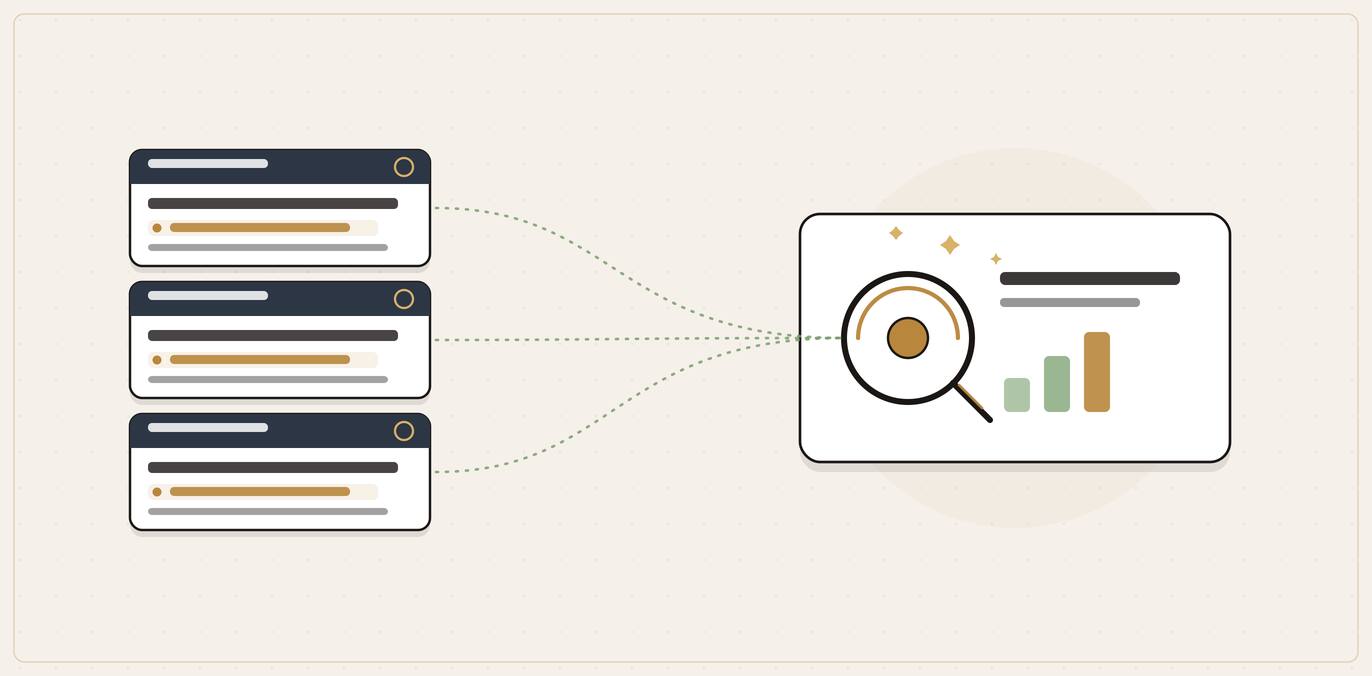
AI engines build their answers from what other websites say about you, not from your own sales copy, so earning third-party mentions is the single highest-value thing you can do for AI visibility. You do not need a PR agency or budget. Claim the listings you already qualify for (professional bodies, supplier and directory pages), keep your business details identical everywhere, then earn local press and expert placements with a genuine story and a specific, quotable fact. It compounds slowly: a handful of accurate, consistent placements a year beats one big burst.
Ask ChatGPT, Perplexity or Google's AI to recommend a tradesperson, a clinic or a firm in your town, and the answer it gives is built almost entirely from what other websites say about the businesses involved. Not your homepage. Not your sales copy. The local news write-up, the trade directory listing, the supplier's "where to buy" page, the forum thread where a real customer named you.
That is the uncomfortable truth at the centre of AI visibility, and it is also the opportunity. Earning those outside mentions is what marketers call digital PR, or earned media. The catch is that the people who write about it assume you have a public-relations agency on retainer and a budget to match. Most local businesses have neither.
This guide is the version nobody writes: how a one-person or small team earns the third-party mentions that AI engines trust, using time and genuine relationships instead of a PR budget. It explains why earned media is the single highest-value thing you can do for AI visibility, what counts as a citation an engine will actually use, and a practical, ordered plan you can start this week.
In brief
- AI answers run on outside sources. Engines build a reply from pages you do not own, so mentions elsewhere decide whether you are named, not your own homepage.
- Corroboration beats brand size. Most AI summaries cite three or more sources, so a smaller business the trusted sources name can be picked over a bigger one they do not.
- Start with what is free. Claim professional-body, supplier and directory listings you already qualify for, and make every one describe your business identically.
- Earn placements the engines like to read. Give a journalist or trade blog a genuine story with a specific, quotable figure; evidence-backed pages get cited far more than vague marketing.
- It compounds, so keep it consistent. A steady habit of accurate, durable placements outperforms a single burst that then goes stale.
Why AI engines run on what others say about you
The mechanics explain every tactic that follows. When you ask an answer engine a question, it does not invent a reply from memory alone. It retrieves a set of web pages, reads them, and writes an answer grounded in those sources, with the sources cited. A 2024 research paper from a team later published at the ACM's KDD conference formalised this: generative engines "retrieve relevant documents from a database (like the internet) and use large neural models to generate a response grounded on the sources" (Aggarwal et al., GEO: Generative Engine Optimization, KDD 2024)[1]. The answer is only as good as the sources it found, and your business only appears if it is in those sources.
The mechanics
How the engine builds an answer from sources
The question
A customer asks the engine to recommend a business for their need.
Gather pages
It pulls a set of web pages rather than inventing a reply from memory alone.
Check agreement
It weighs which businesses are named consistently across pages they do not control.
Name the business
The best-corroborated business earns the mention, with its sources cited.
That is why a polished website, on its own, is not enough. The engine treats your own site as one voice among many, and a naturally biased one. What makes the difference is corroboration: the same business named, consistently, across pages the business does not control. Independent browsing-data research from Pew Research Center makes the scale of this sourcing concrete. In its March 2025 analysis, the vast majority of Google AI summaries (88%) cited three or more sources, and only 1% relied on a single source (Pew Research Center, July 2025)[2]. The engine is assembling a small panel of references for almost every answer. Earned media is how you get a seat on that panel.
Why it matters
AI answers run on what others say about you
6% to 45%
rise in a year in consumers using generative AI to find a local business
88%
of Google AI summaries cited three or more sources; only 1% relied on a single source
over 40%
boost in source visibility when a page includes citations, quotations and statistics
BrightLocal, Local Consumer Review Survey 2026; Pew Research Center, 2025; Aggarwal et al., KDD 2024
There is a second, more encouraging implication. Because the engine builds its answer from whatever sources it retrieves, raw brand size is not the deciding factor: a national chain with a thin third-party footprint can be passed over for a smaller business that the trusted sources actually name. Whether AI genuinely favours big brands is worth understanding on its own, and we look at it in does AI favour big brands. For a local business this reframes the whole game. You are not trying to outspend a national chain. You are trying to be the business that the sources an engine already trusts happen to mention.
This has also stopped being a fringe channel. BrightLocal's 2026 Local Consumer Review Survey found that use of generative AI for local business recommendations jumped from 6% to 45% of consumers in a year, making it the third most popular way people now look for a local business (BrightLocal, Local Consumer Review Survey 2026)[3]. When nearly half of local searchers are asking an AI who to use, being one of the businesses those sources name is no longer optional.
What "earned media" actually means for a local business
The phrase sounds grand, but it means one thing: a mention of your business on a website you do not own and did not pay to control. The enterprise version involves national press and PR firms. The local version is smaller, cheaper and, for AI search, often more useful, because it is closer to the specific questions your customers ask.
Here is what counts, roughly in order of how achievable it is for a small business:
- Local and regional news. A community paper's website, a "best of [town]" round-up, a piece about a local award or a charity event you supported. Local news still carries real weight as a source AI summaries draw on.
- Niche and trade directories. Sector-specific listings (a checked-trades directory, a professional-body member finder, a regional business index). These are dense with the exact location and category signals AI uses.
- Trade bodies and professional associations. A member listing on your institute, federation or accrediting body's site is a strong, credible third-party mention that most owners already qualify for and never claim.
- Supplier and partner sites. Manufacturers' "find an installer", "stockists" or "approved partner" pages; a wholesaler's directory; a software vendor's partner list. If you fit a brand's products or services, their site can name you.
- Community and forum mentions. A genuine recommendation in a city subreddit or a local Facebook group that gets indexed. This is the most powerful and the most easily abused, so it has its own rules, covered below.
- Guest articles and expert commentary. A how-to piece on a trade blog, a quote in a journalist's round-up, an answer in an industry Q&A. These let you bring the kind of content engines favour to a site that already has authority.
None of these requires a press release or an agency. Every one of them is a relationship or a listing you can pursue directly.
The content that earns citations (and the part you control)
Earned media is not only about where you appear. It is also about what the page says, because the research is specific about which writing earns a place in an AI answer.
Side by side
Your own site versus earned media
| Your own website | Earned media | |
|---|---|---|
| Who controls it | You do | Someone else does, which is exactly why it counts |
| How the engine treats it | One voice among many, and a naturally biased one | Independent corroboration the engine trusts more |
| What it does for a citation | States your claims | Confirms them from a page you do not control |
The GEO paper tested ways of changing a page to improve its odds of being cited and found a clear winner. "Including citations, quotations from relevant sources, and statistics can significantly boost source visibility, with an increase of over 40% across various queries," the authors wrote, with comparable gains demonstrated on a real engine, Perplexity (Aggarwal et al., KDD 2024)[1]. The benchmark behind that figure ran 10,000 queries across many domains, and the authors stressed the effect "varies across domains", so treat 40% as an upper-bound illustration rather than a promise.
The practical lesson survives the caveat: pages that make a clear, specific, evidence-backed claim get cited more than pages of vague marketing language. That is true whether the page is yours or someone else's. So the content you pitch, supply or contribute should carry the things engines reward: a concrete figure, a named source, a direct quotable sentence, a clear answer to a specific question.
This is the part you genuinely control. When you give a local journalist a clear statistic about your trade, when you write a trade-blog guide with real numbers in it, when you give a supplier a clean, specific description for their partner page, you are not just earning a mention. You are earning a mention on a page built the way engines like to read. The reverse also holds: a vague "we are passionate about quality service" quote earns a mention that helps almost nothing.
The no-budget digital PR plan
Here is the ordered method. It assumes no agency, no press-release service, and a few hours a week. Work down the list; the early steps are the cheapest and pay back fastest.
No-budget plan
The ordered method, cheapest steps first
Fix your own facts first.Make sure your site and listings agree before any mention can confirm against them.
Claim the mentions you already qualify for.Then map the sources AI already trusts for your category.
Earn local press with a real reason to write.Contribute expertise where your buyers already read, and take part genuinely where they discuss your category.
Keep the placements consistent and let them compound.Steady, agreeing mentions build the corroboration the engines reward over time.
1. Fix your own facts first
Before you chase a single mention, make sure the business an engine finds is described consistently everywhere it already appears. Earned media works by corroboration, and corroboration breaks if your name, address, phone number, service area and opening hours disagree across listings. Spend the first session auditing your Google Business Profile, your existing directory entries and your own site so they all tell the same story. This is the groundwork the rest of the plan sits on, and it overlaps directly with the basics in the complete guide to AEO for local businesses. Skip it and every mention you later earn has nothing solid to confirm it against.
2. Claim the mentions you already qualify for
Most owners are leaving free, credible citations unclaimed. Before any outreach, collect the ones available to you by right:
- Your professional body or trade association's member directory.
- Any accreditation or certification scheme you belong to (a checked-trades scheme, a quality mark, an industry register).
- Manufacturer or supplier "find a [trade]" and approved-partner pages for the brands you already use or sell.
- Chamber of commerce and legitimate local business indexes.
Each of these is a third-party page, on an authoritative domain, that an engine can use to confirm you exist and what you do. Many take ten minutes to claim. This step alone can put your business onto several trusted sources in an afternoon.
3. Map the sources AI already trusts for your category
You do not have to guess where to aim. Let the engines tell you. Open ChatGPT, Perplexity and Google's AI Mode and ask the questions your customers ask: "best [your service] in [your town]", "recommended [your trade] near me", "how do I choose a [your category]". Note which websites the answers cite. Run a dozen of these and the same handful of directories, publications and community sites will keep appearing.
That shortlist is your target list. It is far more useful than a generic "top PR outlets" article, because it is the actual set of sources the engines reach for in your category and area. The same method used to check your own visibility is covered in how to check if AI recommends your business; here you are pointing it at the question of where to earn placements.
4. Earn local press with a real reason to write
Local journalists need stories, and they are perpetually short of them. You do not need a PR firm to give them one, you need a genuine reason. Some that work for small businesses:
- A milestone (a tenth anniversary, a hundredth project, a new apprentice hired locally).
- A community contribution (sponsoring a team, fixing something for a charity at cost, running a free clinic day).
- A genuinely useful local angle (a tradesperson explaining the most common winter problem in older houses in the area; an accountant explaining a tax change in plain terms for local owners).
Email the relevant reporter directly, keep it short, lead with the story not yourself, and include one specific, quotable fact or figure. That figure is what makes the piece citable later. You are giving them something easy to publish and giving the engine something clear to quote.
5. Contribute expertise where your buyers already read
You hold knowledge a trade blog, a community site or a regional publication would happily run. Offer a genuinely useful guide or answer, not a thinly disguised advert. Write the piece the way engines reward: a clear question answered directly, a real statistic or two with their source named, a quotable line that states your point plainly. A single well-placed expert guide on a site that already has authority can do more for your AI visibility than months of posting on your own channels, because it sits on a domain the engines already trust.
This is also where enterprise-scale digital PR translates cleanly downward. The enterprise version approaches national publications and well-known industry voices with exclusive data, guest posts or interviews. Your version pitches the county paper and the trade forum with the same offer. The mechanism is identical; only the scale and the cost differ.
6. Take part genuinely where customers discuss your category
Community recommendations carry real weight, because forums like Reddit are among the most-cited sources in AI search. They are also the easiest place to get it badly wrong. The rule is simple and absolute: take part as yourself, helpfully and openly, and never fake it.
Planted reviews and sock-puppet recommendations break platform rules, breach UK consumer law under the Digital Markets, Competition and Consumers Act, and, worst of all, produce exactly the salesy content the engines are built to filter out. The full method for doing this properly, and why the fake version actively backfires, is covered in why Reddit is the most-cited source in AI search. For digital PR, treat genuine community participation as one channel among several, not a shortcut.
7. Keep the placements consistent and let them compound
Earned media is a slow, compounding asset, not a campaign with an end date. Engines tend to build a durable library of trusted sources rather than chase the newest thing, so a placement that stays live keeps earning citations long after it first appears, whether it is a news write-up or a directory listing. So the goal is not one big hit. It is a steady accumulation of consistent, accurate mentions across trusted sources, each one reinforcing the others. A handful of solid placements a year, kept accurate, beats a single burst of activity that then goes stale.
How earned media fits the rest of your AI visibility
Digital PR is one pillar, and it works best braced against the others. Your own site has to be readable and consistent for any of the mentions to confirm against, which is the foundation laid out in the local-business AEO guide. The way each engine weighs its sources, and therefore which placements are worth chasing, is covered in how AI engines choose what to cite. And the specific goal of being named in the most-used engine has its own playbook in how to get recommended by ChatGPT.
The mental model is straightforward. Your website is your statement. Earned media is everyone else's confirmation of it. AI answers are built far more on the confirmation than on the statement, which is why a no-budget PR habit is one of the highest-return things a small business can do for its visibility.
Common mistakes to avoid
- Writing your own site and stopping there. The page you control is the one the engine trusts least on its own. Without outside corroboration, it is a single biased source.
- Chasing volume over relevance. A mention in a directory that matches your trade and town is worth far more than a generic listing on a national catch-all site. Aim for the sources the engines already cite for your category.
- Pitching yourself instead of a story. Journalists publish stories, not adverts. Lead with the local angle, the milestone or the genuinely useful fact, and let the credit follow.
- Supplying vague quotes. "We pride ourselves on quality" earns a mention that helps nothing. A specific, quotable figure or claim is what gets pulled into an answer.
- Faking community recommendations. Planted reviews and undisclosed self-promotion break the rules, break UK consumer law, and produce the exact salesy content engines filter out. There is no working black-hat version.
- Treating it as a one-off campaign. Earned media compounds slowly. A steady habit of accurate placements beats a single burst that then ages without renewal.
- Letting your facts drift. If a new placement names a phone number or address that disagrees with your other listings, it weakens the corroboration instead of strengthening it. Keep every mention consistent.
Frequently asked questions
Do I really need press coverage to show up in AI search?
Not press coverage specifically, but yes to third-party mentions in general. AI engines build answers from multiple external sources, and the independent data shows most AI summaries cite three or more of them. The point is to be named on pages you do not own, which can be a directory, a trade body, a supplier site or a local news piece, not necessarily a national newspaper.
Can I do digital PR with no budget at all?
Largely, yes. The highest-value moves, claiming professional-body and supplier listings, fixing the consistency of your existing mentions, pitching a local reporter a genuine story, and contributing a useful expert guide, cost time rather than money. A budget speeds things up, but the core of local digital PR is relationships and genuine usefulness, both of which are free.
What kind of content actually gets cited?
Pages that make clear, specific, evidence-backed claims. Research into generative engines found that including citations, direct quotations and statistics measurably increased the chance of a source being used. So when you supply a quote or write a guest piece, give it a concrete figure with its source named and a plainly worded, quotable sentence.
How long before earned media affects my AI visibility?
It is a compounding effect, not an instant one. Engines favour durable content, and a good placement keeps earning citations long after publication. Expect the benefit to build over months as mentions accumulate and reinforce each other, rather than appearing the week you earn a single one.
Is getting mentioned on Reddit or in forums part of this?
It can be, and community sources are genuinely powerful, but only when you take part genuinely as yourself. Fake reviews and undisclosed self-promotion break platform rules and UK law and produce the salesy content engines ignore. Treat genuine participation as one channel and read the dedicated guide before you start.
Should I prioritise national or local placements?
For a local business, local and niche almost always wins. A mention on a site that matches your town and trade gives the engine exactly the location and category signal it needs to recommend you for a "near me" question. National coverage is nice, but a relevant regional or sector placement usually does more for the answers your actual customers see.
Is it really worth the effort now, or is AI search still too small?
It is worth it now. BrightLocal's 2026 survey found that use of generative AI to find local businesses rose from 6% to 45% of consumers in a single year, making it the third most popular way people look for a local firm. When close to half of local searchers are asking an AI who to use, being named by the sources those answers draw on is a mainstream concern, not a niche one.
Which mention should I try to earn first?
Start with the ones you already qualify for and can claim in minutes: your professional body or trade association's member directory, any accreditation scheme you belong to, and the "find an installer" or approved-partner pages of the brands you use or sell. These are authoritative third-party pages that confirm you exist and what you do, and most owners leave them unclaimed. They give you the fastest credible footprint before you pitch anyone.
How do I know which websites to target for my trade and town?
Let the engines tell you. Ask ChatGPT, Perplexity and Google's AI Mode the questions your customers ask, such as "best [your service] in [your town]", and note which websites the answers cite. Run a dozen of these and the same handful of directories, publications and community sites keep appearing. That recurring shortlist is your target list, because it is the actual set of sources the engines reach for in your category.
What should I say to a local journalist so they will actually use it?
Lead with the story, not with your business. Journalists are short of stories and uninterested in adverts, so offer a genuine hook: a milestone, a community contribution, or a useful local angle only you can explain. Keep the email short, and include one specific, quotable fact or figure. That figure is what makes the finished piece citable later, because it gives both the reporter something easy to publish and the AI something clear to quote.
Where to start
If you take one move from this, make it the cheapest one: claim the third-party listings you already qualify for, and make sure every one of them describes your business identically. That single afternoon puts you onto several trusted sources and gives every future mention something solid to confirm. From there, build the habit, one genuine story, one expert contribution, one accurate placement at a time, and let it compound.
The hard part is knowing where you stand right now: which sources already name you, which name your competitors instead, and which trusted directories and publications in your category you are missing from. A QBiz AI Visibility audit answers exactly that. Our audit checks those buyer questions in the major AI engines and shows you the third-party sources each answer is built from, and maps where earned media is already working for you and where the gaps are costing you recommendations. You finish with a clear, prioritised shortlist of the placements worth chasing first.
Get your AI Visibility audit →
Sources
- [1] Aggarwal et al., "GEO: Generative Engine Optimization," KDD 2024 (arXiv:2311.09735): https://arxiv.org/abs/2311.09735 (independent academic; generative engines "retrieve relevant documents... and use large neural models to generate a response grounded on the sources"; "including citations, quotations from relevant sources, and statistics can significantly boost source visibility, with an increase of over 40% across various queries"; GEO-bench = 10,000 queries across diverse domains; efficacy "varies across domains"; demonstrated visibility improvements up to 37% on Perplexity.ai)
- [2] Pew Research Center, "Google users are less likely to click on links when an AI summary appears in the results," 22 July 2025: https://www.pewresearch.org/short-reads/2025/07/22/google-users-are-less-likely-to-click-on-links-when-an-ai-summary-appears-in-the-results/ (independent; browsing data of 900 US adults across 68,879 Google searches, March 2025; 88% of AI summaries cited three or more sources and only 1% cited a single source; news websites ~5% of AI-summary sources; Wikipedia, YouTube and Reddit the three most-cited sources)
- [3] BrightLocal, "Local Consumer Review Survey 2026": https://www.brightlocal.com/research/local-consumer-review-survey/ (consumer survey; use of generative AI for local business recommendations rose from 6% to 45% in a year, now the third most popular source consumers use to find a local business)
Leave a comment
Thoughts on this post? Leave a comment below. Comments are moderated before they appear, so yours will not show on the page straight away.
Your email is used only to contact you about your comment if needed — it is never published.
Comments
No comments yet. Be the first to leave one above.