Does AI Favour Big Brands or Local Businesses? Here's What the Data Suggests
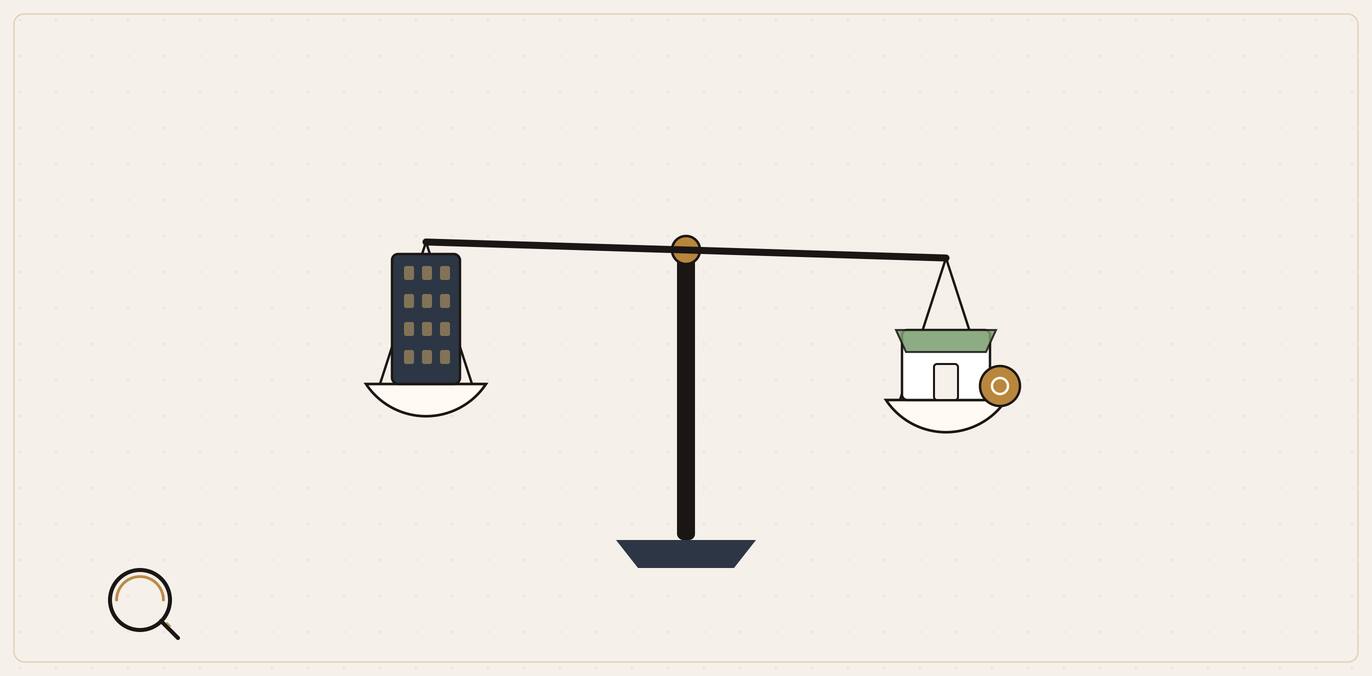
No. On the evidence so far, AI answer engines do not simply default to the biggest brands. They pick whichever source answers the exact question most clearly and specifically, which is why community sites and focused local pages are regularly cited ahead of national corporate marketing. Brand size helps a name get recognised; it does not decide who gets named in the answer.
Ask most business owners whether AI will ever recommend their company, and you get the same resigned answer. "It'll just name the big brands, won't it." The national chain, the household name, the firm with the marketing budget the size of your annual turnover. It feels obvious enough: the big players dominate Google, they dominate advertising, surely they dominate AI too.
It is a reasonable fear. It is also, on the evidence so far, mostly wrong.
AI answer engines pick who to mention very differently from the way you might expect, and that difference quietly favours the smaller, more specific, more genuinely useful business over the glossy national brand. This guide walks through what the data shows, why a big brand is not the automatic winner it is on Google, and what a local business can do to get named.
The short version
- Community and neutral sources beat brand pages. Across five industries, AI engines cited Wikipedia and Reddit far more than corporate sites; even Microsoft and Apple lost their own marketing pages to neutral sources.
- Many markets have no single winner. In business services AI named nearly five different brands per query, with the category leader on barely a fifth of the share of voice.
- Citable beats famous. These engines reward content that is specific, detailed and genuinely useful, not content that is merely well known, which is a structural advantage for a focused local business.
- Authority still matters, size alone does not. Trusted, well-sourced sites are cited far more, but that trust is earned through useful content and mentions, not bought with a big name.
- The door is open because few have walked through it. Almost no local business has yet earned its place as the answer, which is exactly why the opening exists now.
Where the "AI only names big brands" belief comes from
The belief is not irrational. It comes from how Google has worked for twenty years.
On classic Google, scale tends to win. A national brand has more backlinks, more domain authority, more pages, more budget for content and more history. All of those are signals Google's ranking system rewards. So the brand with the deepest pockets often does sit at the top of the results, and owners have learned, correctly, that out-spending a national competitor on traditional SEO is a hard fight.
The natural assumption is that any other system reading the web would reach the same conclusion. If the big brand wins on Google, it must win everywhere.
But an AI answer engine is not doing the same job as Google, and that single fact changes who comes out on top.
What the data actually shows
The clearest evidence so far comes from a study by Semrush, the search-analytics company, which analysed AI search results across five major industries (finance, digital technology, business services, consumer electronics and fashion) on both ChatGPT and Google AI Mode. Its headline finding runs straight against the big-brand assumption: "AI models trust community-edited sources more than official brand marketing, with Wikipedia and Reddit consistently outranking corporate websites across all industries" (Semrush, How AI Search Really Works, 2025)[1].
What the data shows
Size is not what earns the citation
2 to 2.9
citations sites averaged below about 190,000 monthly visitors, regardless of traffic
nearly 5
brands named per query in business services, the leader on only about 23% share of voice
15%
of Google AI citations went to Wikipedia, YouTube and Reddit combined, not big brands
Semrush, 2025; SE Ranking via Search Engine Journal, 2025; Pew Research Center, 2025
The pattern held even for the biggest names in the world. In Semrush's words, "Microsoft's corporate blog generates fewer AI citations than Reddit threads about Microsoft products," and "Apple's marketing pages can't compete with Wikipedia's neutral product specifications when AI models need authoritative information" (Semrush, 2025)[1]. If two of the largest companies on earth lose their own polished pages to a neutral encyclopaedia and a public forum, brand size plainly is not the deciding factor.
Semrush explains why: "AI models may prioritize collective wisdom over polished marketing messages because community sources are thought to provide the unbiased, factual information AI can confidently reference and cite." The engine is not reaching for the most famous homepage. It is reaching for the clearest, most verifiable statement of fact, wherever it sits.
The study also measured how many different companies AI names per question, a "brand diversity" score, and found the answer varies sharply by market. Consumer electronics is concentrated (AI typically names only one or two brands, with Samsung and Apple dominating), but business services is wide open: AI models named nearly five different brands per query, and the category leader held just 23% share of voice, "creating opportunities for smaller players to gain visibility" (Semrush, 2025)[1]. In a lot of categories, in other words, there is no incumbent the engine is locked onto.
The obvious conclusion for smaller players is the whole argument in one sentence: because these engines reward clear, factual, well-structured content over marketing polish, a focused business that writes the genuinely useful answer can be cited ahead of a bigger name that did not.
Why big is not the same as cited
To see why a national brand loses its automatic advantage, it helps to understand what an answer engine is actually trying to do.
Why big is not cited
What the engine is actually trying to do
A specific question
The customer asks for the exact job, place and need, not a brand name.
Pull the sources
It reads reviews, listings, community threads and reference pages, not just marketing sites.
Find the quotable answer
A neutral, specific source outranks a glossy national page the model cannot lift a clear fact from.
Cite the clearest match
The business that answers the exact question most usefully earns the mention.
Historically, Google answered by ranking links and leaving the final choice to you. Its signals reward pages that have earned authority for a search term: links from other sites, a strong domain, depth of history. Scale helps, because scale is what produces those signals.
An AI answer engine is doing something else. Faced with a live question, an AI engine collects text from across the web, keeps the passages most worth quoting, and folds them into one written reply. It is not hunting for the most famous homepage. It is hunting for the most citable text: clear, specific, well-organised writing that answers the precise question in front of it.
A famous brand is not automatically good at that. Big-brand pages are often built to sell and to look impressive, which frequently means short on the kind of concrete, detailed, plainly written substance a model can lift into an answer. A focused local business that has written a genuinely thorough page on the exact job it does, in the exact place it does it, can be far more citable than a national competitor with ten times the budget and a homepage full of brand copy.
There is data behind this. When SE Ranking studied 216,524 pages across roughly 129,000 domains, it found that below about 190,000 monthly visitors a site's traffic barely moved its citation count at all, averaging between 2 and 2.9 citations regardless of how much or how little traffic it drew (SE Ranking, via Search Engine Journal, 2025)[4]. These are correlations rather than proof of cause, but the direction is clear: past a modest threshold, raw reach is not what earns a mention.
In other words, the thing that wins on Google (accumulated authority and scale) is not the thing that wins in an AI answer (specific, quotable usefulness). That gap is the opening.
The independent picture lines up
It would be unwise to rest a whole argument on a single study. The broader, independent data points the same way.
Side by side
Big is not the same as cited
| National brand | Local business | |
|---|---|---|
| Who it writes for | The whole country, in general terms | One town and one job, in the detail a customer asked for |
| What the engine trusts | Marketing pages it treats as biased | Specific, quotable answers plus third-party mentions |
| Where the edge sits | Scale and awareness | Specificity the national page will never match |
In March 2025, the Pew Research Center analysed nearly 69,000 Google searches made by 900 US adults. It found that the sources cited most often in Google's AI summaries were not a roll-call of big commercial brands at all. The three most frequently cited sources were Wikipedia, YouTube and Reddit, which together made up around 15% of the sources listed in the AI summaries examined (source: Pew Research Center, July 2025)[2].
Think about what that means. The engines are leaning heavily on reference sites, video and genuine public discussion, not on whichever company has the largest ad spend. Reddit threads and community recommendations carry real weight. A national brand cannot simply buy its way to the top of that, and a local business with real customers talking about it genuinely has a route in that money alone does not provide.
This also underlines why all of this matters now rather than later. AI summaries already appear on a large share of everyday Google searches, and when one is present far fewer people click through to a traditional website at all. The AI answer is increasingly the thing people read, which makes being named inside it increasingly valuable.
And the scale of the audience is not small. By OpenAI's own account, ChatGPT passed 400 million weekly active users in February 2025, up 33% from 300 million the previous December (source: CNBC, February 2025)[3]. This is a mainstream channel where the rules happen to favour specificity over size.
A note on what this evidence does and does not prove
It is worth being straight about the limits, because overclaiming helps no one.
The Semrush study looked at national, commercial categories, finance, technology, consumer electronics and the like. None of them is "best emergency plumber in Leeds" or "family solicitor near me". So this is not direct proof, with a controlled local sample, that AI prefers your independent firm to the national chain in your exact market. We are not going to pretend it is.
What the evidence does establish is the mechanism. AI answer engines reward citable, specific, genuinely useful content rather than brand size, and that mechanism is not a quirk of one industry. It is how these systems are built, which is why the same pattern shows up in Pew's independent data on what gets cited. The sensible reading is not "AI guarantees the small business wins", it is "AI removes the automatic advantage that scale used to confer, and rewards a kind of content a focused local business can realistically produce." That is a meaningfully more hopeful position than most owners start from.
If you want to see how it plays out in your own market, you do not have to take anyone's word for it. The free check at the end of this guide shows you who AI actually names when someone asks the question your customers ask.
What this means if you are a local business
The takeaway is simple. The size of your competitor matters less than it used to. What counts now is whether your business is the answer an AI can most easily quote: clear, specific, and genuinely useful for the exact question a customer puts to it. Here is where to put your effort.
Where to compete
What counts more than your competitor's size
Be specific where the big brand is generic.Answer one town and one job in a level of detail a national page will never match.
Earn genuine off-site mentions.Reviews, directory listings, local press and community discussion are what AI engines lean on.
Compete hardest in wide-open categories.Markets where AI names several brands per query leave the most room for a smaller firm.
Stop assuming a Google ranking is enough.A strong Google position is worth having but does not carry over to AI search by itself.
Be specific where the big brand is generic. A national chain writes for the whole country. You can write for one town and one job in a level of detail they will never match. A page that genuinely answers "what does emergency boiler repair in [your town] involve, what does it cost, how fast can you get there" is more useful to both a customer and an AI than a glossy national page that answers none of it. Specificity is your edge, so use it.
Earn genuine off-site mentions. AI engines lean on third-party sources: reviews, directory listings, local press, community discussion. Where your business is talked about elsewhere can matter as much as your own website. A steady stream of real reviews and genuine mentions from real customers is something a national competitor cannot fake and you can earn. For more on how the engines weigh these sources, see our guide to how AI engines pick their sources.
Keep your location front and centre. When AI rewrites a vague query into a precise one, it almost always keeps the place name attached. That is good news for anyone competing locally, and it means location-rich content works. We cover the evidence for this in why your town survives the AI rewrite.
Do not treat your homepage as the whole job. The Semrush finding is a warning to every business, large or small: the page you are proudest of may be the one the AI ignores in favour of a detailed answer somewhere else. Build the detailed answers.
Stop assuming a Google ranking is enough. A strong Google position is still worth having, but it does not carry over to AI search the way owners expect. If you want the full picture on why, read why a No.1 Google ranking won't get you into ChatGPT.
For the complete, step-by-step playbook that ties all of this together, our pillar guide to Answer Engine Optimisation for local businesses is the place to start.
How to find out where you actually stand
All of the above is general. Your market is specific. The only way to know whether AI favours the national brands in your category or leaves the door open for you is to look.
The first step costs nothing. Put the test to the engines directly. In ChatGPT, Google's AI Mode and Perplexity, ask the way a good customer would, naming your service and town, then asking who to hire for the exact job you do. Record which firms come back, whether yours is among them, and which sources the reply rests on. A single pass tells you where you really stand.
What it will not tell you is why, or which of the many possible signals is holding you back: a website AI crawlers struggle to read, thin or un-citable content, weak off-site presence, or business details that are inconsistent across the web.
That is the gap a free QBiz Leads AI visibility check helps close. It scans your website in about thirty seconds and returns a clear pass or fail on the key signals that decide whether AI tools can find and recommend your business, so you get a clear, prioritised list of what to fix rather than a vague worry that "AI only knows the big names".
Get your AI Visibility audit →
What this means for your business
The belief that AI search belongs to the big brands is the most expensive assumption a local owner can make right now, because it stops them acting while the opportunity is still open.
The evidence says the opposite is closer to the truth. These engines reward specific, citable, genuinely useful content over sheer brand size, and that is a kind of content a focused local business can produce far more readily than a national chain can fake. The big brand's advantage on Google does not transfer automatically, and in some cases it actively reverses.
The businesses that get recommended in the AI era will not be decided by who has the biggest name. They will be the ones who realised the rules changed, and made themselves the clearest answer before their competitors caught on.
The real question is whether, when your customer asks, the AI has any reason to name you yet.
Frequently asked questions
Does AI favour big brands over local businesses?
Not in the way most people assume. Brand size helps an engine recognise a name, but it does not decide who gets cited for a specific question. The data suggests AI engines reward content that is specific, accurate and genuinely useful for the query, which a focused local business can produce as well as, and often better than, a national chain.
Why does a big competitor keep appearing instead of me?
Usually because they have stronger citable signals for that question, not because the AI is loyal to big names. More recent reviews, clearer service pages, complete listings and third-party mentions all feed the answer. Those are signals you can build, which is why a repeated competitor mention is a target rather than a verdict.
Does a strong Google ranking mean a brand wins in AI answers too?
No. AI engines pick their sources by rules that barely overlap with classic search ranking, so a big brand's Google advantage does not transfer automatically. In some local questions it reverses, with a smaller, better-sourced business being the more relevant answer.
What is the fastest way for a small business to compete?
Be the most citable answer to the questions your customers actually ask. Complete and tidy your Google Business Profile, gather recent genuine reviews, write plain and accurate service and area pages, and earn genuine mentions on the sources the engines read. These are quicker for a focused local firm than for a large brand to fake.
Which industries give a smaller business the best chance in AI answers?
The wide-open ones, where AI names several brands per question rather than defaulting to one. Semrush found business services was highly diverse, with nearly five brands named per query and the leader on only about 23% share of voice, while consumer electronics was concentrated on one or two dominant names. The more a category behaves like the former, the more room there is for a well-sourced smaller firm.
Do I need a big marketing budget to get cited by AI?
No. The signals that earn a citation are clear, specific, useful content and genuine third-party mentions, not ad spend. A national brand can outspend you on advertising, but it cannot buy its way to the top of the neutral and community sources these engines lean on. That is one of the few places where a modest budget is not a disadvantage.
Can a local business actually be named ahead of a national brand?
Yes, for a specific question. When someone asks about a service in a particular place, a focused page that answers that exact question in detail can be more relevant and more quotable than a national page written for everyone. The engine is choosing the best answer to that query, not the biggest company overall.
Why do Reddit and Wikipedia matter so much to whether my business is named?
Because AI models treat community-edited and neutral sources as more trustworthy than a company's own marketing, and lean on them heavily when they need to state a fact. That means genuine discussion of your business elsewhere, in reviews, on forums and in local write-ups, can carry as much weight as your own website. It is worth being present and well regarded on the places people actually talk.
Does having more website traffic get me cited more often?
Not much, once you are past a modest level. The SE Ranking data suggests that below roughly 190,000 monthly visitors, traffic barely changed how often a site was cited, with sites averaging between two and three citations regardless. Above a basic threshold, what you publish and how citable it is matters far more than raw visitor numbers. These are correlations, not a guarantee, but they point away from chasing traffic for its own sake.
How can I tell whether AI favours big brands or local firms in my own market?
Check it directly. Open ChatGPT, Google's AI Mode and Perplexity and ask the questions your customers ask, such as "best [your service] in [your town]". Note who gets named, whether you appear, and which sources the answer leans on. If the same one or two national names come up every time, a few big names own it; if the answer varies and names several firms, the door is open.
Sources
- [1] Semrush, "How AI Search Really Works: Findings from Our AI Visibility Study," 2025: https://www.semrush.com/blog/ai-search-visibility-study-findings/ (analysis across finance, digital technology, business services, consumer electronics and fashion on ChatGPT and Google AI Mode; "AI models trust community-edited sources more than official brand marketing, with Wikipedia and Reddit consistently outranking corporate websites across all industries"; "Microsoft's corporate blog generates fewer AI citations than Reddit threads about Microsoft products"; "Apple's marketing pages can't compete with Wikipedia's neutral product specifications"; brand-diversity scores of 4.72 ChatGPT / 4.60 Google AI Mode in business services with the leader at 23.22% share of voice, "creating opportunities for smaller players to gain visibility")
- [2] Pew Research Center, "Google users are less likely to click on links when an AI summary appears in the results" (22 July 2025): https://www.pewresearch.org/short-reads/2025/07/22/google-users-are-less-likely-to-click-on-links-when-an-ai-summary-appears-in-the-results/
- [3] CNBC, "OpenAI tops 400 million users despite DeepSeek's emergence" (20 February 2025): https://www.cnbc.com/2025/02/20/openai-tops-400-million-users-despite-deepseeks-emergence.html
- [4] SE Ranking study of 216,524 pages across ~129,000 domains, reported by Search Engine Journal, "New Data: Top Factors Influencing ChatGPT Citations" (2025): https://www.searchenginejournal.com/new-data-top-factors-influencing-chatgpt-citations/561954/ (below roughly 190,000 monthly visitors, sites averaged 2 to 2.9 citations regardless of traffic; the study reports directional correlations, not proof of causation)
Leave a comment
Thoughts on this post? Leave a comment below. Comments are moderated before they appear, so yours will not show on the page straight away.
Your email is used only to contact you about your comment if needed — it is never published.
Comments
No comments yet. Be the first to leave one above.