Perplexity Is the AI Engine That Still Works Like Google: How to Win It
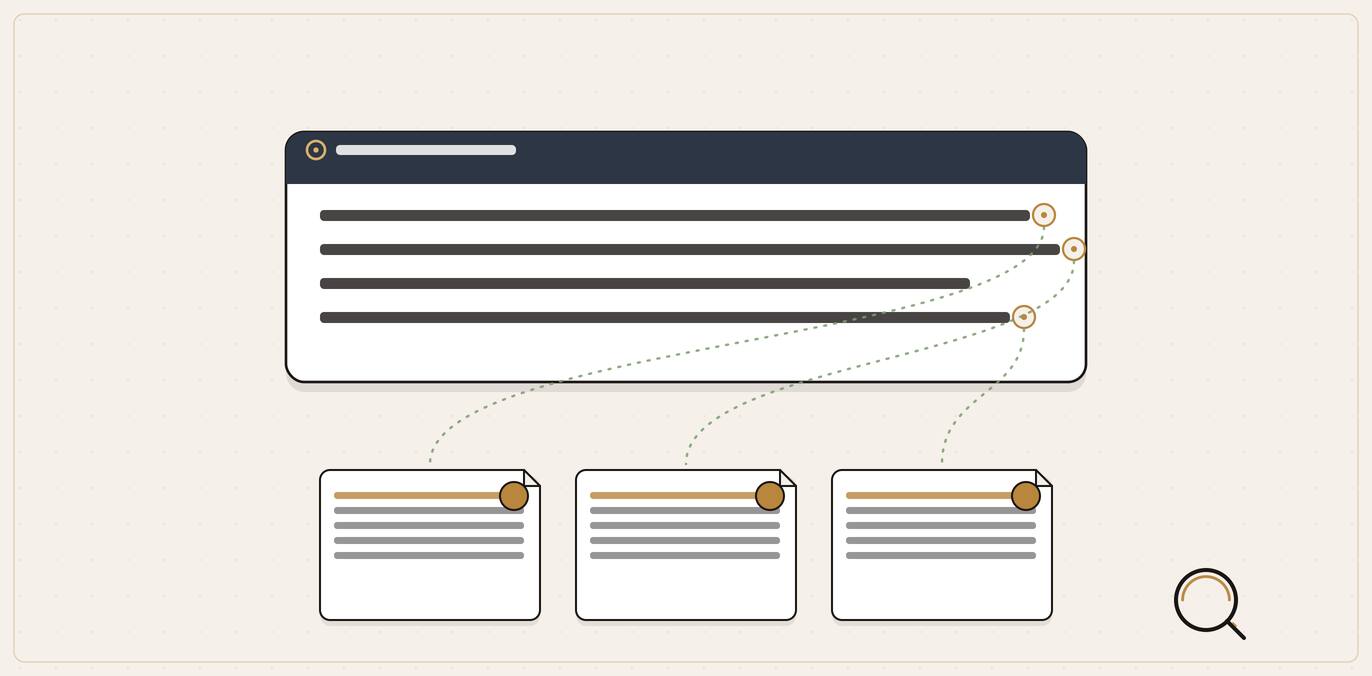
Perplexity behaves closest to classic search of any AI answer engine: it keeps most of the words you type, holds onto your town, and repeats the same searches each day. To get cited, let PerplexityBot into your robots.txt, make your content readable without JavaScript, write keyword-clear service and area pages in the words customers use, gather recent genuine reviews, and take part openly in the communities (Reddit above all) your customers use. The keyword work you did for Google carries over here more directly than on any other engine.
If the world of AI search feels like a moving target, Perplexity is the one engine that holds reassuringly still. Ask ChatGPT the same question twice and it may search the web in two completely different ways. Ask Perplexity, and it tends to look for almost exactly what you typed, the way an old-fashioned search box would. That single difference changes everything about how you get cited by it, and for a local business it is mostly good news.
Perplexity matters because it is the answer engine built from the ground up as a search tool. People use it the way they once used Google: they ask a question, they get a written answer with a row of numbered sources, and they click the ones that look right. If your business is one of those numbered sources, you get found. If it is not, you are invisible to a growing group of people who have stopped using a normal search engine altogether.
This guide explains why Perplexity behaves so much like classic search, what that means for the groundwork you may already have done, and exactly how a local or small business gets cited in its answers. It is one engine in a bigger picture, so if you have not yet read the overview, start with our pillar guide to Answer Engine Optimisation for local businesses, then come here for Perplexity specifically. For how the engines differ from one another, our guide on how each AI engine picks its sources sits alongside this one.
Key takeaways
- Perplexity searches for almost the exact words you type, so the keyword-clear content that has always helped you in Google helps you here too.
- It keeps your town. Location is one of the most reliably preserved parts of any question, which favours local businesses.
- It leans heavily on community sources, Reddit above all, plus reviews and recommendation sites.
- It tells you to let its crawler in. Blocking PerplexityBot means you cannot appear.
- The winning combination is the familiar foundation aimed at a slightly different target: clear pages in plain language, genuine reviews, genuine community presence, and crawlable content.
If that is enough to get you started, the playbook below has the detail. If you want to understand why Perplexity rewards this approach, read on.
Why Perplexity behaves like classic search
Most AI engines rewrite your question before they search. They take what you typed and turn it into something else behind the scenes, then look for that. Perplexity does the least rewriting of the major engines, and that is the key to everything.
Closest to classic search
The numbers behind Perplexity's familiar behaviour
88%
word overlap between your question and the search Perplexity runs, versus 13% for ChatGPT
14%
of Perplexity's queries are unique, so a single check gives a stable read
10,000
prompts tracked across three engines over 14 days in 2026
48–77%
of AI-engine citations point to specialised long-tail sites, not household names
Profound (vendor research, 10,000 prompts); BrightEdge tracking data.
An analysis by Profound tracked 10,000 prompts across three major AI engines over fourteen days in 2026, measuring how each one turned a user's question into the searches it actually ran. Perplexity came out as "the closest to classic search". It "stays closest to the original user prompt across wording, structure, and task framing"[1]. Profound sells AI-visibility software, so read its figures as vendor research; the query-mechanics measurement below is its own original work, and it fits how Perplexity openly presents itself as a search engine first.
The clearest number is word overlap. Profound measured how many of the words in a person's question survived into the searches Perplexity actually ran, and found 88% overlap. In its words, "its internal search queries stay very close to the prompt", so that "traditional keyword coverage remains a strong proxy for what Perplexity is likely to search"[1]. For comparison, the same study put ChatGPT at just 13% word overlap, an almost completely different set of words from the one the user typed.
There is a second, related finding that matters for how you check your visibility. Perplexity repeats itself. Profound found that only 14% of Perplexity's queries were unique, meaning "for the typical prompt, it issues the same one or two queries on every daily run"[1]. ChatGPT, by contrast, almost never fires the same search twice. The practical upshot, in Profound's words, is that "a single check on Perplexity gives a reasonably stable read on how your brand is being retrieved". You can test Perplexity once and broadly trust the result, where ChatGPT needs checking again and again.
Put those two facts together and Perplexity is the engine where the rules feel most familiar. The keyword-clear pages you wrote for Google are working for you here. You are not starting from scratch.
What this means for a local business
The "behaves like search" character is not an abstract curiosity. It hands a local business three concrete advantages.
Your town survives
Local businesses live or die on geography, and the worry with AI search is that it strips the location out of a question. With Perplexity, it almost never does, and the reason follows directly from how little it changes your words. When someone asks Perplexity for "a reliable plumber in Derby", the word "Derby" is exactly the kind of concrete detail that carries through to the search it runs. Geography is the part of a question a local business most needs kept, and it is the part these engines are most reluctant to drop.
"Best [service]" is a stable doorway
The classic local question, "best [thing] in [place]", is exactly the kind of plain, keyword-shaped phrasing Perplexity tends to keep intact rather than rewrite. A page that genuinely answers "best [your service] in [your town]", in those words, is aimed straight at the question Perplexity is most likely to run unchanged. It is one of the most durable ways in, because it is phrased the way the engine searches.
Your existing keyword work counts
Because Perplexity matches the words on your pages closely, the plain-language service and area pages you may already have written for Google are doing double duty. Content built around the category names, service labels and place names customers actually use is content Perplexity can match a real search to. Where ChatGPT demands a wide footprint of content phrased in many different ways, Perplexity rewards you for saying clearly what you do, in the words customers use.
This is the engine where the gap between old-fashioned SEO and new AI visibility is smallest. If you have done the basics for Google, you are most of the way there for Perplexity.
Where Perplexity looks: Reddit, reviews and recommendation
Familiar search behaviour does not mean Perplexity reads the same sources Google's blue links once did. It has a strong, distinctive appetite, and it is worth knowing before you decide where to spend your effort.
Perplexity is, to a striking degree, a Reddit reader. An independent analysis of 30 million cited sources by the AI-search analytics firm Peec AI, reported by Search Engine Land, found Reddit to be the single most-cited domain across ChatGPT, Google AI Mode, Gemini, Perplexity and AI Overviews, and singled out Perplexity as emphasising "Reddit, LinkedIn, and G2 for B2B queries"[2]. Review and recommendation platforms such as Yelp and G2 also "appeared often in recommendation queries". The reason the study gives is simple: "Reddit leads because it captures real user discussions."
It adds up to one thing: Perplexity puts community discussion and peer recommendation near the top of what it trusts. That tells you where the off-site work pays off. For Perplexity specifically, genuine reviews and genuine community presence are not optional extras, they are close to the main event.
That taste for specific, niche sources is part of a wider pattern across AI engines. BrightEdge's tracking of AI search found that a large share of AI-engine citations, between 48% and 77% depending on the engine, point to specialised long-tail sites rather than a small set of household-name brands[4]. For a local or specialist business that is quietly encouraging: being the clear, specific authority on your exact niche and town is closer to what these engines reach for than being the biggest name in your sector.
It is the same Reddit-and-reviews appetite that Google's AI Overviews share, which is why a single genuine off-site effort feeds more than one engine at once. Our guide on getting your business mentioned in ChatGPT covers the white-hat way to take part in those communities without ever faking it.
Let Perplexity's crawler in (this one is non-negotiable)
Before any of the content work matters, Perplexity has to be allowed to read your site. It uses automated crawlers, and you control which ones reach you through a small file on your website called robots.txt. Block the wrong one and you cannot appear, no matter how good your pages are.
Perplexity is clear about which crawler does what. The crawler that matters is PerplexityBot, which Perplexity says is "designed to surface and link websites in search results on Perplexity". Its own documentation gives a direct instruction: "To ensure your site appears in search results, we recommend allowing PerplexityBot in your site's robots.txt file"[3]. A separate user agent, Perplexity-User, visits a page when a user's specific question sends it there.
So the action is simple. Make sure your robots.txt is not blocking PerplexityBot. On many small-business sites this is a non-issue, but rebuilds, security plugins and over-cautious web firewalls sometimes block AI crawlers by default, and the owner never finds out. The whole allow-or-block question, bot by bot, is laid out in our crawler guide. For Perplexity in particular, the answer for a business that wants to be found is straightforward: let it in.
There is a second, quieter version of the same problem. If your website loads its content with JavaScript that runs only in a visitor's browser, a crawler can arrive and see a near-blank page even when it is allowed in. That is its own topic, and a common silent killer for site-builder sites, covered in our guide to whether AI can even read your website. It is worth ruling out early, because everything below assumes Perplexity can actually read your words.
The playbook: how to get cited by Perplexity
Here are the steps, ordered roughly by impact for a typical local business. The first three carry most of the weight, and if you have done the groundwork for Google, several will already be half-done.
The playbook
How to get cited by Perplexity
Crawlable and readable
Let PerplexityBot in through robots.txt and keep your facts in the raw page, not only in JavaScript.
Keyword-clear pages
Name each service and area the way customers say it, so Perplexity can match a real search to your words.
Reviews and community
Gather recent genuine reviews and take part openly on Reddit, the sources Perplexity trusts most.
Read your position
Ask Perplexity a customer's question, note the cited sources, and re-check after changes; its stability makes each shift a real signal.
1. Make sure you are crawlable and readable
Start with the basics from the section above, because nothing else counts until they are true.
- Confirm your robots.txt allows PerplexityBot.
- Confirm your important content (services, areas, prices, contact details) is in the raw page, not loaded only by JavaScript.
- Confirm you have not accidentally blocked crawlers at your hosting or security-plugin level after a site change.
These are pass-or-fail. Get them right once and you rarely think about them again.
2. Write keyword-clear pages in the words customers use
This is where Perplexity's "behaves like search" character pays you back directly. Because it matches your words closely, plain, specific pages are your strongest asset.
- A dedicated page for each core service, named the way people say it. "Emergency electrician", not "power solutions". "Divorce solicitor", not "family-law services".
- A real page for each area you cover, with genuine local detail, so the town in someone's question matches the town on your page.
- List the facts the engine can quote: prices or ranges, response times, qualifications, opening hours, what is included.
- Own the "best [service] in [town]" phrasing somewhere on your site, genuinely. A clear page that answers that exact question is aimed at the most stable query Perplexity runs.
Phrase your pages in the customer's words, not your trade's. A heading like "How much does a typical conveyancing job cost in Sheffield?" is something Perplexity can match a real search to. "Our bespoke client-focused approach" matches nothing, because it says nothing.
3. Build steady, recent reviews and a genuine community presence
Because Perplexity leans so hard on Reddit, reviews and recommendation sites, this off-site work matters more here than for almost any other engine.
- Reviews: ask happy customers while the job is fresh, and gather them on the platforms that count in your field, Google first. Recency matters: a wall of years-old reviews reads as a business that has gone quiet.
- Reddit, the right way: go to the communities your buyers already use, your city subreddit or trade forum, and contribute something genuinely useful. Answer what is actually asked, be open about who you are, and never seed praise for yourself. Astroturfing is transparent to readers and to the engine, it backfires, and posting fake reviews is increasingly unlawful.
- Recommendation sites in your trade: keep your presence accurate and current on the review and listing sites that matter in your field, the ones Perplexity is most likely to read.
4. Get listed accurately on the sources Perplexity cites
Perplexity is checking what the wider web says about you, not only your own site. Make that picture consistent.
- Keep your name, address and phone number identical everywhere. Contradictory details make any engine less sure of who you are, and a less sure engine cites you less often.
- Get listed on the directories and trade bodies that genuinely matter in your field, with details that match your website exactly.
- Check which sources Perplexity already cites for your kind of question (the next section shows you how) and make sure you are present on them.
5. Check your Perplexity visibility, and use its stability
This is where Perplexity's repeatability becomes a practical gift. Because it tends to run the same searches each time, a single check gives you a reliable read.
- Ask Perplexity what a customer would: "best [service] in [town]", "[trade] near me", "who handles [problem] in [area]?".
- Note whether you are named, who is named instead, and which numbered sources the answer cites.
- Look at those cited sources. Those are the places you need to be present and accurate. When the same directory keeps surfacing three rivals and never you, you have found a listing worth getting on.
- Re-check after you make changes. Because Perplexity is stable, a shift in your result is a real signal, not noise.
Our guide to tracking whether AI mentions your business covers the free method in full, and when a paid tool earns its place.
How Perplexity compares to ChatGPT and Google
It helps to hold the three engines side by side, because they overlap but the emphasis differs.
Side by side
How Perplexity compares to ChatGPT and Google
| Perplexity | ChatGPT | Google AI Overviews | |
|---|---|---|---|
| How it handles your words | Keeps your words and your town, and repeats its searches | Rewrites heavily and rarely searches the same way twice | Breaks your question into many sub-questions |
| Where it leans | Reddit and reviews | Authoritative, encyclopaedic pages | Google Business Profile, reviews and community |
| The winning move | Keyword-clear pages plus genuine community presence | A broad footprint of content and authoritative off-site presence | A complete profile and community and video signals |
- Perplexity keeps your words and your town, repeats its searches, and leans on Reddit and reviews. Keyword-clear pages plus genuine community presence are the winning combination, and a single check tells you where you stand.
- ChatGPT rewrites your question heavily and rarely searches the same way twice, so it rewards a broad footprint of content and authoritative off-site presence. See how to get mentioned in ChatGPT.
- Google AI Overviews breaks your question into many sub-questions and leans on your Google Business Profile, reviews and community sources. See how to show up in Google AI Overviews.
The reassuring through-line is that the foundations are shared. Clear pages, genuine reviews, genuine community presence and a crawlable site feed all three. Perplexity simply rewards the keyword-clear, location-clear version of that work most directly, which is why it is often the engine a local business wins first. And if you have been told your Google ranking is all you need, our guide on why a No.1 Google ranking means nothing in ChatGPT explains why that is no longer true, even as Perplexity keeps more of the old rules alive than any other engine.
Common mistakes that keep you out of Perplexity
- Blocking PerplexityBot without realising. A security plugin or a post-rebuild robots.txt can lock the crawler out, and Perplexity is explicit that an excluded site will not appear in its search results.
- A site that loads content only with JavaScript, so the crawler arrives at a near-blank page even when it is allowed in.
- Vague brochure pages. Perplexity matches words. "Bespoke solutions" matches nothing; "emergency drain unblocking in Leeds" matches the question someone actually asks.
- Ignoring Reddit and reviews because they feel like someone else's job. They are Perplexity's favourite sources, so they are the highest-impact off-site work you can do.
- Faking reviews or community posts. Transparent, counterproductive, and increasingly illegal. The engine and the community read the same threads.
- Details that disagree across the web chip away at how sure Perplexity is about who you are.
- Assuming AI strips your location. It almost never does, so location-clear pages are an advantage, not wasted effort.
Do this instead
The mistakes turned into a checklist
Let the crawler in and stay readable.Confirm robots.txt allows PerplexityBot and your key facts are not painted in by JavaScript alone.
Write for the words customers use."Emergency drain unblocking in Leeds" matches a real search; "bespoke solutions" matches nothing.
Prioritise Reddit and reviews.They are Perplexity's favourite sources, so they are the highest-impact off-site work you can do.
Keep it genuine.Never fake reviews or community posts; the engine and the community read the same threads, and it is increasingly unlawful.
Keep your details consistent.Matching name, address and phone everywhere raises how sure Perplexity is about who you are.
Frequently asked questions
How do I get my business cited by Perplexity?
Make sure Perplexity's crawler is allowed in your robots.txt and your content is readable, then write clear, keyword-clear service and area pages in the words customers use, build steady recent reviews, take part genuinely in the communities (especially Reddit) your customers use, and keep your listings consistent. Perplexity matches your words closely, so plain, specific pages are your strongest asset.
Is Perplexity SEO different from normal SEO?
Less than you might think. Of the major AI engines, Perplexity behaves closest to classic search: Profound's analysis found 88% word overlap between user prompts and the searches Perplexity actually runs, meaning "traditional keyword coverage remains a strong proxy" for what it looks for[1]. The keyword-clear pages you wrote for Google help you directly on Perplexity.
Do I need to allow PerplexityBot?
Yes, if you want to appear. Perplexity's own documentation says PerplexityBot is "designed to surface and link websites in search results", and recommends allowing it in your robots.txt so your site can appear[3]. Blocking it means you cannot be cited in Perplexity's answers.
Why does Perplexity cite Reddit so much?
It strongly favours community discussion and peer recommendation. An independent analysis of 30 million cited sources found Reddit to be the most-cited domain across the major AI engines, with Perplexity leaning on "Reddit, LinkedIn, and G2" in particular and review platforms appearing often in recommendation queries[2]. For a local business that means genuine reviews and an active Reddit presence are among the highest-impact things you can do.
Will Perplexity keep my town in the question?
Almost always. Because Perplexity keeps so much of your original wording, concrete details like a town name are exactly what survives into the search it runs. Geography is the signal these tools hold onto, which works in a local business's favour.
How often should I check my Perplexity visibility?
Less often than for ChatGPT. Because Perplexity repeats its searches (only about 14% of its queries are unique in Profound's data), a single check gives a reasonably stable read[1]. Check, make your changes, then re-check to confirm the shift. A monthly look is plenty for most local businesses.
Is it worth the effort if Perplexity is smaller than Google?
The effort is largely shared. The keyword-clear pages, reviews and community presence that win Perplexity also feed Google's AI Overviews and help with ChatGPT. Because Perplexity rewards the most familiar version of that work, it is often the engine a local business wins first, which makes it a sensible place to start, not a separate project.
Does my site need JavaScript-loaded content fixed for Perplexity?
Only if that content is invisible without a browser. If your important pages (services, areas, prices, contact details) are painted in by JavaScript that runs only in a visitor's browser, Perplexity's crawler can arrive at a near-blank page even when it is allowed in. Confirm your key facts sit in the raw page, not just in scripts.
Am I better off as a small specialist or a big generalist for Perplexity?
Being a clear, specific authority on your exact niche and town works in your favour. Across AI engines, a large share of citations, by BrightEdge's tracking between 48% and 77% depending on the engine, point to specialised long-tail sites rather than the biggest household names. Say precisely what you do and where, and you are closer to what these engines reach for.
What page phrasing does Perplexity match best?
Plain, keyword-shaped questions in the customer's words. "How much does a typical conveyancing job cost in Sheffield?" or "emergency drain unblocking in Leeds" match a real search someone runs. Trade jargon and slogans like "bespoke client-focused solutions" match nothing, because they say nothing specific the engine can tie to a query.
Where to start
If you do only three things this week: confirm your robots.txt allows PerplexityBot and that your content is readable; sharpen your main service and area pages so they answer "best [your service] in [your town]" in plain words; and ask your recent happy customers for reviews. Those three put you into the sources Perplexity reads most, and they help every other engine at the same time.
If you would rather start with a quick read on your own site, a free QBiz Leads AI visibility check scans your website in about thirty seconds and returns a plain pass or fail on the signals that decide whether Perplexity and the other engines can find, read and recommend you. It tells you where you stand and what to fix first, before you spend anything.
Get your free AI visibility check →
Sources
- [1] Profound, "What AI Engines Actually Search For," 2026: https://www.tryprofound.com/blog/what-ai-engines-actually-search-for (vendor; Profound is an AI-visibility company. 10,000 prompts across ChatGPT, Perplexity and Copilot over 14 days in 2026. Perplexity is "the closest to classic search" and "stays closest to the original user prompt"; 88% word overlap between prompt and fanout queries vs ChatGPT's 13%; "traditional keyword coverage remains a strong proxy for what Perplexity is likely to search"; only 14% of Perplexity's queries are unique so "a single check on Perplexity gives a reasonably stable read")
- [2] Search Engine Land, "AI search engines cite Reddit, YouTube, and LinkedIn most: Study," reporting Peec AI's analysis of 30 million cited sources: https://searchengineland.com/ai-search-engines-cite-reddit-youtube-and-linkedin-most-study-473138 (independent; Reddit is the most-cited domain across ChatGPT, Google AI Mode, Gemini, Perplexity and AI Overviews; Perplexity "emphasized Reddit, LinkedIn, and G2 for B2B queries"; review platforms appeared often in recommendation queries; "Reddit leads because it captures real user discussions")
- [3] Perplexity, "Perplexity Crawlers": https://docs.perplexity.ai/guides/bots (primary; PerplexityBot is "designed to surface and link websites in search results on Perplexity" and "not used to crawl content for AI foundation models"; "To ensure your site appears in search results, we recommend allowing PerplexityBot in your site's robots.txt file"; Perplexity-User supports user-initiated visits; settings work independently and may take up to 24 hours to reflect)
- [4] BrightEdge, "How different AI search engines choose which brands to recommend": https://www.brightedge.com/resources/weekly-ai-search-insights/how-different-ai-search-engines-choose-which-brands-to-recommend (vendor tracking data; between 48% and 77% of AI-engine citations, depending on the engine, point to specialised long-tail sites rather than a small set of large brands)
Leave a comment
Thoughts on this post? Leave a comment below. Comments are moderated before they appear, so yours will not show on the page straight away.
Your email is used only to contact you about your comment if needed — it is never published.
Comments
No comments yet. Be the first to leave one above.