How Florida Attorneys Get ChatGPT AI Recommendations
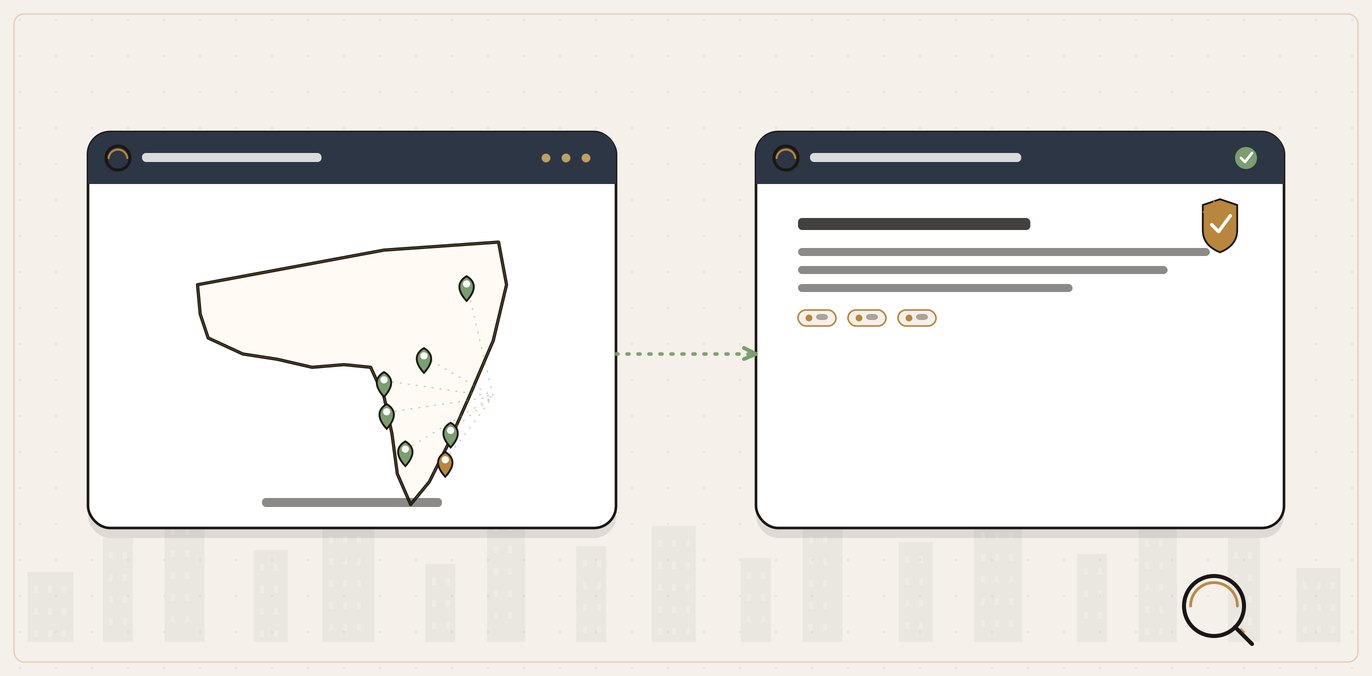
A Florida firm earns AI recommendations by being the practice an answer engine can most easily read, verify, and quote. That means a crawlable site that allows OAI-SearchBot, consistent name, address, and phone details everywhere, named attorneys with bar numbers, deep practice-area and Florida-city pages, structured data (LegalService, LocalBusiness, FAQPage), genuine reviews, and off-site coverage. Every one of those moves has to satisfy the Florida Bar advertising and ethics rules, and Florida Bar Ethics Opinion 24-1 is where those rules meet AI directly.
Type "best car accident lawyer in Miami" into ChatGPT and the answer comes back in seconds: a short paragraph, two or three firms named, a line on what each one handles. Whoever asked will rarely scroll and rarely second-guess it. They call the name that reads best. That reply has quietly become the front door to a Florida law practice, and most firms cannot say whether they are standing inside it or outside it.
Earning a place in that answer is not luck or clever wording. It rests on a handful of concrete signals a Florida firm can build on purpose. What a national "get recommended by AI" guide leaves out is the layer beneath all of them: every one of those signals is a form of lawyer advertising, and in Florida lawyer advertising answers to the Bar. The Bar has already ruled on generative AI directly, in Florida Bar Ethics Opinion 24-1, so for a Florida attorney the ethics rules and the visibility work are a single conversation rather than two.
The short version
- In Florida, ethics and visibility are one job. Florida Bar Opinion 24-1 governs AI use, so every visibility move (a chatbot disclaimer, no unverifiable "best firm" claim) is also an advertising-compliance move.
- Access comes before copy. If robots.txt blocks OAI-SearchBot, or the site only renders once JavaScript runs, ChatGPT's search feature may never read your practice-area and city pages at all.
- A city in the question favors the real local firm. Ask for an "estate planning attorney in Naples" and a practice with genuine Naples reviews beats a national brand with no county footprint.
- There is no paid route in. A recommendation is assembled from public signals (your site, listings, reviews, the wider web), so treat anyone selling guaranteed AI placement with caution.
- Ranking first on Google and being named by ChatGPT are now two separate jobs. They overlap, but the signals that win each one are not identical.
How does ChatGPT actually decide which Florida firms to name?
ChatGPT surfaces sites through a documented crawler, not a vague sense of reputation. OpenAI states that it "uses OAI-SearchBot and GPTBot robots.txt tags to enable webmasters to manage how their sites and content work with AI," and that OAI-SearchBot "is used to surface websites in search results in ChatGPT's search features."[2] The consequence is blunt: OpenAI says "sites that are opted out of OAI-SearchBot will not be shown in ChatGPT search answers," and recommends "allowing OAI-SearchBot in your site's robots.txt file."[2]
Selection path
How a Florida firm becomes a named answer
Crawlable and allowed
The site permits OAI-SearchBot and renders without needing JavaScript, so the pages can be read at all.
Practice and place
Deep practice-area and Florida-city pages match the treatment and location in the question.
Confirmation
Consistent entity details, bar numbers, reviews and off-site coverage confirm the firm from several directions.
Recommendation
The firm the engine can most easily read, verify and quote earns the mention.
So the first thing to check is not your copy but your access. If your Florida firm's robots.txt blocks OAI-SearchBot, or your site only renders its content once a browser runs JavaScript, ChatGPT's search feature may never see the practice-area and city detail that would qualify you for the answer. Being crawlable and allowed is the prerequisite; everything below assumes an engine can actually read the page.
One point often gets overstated: ChatGPT does not crawl the live web in real time the way people picture Google doing. OpenAI documents separate agents for separate jobs, including OAI-SearchBot for search surfacing and ChatGPT-User for pages fetched when "users ask ChatGPT or a CustomGPT a question."[2] For the broader mechanics of how answer engines assemble a reply from many sources, our guide to query fan-out covers the process, and what answer engine optimisation is sets out the wider frame.
The Florida ethics rule that shapes every AI-visibility move
This is the section a generic "rank in ChatGPT" post never contains, and for a Florida attorney it comes first. The Florida Bar confirms that "lawyers may use generative artificial intelligence ('AI') in the practice of law but must protect the confidentiality of client information, provide accurate and competent services, avoid improper billing practices, and comply with applicable restrictions on lawyer advertising."[1] AI visibility is a form of lawyer advertising, so the advertising rules apply to it directly.
Compliance test
Will this AI-visibility move pass Opinion 24-1?
Ask
Is the claim objectively verifiable, and does any chatbot say it is not a lawyer?
It is advertising the Bar allows
Checkable facts, named attorneys with bar numbers and a clear AI disclaimer satisfy the rules and read well to an engine.
It is a compliance problem
An unverifiable "best firm" claim or an undisclosed chatbot breaches Rule 4-7.13 and the advertising rules.
Three parts of Opinion 24-1 change how a Florida firm should approach AI visibility.
1. An AI intake chatbot must say it is not a lawyer
Many firms are tempted to bolt an AI chat widget onto the site to capture inquiries that arrive through AI channels. In Florida that carries a hard requirement.
The opinion states that "generative AI chatbots that communicate with clients or third parties must comply with restrictions on lawyer advertising and must include a disclaimer indicating that the chatbot is an AI program and not a lawyer or employee of the law firm."[1] It adds that "to avoid confusion or deception, a lawyer must inform prospective clients that they are communicating with an AI program and not with a lawyer or law firm employee."[1] A chatbot that answers legal questions on a Florida firm's site without that disclosure is a compliance problem, not a growth tactic.
2. Superiority claims must be objectively verifiable
The whole pitch of "be the number one AI-recommended firm" runs into Rule 4-7.13. The opinion states that "lawyers may advertise their use of generative AI but cannot claim their generative AI is superior to those used by other lawyers or law firms unless the lawyer's claims are objectively verifiable."[1] Rule 4-7.13(b)(3) more broadly prohibits "comparisons of lawyers or statements, words, or phrases that characterize a lawyer's or law firm's skills, experience, reputation, or record, unless the characterization is objectively verifiable."[1] A Florida firm, or a marketer acting for it, cannot claim to be "the best" or "the most recommended" without objective backing. That leash is also good AEO discipline: answer engines quote checkable facts far more readily than superlatives.
3. You are responsible for verifying what AI produces
The opinion warns that generative AI can "hallucinate" and "create 'inaccurate answers that sound convincing,'" citing the federal sanction of two lawyers for filing fake AI-generated citations in Mata v. Avianca.[1] It concludes that "a lawyer must verify the accuracy and sufficiency of all research performed by generative AI."[1] Read that alongside your visibility strategy and the two point in the same direction. The content that earns citations is accurate, sourced, and specific, which is exactly the standard the duty of competence already demands. Confidentiality under Rule 4-1.6 applies too: it governs how a firm may feed client information into any third-party AI tool in its own workflow.
Opinion 24-1 and answer engines are asking a Florida firm for the same thing: content that is accurate, verifiable, specific to your jurisdiction, and free of anything misleading. Satisfy the Bar's standard on its own terms and you have already built most of what an engine needs before it will name you.
What signals get a Florida firm recommended?
With the ethics frame set, here are the signals, ordered roughly by how much each moves an AI recommendation. Each item is written as its compliant form.
Signal worklist
The signals that get a Florida firm recommended
Make entity details agree everywhere.Firm name, address and phone identical across the site, Google, the Bar directory and legal directories.
Name attorneys with real credentials.List partners with Florida Bar numbers, admission dates and genuine recognitions the engine can check.
Build deep practice-area and city pages.Answer the real question for a named Florida city so a local search resolves to you.
Gather genuine reviews within your duties.Earn real reviews without disclosing anything covered by client confidentiality.
Earn off-site editorial authority.Coverage beyond your own site backs up the firm and handles YMYL scrutiny with care.
Consistent entity details everywhere
Your firm name, office address, and phone number should read identically across your website, Google Business Profile, the Florida Bar member directory, and every legal directory. Conflicting listings leave an engine unable to settle on a single entity for your firm, and uncertainty is the fastest way to be left out of a short, confident answer. A practice that has absorbed another partner, shifted between Miami and Fort Lauderdale offices, or rebranded will usually have several stale records to reconcile. That unglamorous cleanup does more work than most of the marketing around it.
Named attorneys with bar numbers and real credentials
A firm page that lists partners by name, with Florida Bar numbers, admission dates, practice concentrations, and genuine recognitions, gives an engine concrete, checkable facts to attach to your name. "Regulated by the Florida Bar, member no. 123456," beside a named attorney's actual background, is the kind of verifiable detail an engine repeats with confidence and a prospective client trusts. List only the credentials and honors you actually hold, keep the page current as they change, and you stay on the right side of the objectively-verifiable standard the previous section set out.
Deep practice-area and Florida-city pages
One catch-all "Practice Areas" page that runs personal injury, criminal defense, family law, and estate planning together, then rattles off seven cities, gives an engine nothing precise to lift. The client asking about a Sarasota probate matter and the client asking about an Orlando DUI are two different questions, and a page that tries to be both is a strong answer to neither. Give each practice area its own page, titled the way a client names the problem, and give each Florida city you serve its own page rather than folding them into a place-name list. The next section works through how to build them.
Genuine reviews, within your confidentiality duties
Reviews are one of the stronger trust signals an engine reads for a local firm. Google's own Business Profile guidance says local results rest on "relevance, distance, and popularity," describes prominence as based partly on "how many reviews you have," and states plainly that "more reviews and positive ratings can help your business's local ranking."[3] For a Florida attorney the confidentiality duty shapes how you collect them. Invite a review once a matter has wrapped up, without steering the client toward anything they would not want on the public record. And when you respond, respond without disclosing a single detail about the case. Buying or faking reviews is off the table entirely.
Off-site editorial authority
An engine reads the web you do not own. Google notes that prominence is also based on "how many websites link to your business."[3] Genuine coverage, a bar-association profile, a speaking credit, a local news mention, or an article you authored builds the wider signal that you are a real, recognized Florida practice. For how earned coverage feeds AI citations, see citations for AEO.
Care with YMYL content
Legal advice sits in the "your money or your life" category that engines treat with extra scrutiny, and Florida's verify duty says the same thing from the ethics side. Content that is accurate, sourced, and clearly framed as general legal information, not advice, is what both an engine and the Bar reward. Vague, unsourced, or overstated legal claims fail on both counts.
How should a Florida firm declare itself in structured data?
Structured data is the machine-readable layer that tells an engine, without ambiguity, what your firm is and where it works. The vocabulary is standards-based, not vendor jargon. LegalService is the real type on schema.org, inheriting LocalBusiness and Organization properties; Attorney is deprecated, with schema.org stating directly that "This type is deprecated - LegalService is more inclusive and less ambiguous."[4] Four are worth setting up carefully:
- LegalService as the primary type, with LocalBusiness details (name,
address, phone, hours) so the engine reads a complete entity. - areaServed, which schema.org defines as "the geographic area where a service or offered item is provided."[4] This is the standards-based way to declare that you serve Miami-Dade, Hillsborough, or Broward County in a form a machine can read.
- aggregateRating and award, which exist on these types, so review ratings and recognitions can be declared in markup.[4]
- FAQPage on your practice-area pages, so the specific questions you answer are exposed in a structure an engine can lift.
Two guards apply. First, the Florida Bar advertising rules still govern how ratings and awards may be claimed, so anything you mark up as an aggregateRating or award must be accurate and, where it characterizes your record, objectively verifiable.[1] Second, structured data describes the page; it does not replace the substance. For the wider set of machine-readable signals a legal site needs, see our guide to the 8 technical signals AI answer engines read on a law firm site.
How do you build practice-area and city pages that answer the question?
The pages that get quoted are the ones that answer a narrow question outright, and that happens to be exactly what a Florida client is reading for. The best raw material for such a page is a hard jurisdictional fact: a rule that applies in Florida, stated in the first line, with the statute in the sentence and the state named. Florida law gives you a clean example, and a recently changed one.
Take the deadline to file. Under Florida Statutes section 95.11, an "action founded on negligence" must be commenced "within two years."[5] Florida moved this from four years to two years through House Bill 837 in 2023, so a page still stating four years is out of date.
Wrongful death is also two years under section 95.11(5)(e), and a medical malpractice action must be commenced "within 2 years from the time the incident giving rise to the action occurred or within 2 years from the time the incident is discovered," with an outer cap of four years.[5] A page that opens "In Florida, the statute of limitations for a negligence claim is two years (Fla. Stat. section 95.11(5)(a))" answers the question in one line, cites the source, and names the jurisdiction. That is the AEO pattern and the accuracy the verify duty expects, in a single sentence.
A guard the Bar's cautions make clear: frame this as general legal information, not legal advice, because section 95.11 sets limitation periods by cause of action, and specific cases carry exceptions. Do not flatten it into a single "personal injury equals two years" claim without the negligence framing. Build each page around the real questions a Florida client asks:
- A page per practice area, titled in the client's own words ("car accident lawyer," "divorce attorney," "criminal defense," "probate and estate planning"), that spells out what you take on, how a matter proceeds, and what the client should expect along the way.
- A page per Florida city or county you cover, naming the local courthouses, the counties in your reach, and the detail that only a firm actually working there would know, instead of a single page that lists towns.
- The specifics both a client and an engine look for: your fee structure (contingency, hourly, flat fee), realistic timelines, the stages a matter moves through, and the named attorney who runs it.
Where do directories and off-site presence fit?
No firm controls everything an engine reads about it, which is why presence off your own site counts. The listings that carry regulated-status and recognition signals do the most work, and for a Florida attorney that starts with the Bar's own official member directory. From there, the directories attorneys already populate, Super Lawyers, Avvo, Justia, Martindale-Hubbell, and FindLaw, are the sensible places to keep an accurate, matching entry.
Treat directory presence as sensible, standards-aligned practice: complete and accurate entries that agree with your site, backed by Google's own point that prominence rests partly on reviews and on "how many websites link to your business."[3] There is no published, verifiable figure for how much any single directory weighs in an AI recommendation, so do not chase a tier or a percentage; the value is accurate, consistent presence, not a measured ranking factor. A strong Google position and a ChatGPT mention now turn on different signals, a split our comparison of ChatGPT versus Google AI Overviews for law firm traffic covers, and the broader compliant playbook lives in our guide to AEO for law firms.
Frequently asked questions
Could our AI-visibility work put us in breach of the Bar's advertising rules?
Not if you build it the way Opinion 24-1 describes. The opinion permits generative AI in practice as long as you protect confidentiality, stay competent, bill properly, and follow the advertising rules. The material that wins an AI recommendation, precise and truthful detail about your services, your people, and your process, is the same material those duties call for, so the two rarely pull against each other. The places to watch are the ones the opinion names: no superiority claim you cannot objectively verify, a clear AI disclaimer on any client-facing chatbot, and your own reading of the current Bar position.
Can we pay to be recommended by ChatGPT?
No. There is no paid route into a genuine AI recommendation. It is assembled from the same public signals an engine can read and verify: your site, your listings, your reviews, and the wider web. Treat anyone selling guaranteed AI placement with caution, and note that under Rule 4-7.13 you cannot make an unverifiable claim about being the top AI-recommended firm.
Do we need an AI chatbot on our website?
Not to be recommended by ChatGPT; that depends on your site content, listings, and authority. If you do add an AI chat widget that communicates with clients or prospects, Opinion 24-1 requires a disclaimer that it is an AI program and not a lawyer or firm employee, and it must comply with the advertising rules.
When a client asks for "the best attorney in Miami," do national brands win by default?
For a question with a city in it, usually not. The engine holds onto the place name when it reworks the query, and that is where a genuine local practice has the edge. Ask ChatGPT for an "estate planning attorney in Naples" and a firm with real Naples reviews and a clear, accurate probate page is a stronger answer than a national brand with no footprint in the county. The location is doing the filtering, and a national name has nothing local to offer it.
How soon should we expect to be named?
There is no fixed timeline, and two people asking the same question on the same day can get different firms back. The quicker wins come from confirming an engine can read your site, allowing OAI-SearchBot, finishing your Google Business Profile, and collecting recent reviews; directory presence and off-site authority build more slowly. Judge it by the trend across repeated checks, not by whatever a single query returns today.
Which practice areas benefit most in Florida?
The high-intent, location-driven areas where a client asks an engine for a nearby attorney: personal injury and car accidents, criminal defense, family law, estate planning and probate, and medical malpractice. Give each one its own page carrying the specifics a Florida client and an engine both look for.
Does ranking well on Google mean ChatGPT will recommend us too?
Not automatically. The two overlap, because both reward a clear, crawlable, well-regarded site, but they are separate jobs. Google AI Overviews draw on Google's index and its local prominence signals; ChatGPT surfaces sites through OAI-SearchBot and leans on what it can read and verify about your entity. A firm can sit at the top of Google Maps and still be missing from ChatGPT because its site is hard to crawl or its details do not agree across the web. Our comparison of ChatGPT versus Google AI Overviews for law firm traffic works through the split.
Do reviews on Google help us get named by AI, or just on Google Maps?
Both, indirectly. Reviews are a documented local prominence signal for Google, and that same prominence feeds the wider picture an answer engine reads about whether you are a real, active Florida practice. For an attorney the confidentiality duty shapes how you gather them: ask once a matter has closed, never steer the client, and reply without disclosing any case detail. Volume of genuine, recent reviews matters more than any single glowing one.
What is the single most common reason a Florida firm is invisible to ChatGPT?
Inconsistent entity details. When the firm name, address, and phone number differ across the website, the Google Business Profile, the Florida Bar directory, and legal directories, an engine cannot settle on one entity. It leaves the firm out of a short, confident answer. A practice that has merged, moved between offices, or rebranded usually has several stale records to reconcile, and that cleanup often does more than any new content.
Is it safe to put an AI chatbot on our firm's website in Florida?
Yes, provided it follows Opinion 24-1. Any generative AI chatbot that communicates with clients or prospects must carry a disclaimer that it is an AI program and not a lawyer or firm employee, and it must comply with the advertising rules. A widget that answers legal questions without that disclosure is a compliance problem rather than a growth tactic, so build the disclaimer in from the start.
Where to start
The Mata v. Avianca sanction is the cautionary bookend to all of this: the same carelessness that got two lawyers sanctioned, unverified AI output presented as fact, is what keeps a firm out of the answers in the first place. Accuracy is the currency in both directions. So start where accuracy is cheapest to fix. Open ChatGPT and ask it, as a client would, for an attorney in your city and practice area, and note whether you appear at all.
Then check the plumbing: confirm your site's content is readable without JavaScript and that robots.txt allows OAI-SearchBot, since a blocked crawler makes everything below invisible. With that settled, reconcile your Google Business Profile against your Florida Bar directory entry until every detail lines up. Finally, build one practice-area page for your strongest area to the standard this post describes, answer-first, Florida statute cited inline, framed as general information. Together these steps carry most firms a long way.
Side by side
Ranking first on Google versus being named by ChatGPT
| First-page Google ranking | ChatGPT recommendation | |
|---|---|---|
| What the searcher sees | A list of links to choose from | A short answer that names two or three firms |
| Access requirement | Googlebot can crawl the page | OAI-SearchBot is allowed and the page renders without JavaScript |
| What wins the place | Relevance, links and page signals | Confirmation that the firm exists, fits the query and can be trusted |
| Role of superlatives | Marketing copy can lean on them | Checkable facts are quoted; unverifiable "best" claims also breach the Bar |
| Is a position visible? | Yes, you can track your rank | No, there is no rank to see |
For the wider framework behind this, how Generative Engine Optimization, Answer Engine Optimization, and AI SEO fit together, see our Florida law firm AI ranking guide.
If you would rather have this checked first, a free QBiz Leads AI visibility check reviews how your site is set up to be found and cited by AI answer engines, and returns a clear read on the signals that decide whether your firm gets named. For the implementation itself, our AI visibility services, answer engine optimization, and ChatGPT SEO services cover the work.
Get your AI Visibility audit →
Sources
- [1] Claim: Florida attorneys may use generative AI subject to confidentiality, competence, billing, and advertising duties; AI chatbots must disclose they are AI; superiority and comparative claims must be objectively verifiable; and a lawyer must verify AI output. Source: The Florida Bar, Ethics Opinion 24-1 (January 19, 2024). URL: https://www.floridabar.org/etopinions/opinion-24-1/ (full text: https://www-media.floridabar.org/uploads/2024/01/FL-Bar-Ethics-Op-24-1.pdf). Exact quotes: "Lawyers may use generative artificial intelligence ('AI') in the practice of law but must protect the confidentiality of client information, provide accurate and competent services, avoid improper billing practices, and comply with applicable restrictions on lawyer advertising." "Generative AI chatbots that communicate with clients or third parties must comply with restrictions on lawyer advertising and must include a disclaimer indicating that the chatbot is an AI program and not a lawyer or employee of the law firm." "Lawyers may advertise their use of generative AI but cannot claim their generative AI is superior to those used by other lawyers or law firms unless the lawyer's claims are objectively verifiable." "Functionally, this means a lawyer must verify the accuracy and sufficiency of all research performed by generative AI." Rule 4-7.13(b)(3): "unless the characterization is objectively verifiable."
- [2] Claim: ChatGPT surfaces websites through OAI-SearchBot; sites that block it will not appear in ChatGPT search answers; OpenAI recommends allowing it in robots.txt. Source: OpenAI, "Overview of OpenAI Crawlers." URL: https://platform.openai.com/docs/bots (redirects to https://developers.openai.com/api/docs/bots). Exact quotes: "OpenAI uses OAI-SearchBot and GPTBot robots.txt tags to enable webmasters to manage how their sites and content work with AI." "OAI-SearchBot is used to surface websites in search results in ChatGPT's search features. Sites that are opted out of OAI-SearchBot will not be shown in ChatGPT search answers, though can still appear as navigational links. To help ensure your site appears in search results, we recommend allowing OAI-SearchBot in your site's robots.txt file." "ChatGPT-User ... When users ask ChatGPT or a CustomGPT a question, it may visit a web page with a ChatGPT-User agent."
- [3] Claim: Google local results rest on relevance, distance, and popularity/prominence; prominence is based partly on inbound links and reviews; more reviews and positive ratings can help local ranking. Source: Google Business Profile Help, "Tips to improve your local ranking on Google." URL: https://support.google.com/business/answer/7091. Exact quotes: "Local results are mainly based on relevance, distance, and popularity." "Prominence means how well-known a business is. Prominent places are more likely to show up in search results. This factor's also based on info like how many websites link to your business and how many reviews you have. More reviews and positive ratings can help your business's local ranking." Used here as directory and local-signal context, not as a statement of the signals ChatGPT uses.
- [4] Claim: LegalService is the real schema.org type inheriting LocalBusiness/Organization properties, including areaServed, aggregateRating, and award; Attorney is deprecated in favor of LegalService. Source: Schema.org type definitions. URLs: https://schema.org/LegalService and https://schema.org/Attorney. Exact quotes (properties and notices listed on the type pages): "[areaServed] ... The geographic area where a service or offered item is provided." "[aggregateRating] AggregateRating ... The overall rating, based on a collection of reviews or ratings, of the item." "[award] Text ... An award won by or for this item." "[address] PostalAddress or Text ... Physical address of the item." schema.org/Attorney: "This type is deprecated - LegalService is more inclusive and less ambiguous."
- [5] Claim: Florida's statute of limitations for a negligence action is two years; wrongful death is two years; medical malpractice is two years with a four-year cap. Source: The Florida Senate, 2025 Florida Statutes section 95.11. URL: https://www.flsenate.gov/Laws/Statutes/2025/0095.11. Exact quotes: "(5) WITHIN TWO YEARS" and "(a) An action founded on negligence." "(e) An action for wrongful death." "(c) An action for medical malpractice shall be commenced within 2 years from the time the incident giving rise to the action occurred or within 2 years from the time the incident is discovered, or should have been discovered with the exercise of due diligence; however, in no event shall the action be commenced later than 4 years from the date of the incident." (Florida changed the general negligence limitation from four years to two years via House Bill 837, 2023.)
Leave a comment
Thoughts on this post? Leave a comment below. Comments are moderated before they appear, so yours will not show on the page straight away.
Your email is used only to contact you about your comment if needed. It is never published.
Comments
No comments yet. Be the first to leave one above.