Is SEO Dead in the Age of AI Search? What Still Works and What to Add
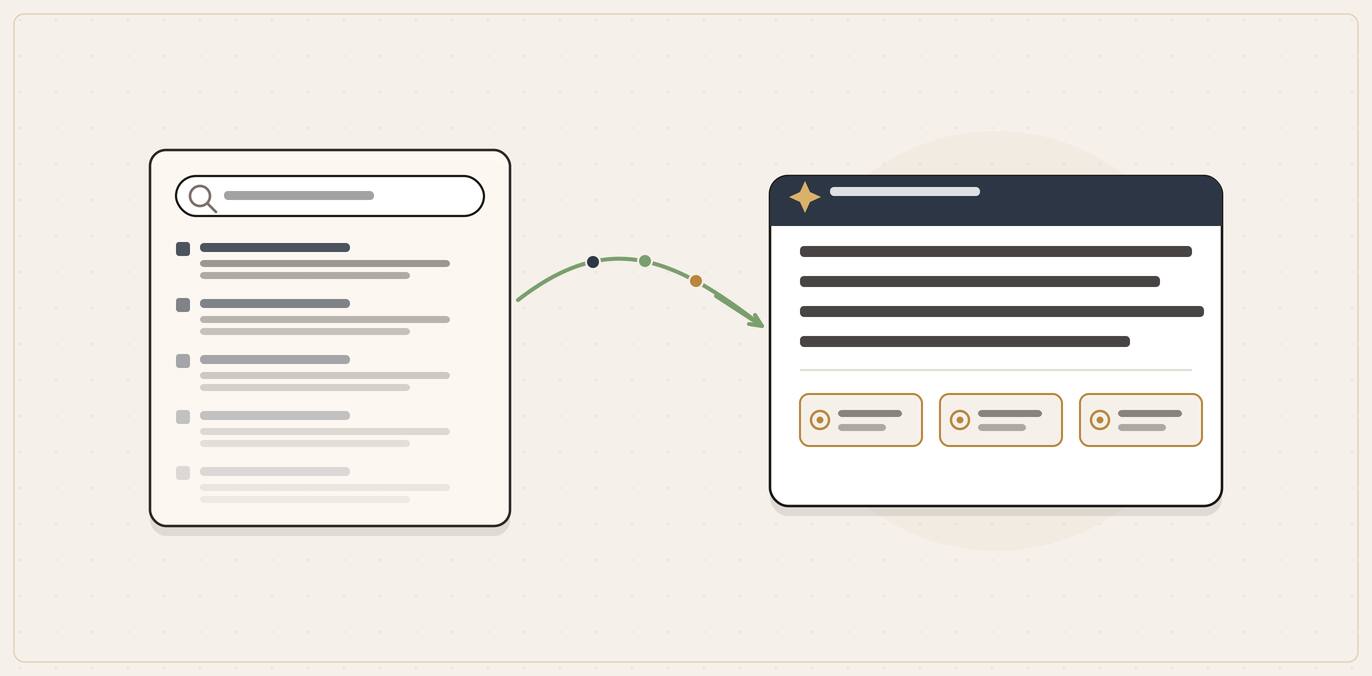
No, SEO is not dead. The work that helps search engines find, read and trust your site still matters, and AI answer engines rely on the same signals. What has changed is the reward: ranking well no longer guarantees a click, because AI answers now satisfy many searches on the page. The fix is not to abandon SEO but to add a layer on top of it, Answer Engine Optimisation, so your business gets named inside those AI answers rather than only listed in the links below them.
Key takeaways
- SEO is not dead, its reward has changed. Ranking used to earn a click; increasingly it earns a citation inside an answer the searcher reads without clicking.
- AI answers are common but not everywhere. Semrush found AI Overviews settled at around 16% of queries in 2025, so most searches still return the familiar list of links.
- When an AI answer does appear, clicks fall sharply. Ahrefs measured a 34.5% lower average clickthrough rate for the top-ranking page on keywords with an AI Overview.
- The AI reads sources, it does not invent answers. Getting your page into the trusted, readable set of pages an engine cites is largely the same discipline SEO has always practised.
- Add AEO on top, do not replace SEO. Keep the foundations healthy, make pages quotable, check what each engine says about you, and tend reviews and listings across the wider web.
If you have spent real money and years of effort on SEO, the headlines this year have probably made you wince. "SEO is dead." "AI killed search." "Google traffic is collapsing." When you have invested in something that is now being declared finished, the worry is fair and worth taking seriously.
So here is the straight answer, before the detail: no, SEO is not dead. What has happened is narrower and more useful to understand. The thing SEO has always done, helping search engines find, read and trust your website, still matters, and in some ways matters more than ever. What has changed is what happens after the search engine understands your site. The reward used to be a click. Increasingly, the reward is being named in an answer that a person reads without clicking anything.
That single shift explains almost every "SEO is dead" headline you have seen. It also explains why those headlines are misleading. The groundwork you have paid for is not wasted. It is the foundation that a newer layer, getting recommended inside AI answers, is built on top of. This guide explains what has actually changed, what the independent data shows, which parts of SEO still earn their keep, and the specific things to add so your business shows up in the way customers now search.
Where the "SEO is dead" panic comes from
Something real sits behind the panic, and it is worth naming plainly so you can separate the genuine change from the hype.
For twenty years, the deal with search was simple. You made your website good and relevant, Google ranked it, and people clicked through to you. The whole industry of SEO existed to win that click. Ranking and traffic were nearly the same thing.
Two changes have loosened that link between ranking and traffic.
First, Google now answers many searches directly, at the top of the page, with an AI summary. The person reads the answer and often never scrolls to the links beneath it. Second, a growing number of people skip Google for some questions entirely and ask ChatGPT, Perplexity or Copilot, which reply in a paragraph rather than a list of ten blue links.
In both cases the search still happens. The answer still gets delivered. But the click you used to earn off the back of ranking well does not always follow. That is the real change, and it is why "SEO is dead" resonates with anyone watching their traffic graph soften. The mistake is in the conclusion, not the observation. Fewer clicks from a given ranking does not mean ranking is worthless. It means ranking now does a slightly different job, and there is a second job to do alongside it.
What the independent data actually shows
Frightening numbers about the death of search are easy to find, often from people with something to sell. Here is the measured version, from sources that have no product to push.
The measured version
What the independent data actually shows
16%
of queries showed an AI Overview once it settled in 2025; most searches still return the familiar links
34.5%
lower click-through to the top result when an AI Overview appears, across 300,000 keywords
10%
increase in Google usage for the query types that show AI Overviews (Google, May 2025)
300,000
keywords in the Ahrefs sample that measured the click-through drop
Semrush AI Overviews Study; Ahrefs (300,000 keywords); Google (May 2025).
AI answers are common, but they are not everywhere. Semrush tracked more than 10 million keywords across 2025 alongside Datos clickstream data. AI Overviews appeared for 6.49% of tracked queries in January 2025, rose to 24.61% in July, then settled back to 15.69% by November, "settling in at around 16% of all queries" (Semrush AI Overviews Study)[1]. In other words, an AI answer now sits on roughly one in six searches, but the majority still return the familiar list of links. The old results page has not vanished. It has gained a new top section that appears on some queries and not others.
When the AI does answer, clicks drop sharply. This is the part that hurts. Across a sample of 300,000 keywords, Ahrefs found that the presence of an AI Overview correlated with a 34.5% lower average clickthrough rate for the top-ranking page, against similar informational keywords with no AI Overview (Ahrefs, 2025)[2]. So on the searches where an AI answer shows up, your ranking earns you far fewer clicks than it used to. This is the genuine grain of truth inside the "SEO is dead" headline.
But the AI does not invent its answer. It reads sources. Here is the detail the doom headlines skip. Semrush's separate AI-visibility study, analysing ChatGPT and Google AI Mode across five industries, found that "AI models trust community-edited sources more than official brand marketing, with Wikipedia and Reddit consistently outranking corporate websites across all industries" (Semrush AI Visibility Study)[3]. The AI answer is built from web pages it can find, read and trust. Getting your page into that set of trusted, readable, citable sources is, in large part, the same discipline SEO has always practised. The reward has changed from a click to a citation. The work that earns it has not changed nearly as much.
One more point worth holding onto, this time from Google itself. Far from declaring search over, Google reports that in its biggest markets, the US and India, AI Overviews is "driving over 10% increase in usage of Google for the types of queries that show AI Overviews" (Google, May 2025)[4]. Take that with the usual caution, because it is the platform describing its own product, but the direction is telling: the company at the centre of this is reporting that people are searching more, not less. Search is not dying so much as changing shape.
What SEO still does, and does well
The parts of SEO that were really about helping a customer were always going to survive, because AI engines need the same things a search engine does. Here is what still earns its keep.
Being findable and readable by machines. An AI engine cannot recommend a page it cannot read. The technical SEO basics, a site that loads, pages a crawler can reach, clean structure, content that is present in the actual page rather than hidden behind scripts, are now the price of entry for AI visibility too. If anything, this groundwork matters more, because there are now more machines reading your site, not fewer.
Clear, well-structured pages. The on-page habits that good SEO taught, a descriptive page title, sensible headings, answering the question the page is about plainly and early, are exactly what makes a page easy for an AI to quote. A page written to be understood by a person skim-reading is also a page an answer engine can lift a clean fact from.
Structured data and schema. Marking up your key facts, your address, opening hours, services, prices, reviews, in the background code of your site has always helped search engines understand you with less guesswork. That same clarity helps AI engines pull the right details into an answer. This is the clearest example of an old SEO practice quietly becoming an AI-visibility practice. It was good housekeeping before. It is good housekeeping now, for a wider audience of readers.
Local SEO signals. For any business serving a town or area, the local SEO staples, a complete and accurate Google Business Profile, consistent name, address and phone number across the web, genuine reviews, were never only about Google rankings. They are signals about who you are and where you operate, and AI engines lean on exactly these signals when someone asks for a recommendation near them.
Authority and reputation. SEO has long held that trustworthy, well-regarded sites get rewarded. AI engines are, if anything, more reliant on that, because they are choosing which handful of sources to build an answer from. The reviews, mentions and links that built your search authority are the same things that make an AI engine confident enough to name you.
Read that list again and the theme is hard to miss. Almost everything SEO did to serve a real customer still applies. The practices that are fading are the ones that were only ever about gaming a ranking, never about helping anyone.
What has genuinely changed, and what to add
So if the foundations hold, what is actually new? Three things, and they are where the newer work, Answer Engine Optimisation (AEO), lives.
The goal has shifted from ranking to being named. It is now entirely possible to rank well and still be invisible in the answer, because the AI summarised two or three other sources and never mentioned you. The new target is to be one of the businesses the answer names, not merely one of the links below it. That depends on the wider web's view of you, your reviews, listings and mentions, as much as on your own page.
Your real reach will be wider than the traffic figure suggests. You can be named in answers all day and watch your visitor numbers fall, because the customer got what they needed without clicking. Lean on traffic alone as your scorecard and it will tell you the wrong story more often. The enquiry that begins "ChatGPT said you handle commercial leases" never appeared as a click in your analytics.
There is a second front beyond Google. Classic SEO optimised for one place: Google's results. Now a meaningful share of questions are asked inside ChatGPT, Perplexity and Copilot, each of which decides what to say about you from its own reading of the web. Being strong on Google no longer guarantees you are present in those answers. It is worth checking each of them directly, because a top Google ranking can sit alongside total silence in ChatGPT. We cover that gap in detail in why a No.1 Google ranking means nothing in ChatGPT.
None of this replaces SEO; it extends it. AEO is the layer that takes a well-built, findable, trustworthy site, the thing good SEO produces, and works on getting it named inside AI answers. You do the SEO groundwork so the AI can read and trust you, then you add the AEO work so it actually recommends you. If the acronyms are starting to blur, AEO vs GEO vs SEO explained lays out what each one means and which to care about.
SEO vs AEO: the same foundations, a new finish
It helps to see the two side by side, because the overlap is larger than the headlines suggest.
Side by side
SEO vs AEO: the same foundations, a new finish
| Classic SEO | AEO (the layer to add) | |
|---|---|---|
| Main goal | Rank in the list of links | Be named inside the AI answer |
| Reward | A click to your site | A citation or recommendation, often with no click |
| Where it plays out | Google's results page | Google AI summaries, ChatGPT, Perplexity, Copilot |
| Key signals | Readable site, good content, links, reviews, local profile | The same, plus how the wider web describes you and how quotable your pages are |
| How you measure it | Rankings and traffic | Whether you are named, plus enquiries and "how did you hear about us" |
Look at the "key signals" row. The AEO column is mostly the SEO column with a little added. That is the whole point. The work you have already paid for is not stranded. It is the base that the newer layer stands on. A business with no SEO foundation, no readable site, no reviews, no consistent listings, has nothing for an AI engine to find and trust. A business that did its SEO well is most of the way there, and the remaining distance is AEO.
New to the term AEO? Answer Engine Optimisation explained is the from-scratch walkthrough.
A practical plan: keep the SEO, add the AEO
Here is the version you can act on without tearing anything down. It protects your existing SEO investment and builds on it.
Keep the SEO, add the AEO
A practical plan you can act on
SEO foundations
A fast, readable site, a complete Google Business Profile and consistent details now serve both goals.
Quotable pages
Open with the answer and the facts a buyer needs, so the engines can lift a clean fact.
What the AI says
Ask each engine your customers' questions and note whether your ranking strength reaches the answer.
The wider web
Gather recent reviews, complete every relevant listing, and earn genuine mentions where customers gather.
1. Keep the SEO foundations in good order
Do not stop the basics because of a headline. Keep your site fast and readable, keep your content clear and genuinely useful, keep your Google Business Profile complete, keep gathering reviews, keep your name, address and phone consistent everywhere. All of this now serves a double duty: it helps you rank, and it helps AI engines find and trust you. Letting it slide to chase the new thing would be the real mistake.
2. Make your key pages answer the question directly
The engines quote clean facts, so put clean facts where they can find them. Give your key pages the facts a buyer needs up front: what you do, the price or range, the timescale, the area you serve, your credentials. Open with the answer; save the brand story for later. Compare "two-person team, average three-bed move within Leeds, from £450, same-week slots" with "your trusted moving partner": the first is quotable, the second is not. That is on-page SEO and AEO doing the same job at once.
3. Tidy up your structured data
If your site does not already mark up the essentials, your business name, address, hours, services, prices and reviews, in the background, this is a high-value, low-drama job for whoever maintains your site. It removes guesswork for both search engines and AI engines, and makes the right facts easy to surface in an answer.
4. Check what the AI engines say about you
Spend twenty minutes as your own customer. Put the real prospect's questions to each engine in turn: ask ChatGPT, Google's AI Mode and Perplexity for "best [your service] in [your town]", then "who should I use for [the job]", then "[your trade] near me". Jot down which firms are named and what the reply is built on. Run it on a few separate days, since the reply shifts over time. Doing this is free, and it tells you whether your SEO strength is translating into AI visibility or stopping at the Google results page.
5. Change what you measure
Add the numbers that still tell the truth alongside your rankings: enquiries and calls, how people say they found you (just ask, every time), whether you are named when you test the AI engines, and reviews gained. Fewer clicks while enquiries hold or climb is not a problem to solve. It is search taking a new shape and still going your way.
6. Tend the wider web, not just your own site
Because the AI's recommendation draws on what the whole web says about you, gather recent reviews across more than one platform, claim and complete every relevant listing and directory, and earn genuine mentions where your customers gather. This is the part that is more AEO than classic SEO, and it is where the businesses that adapt will pull ahead.
Common mistakes when reacting to "SEO is dead"
- Cancelling your SEO work in a panic. The foundations SEO built are what AI visibility now stands on. Tearing them up to chase the new thing leaves you with nothing for an AI engine to read or trust.
- Assuming a good Google ranking covers AI too. It does not. Ranking first on Google and being unnamed in ChatGPT is a real and common place to be. Check each engine directly.
- Judging everything by traffic. A click and a customer have come apart; one no longer implies the other. Watch enquiries and AI mentions, not just visits.
- Blocking AI crawlers in the hope of defending your click count. Making yourself invisible to AI tools does not bring the clicks back. It just removes you from the answers your competitors still appear in.
- Chasing thin content to win clicks back. More mediocre pages will not beat the AI answer. The pages that get quoted are the fewer, clearer, genuinely useful ones.
- Treating SEO and AEO as rivals. They are not either/or. AEO is the layer you add on top of solid SEO, not a replacement for it.
Do this instead
The mistakes turned into a checklist
Keep the SEO foundations.They are what AI visibility now stands on; do not cut them in a panic.
Check every engine directly.A first-place Google ranking can sit alongside total silence in ChatGPT.
Measure enquiries, not just traffic.A click and a customer have come apart, so watch calls, enquiries and AI mentions.
Stay readable to AI crawlers.Blocking them does not bring the clicks back; it removes you from answers rivals still appear in.
Write fewer, clearer pages.More mediocre content will not beat the AI answer; the pages that get quoted are the genuinely useful ones.
Frequently asked questions
Is SEO actually dead?
No. The technical and on-page work that helps search engines find, read and trust your site still matters, and AI engines need the same things. What has changed is that ranking well no longer guarantees a click, because AI answers often satisfy the searcher on the spot. The fix is to add AEO, getting named inside those answers, on top of your existing SEO, not to abandon SEO.
What is the difference between SEO and AEO?
SEO aims to rank your page in the list of links and earn a click. AEO aims to get your business named inside an AI answer, which often happens without any click at all. They share most of the same foundations, a readable site, good content, reviews, consistent listings, so AEO is best thought of as a layer added on top of SEO rather than a separate discipline.
Does SEO still work with AI search?
Yes, and it underpins it. AI engines build their answers from web pages they can find and trust, and Semrush's AI-visibility study found that community-edited and well-structured sources are what these engines cite most. The SEO work that makes your page findable and trustworthy is exactly what gets it into that set of sources. The reward has shifted from a click to a citation, but the work that earns it is largely the same.
Should I stop investing in SEO and put everything into AI?
No. The two are not separate budgets fighting each other. Keep your SEO foundations healthy, because they serve both Google rankings and AI visibility, then add the AEO work (checking the AI engines, making pages quotable, tending reviews and listings). A business with no SEO base has nothing for an AI engine to recommend.
How do I know if my SEO is translating into AI visibility?
Test it. Ask ChatGPT, Google's AI Mode and Perplexity the questions your customers would ask and see whether you are named. If you rank well on Google but no AI engine mentions you, that gap is exactly what AEO is for.
Are AI answers actually replacing Google search?
Not replacing it, reshaping it. Google itself reports that in its biggest markets AI Overviews are driving over a 10% increase in usage for the query types that show them, so people are searching more, not less. Treat that figure with caution because it is the platform describing its own product, but the direction is clear: the results page has gained an AI answer section on some queries rather than disappearing.
Should I block AI crawlers to protect my traffic?
No. Shutting AI crawlers out will not win back the clicks you have lost; it only drops you from answers where your competitors still turn up. If a searcher gets their answer from ChatGPT or an AI Overview and you have opted out of being read, you are absent from the recommendation while everyone else is present. Staying readable is what keeps you eligible to be named.
Does keyword-focused SEO still work in the age of AI search?
The mechanical, ranking-gaming end of it matters less; the customer-serving end matters as much as ever. Stuffing pages to win a position was always fragile and adds nothing an AI engine wants to quote. Writing a clear page that answers a real question plainly, with the facts a buyer needs up front, is exactly what makes it both rank and get cited. Focus on the question behind the keyword, not the keyword count.
How long does it take to show up in AI answers?
It varies, and a fixed number would mislead more than it helps. If your SEO foundations are already solid, gains in Google AI Overviews can follow fairly quickly because they build on content that already ranks. Being named in ChatGPT tends to take longer, because it depends on how the wider web describes you: reviews, listings, mentions and consistent business details that accumulate over months rather than days.
Do I still need a website if AI answers the question for people?
Yes. The website is what the AI reads to decide whether to name you, so removing it removes the source the answer is built from. Even when a searcher never clicks through, an engine still needs a clear, readable page, consistent listings and genuine reviews to recommend you with any confidence. A business with no site gives the AI nothing to cite, and a competitor with a solid one gets named instead.
Where to start
SEO is not dead. The headline is a blunt summary of a sharper truth: ranking well no longer automatically earns the click, because so many searches are now answered on the spot. Your SEO investment is not wasted by this. It is the foundation the next layer is built on. The businesses that come out ahead are the ones that keep their SEO foundations in good order and add the AEO work of getting named inside AI answers, while their competitors either panic and cut everything or carry on as if nothing changed.
Serving a specific town or patch? The local side is the natural next read: Answer Engine Optimisation for Local Businesses covers the signals that decide a local answer, from your Business Profile to the way engines read a "near me" search. And if you want to understand the wider shift from clicks to answers, the zero-click search era explains what it means when AI answers instead of linking.
When you want to see exactly where you stand, which questions name you, which name your competitors, and whether your SEO strength is reaching the AI answers at all, that is what a QBiz AI Visibility audit does. We test what the engines say about you today, separate the SEO foundations that still earn their keep from the AEO gaps that don't, and hand you a ranked plan. It is the clearest way to turn the vague worry that "SEO is dead" into a concrete plan for what to keep, what to add, and what to fix first.
Get your AI Visibility audit →
Sources
- [1] Semrush, "Semrush AI Overviews Study," refreshed 2025: https://www.semrush.com/blog/semrush-ai-overviews-study/ (independent; 10M+ keywords plus Datos clickstream; AI Overview share 6.49% in January, 24.61% in July, 15.69% in November 2025, "settling in at around 16% of all queries")
- [2] Ahrefs, "AI Overviews Reduce Clicks by 34.5%," 2025: https://ahrefs.com/blog/ai-overviews-reduce-clicks/ (independent; 300,000 keywords, 150,000 with an AI Overview and 150,000 informational without; presence of an AI Overview correlated with a 34.5% lower average clickthrough rate for the top-ranking page; position-one CTR on AI Overview keywords fell from 0.073 in March 2024 to 0.026 in March 2025)
- [3] Semrush, "How AI Search Really Works: Findings from Our AI Visibility Study," 2025: https://www.semrush.com/blog/ai-search-visibility-study-findings/ (independent; search prompts across finance, digital technology, business services, consumer electronics and fashion on ChatGPT and Google AI Mode; "AI models trust community-edited sources more than official brand marketing, with Wikipedia and Reddit consistently outranking corporate websites across all industries")
- [4] Google, "AI in Search: Going beyond information to intelligence," 20 May 2025: https://blog.google/products/search/google-search-ai-mode-update/ (vendor / platform; Google states that in its biggest markets, the US and India, AI Overviews is "driving over 10% increase in usage of Google for the types of queries that show AI Overviews"; used here as the platform's own description of search usage, not as independent data)
Leave a comment
Thoughts on this post? Leave a comment below. Comments are moderated before they appear, so yours will not show on the page straight away.
Your email is used only to contact you about your comment if needed — it is never published.
Comments
No comments yet. Be the first to leave one above.