How to Get Your Business Recommended by ChatGPT (A Practical Guide)
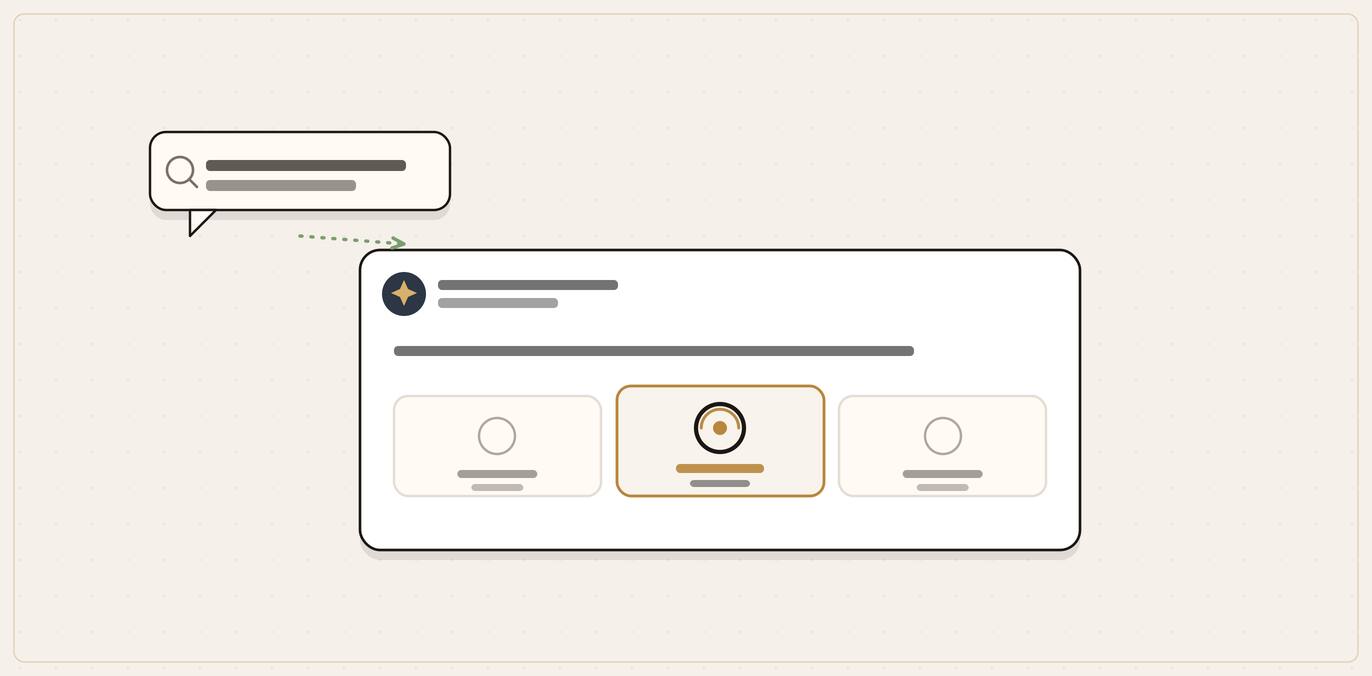
ChatGPT recommends the businesses it can most confidently verify from the open web. To become one of them: publish clear service and area pages that answer the broad opening question in plain words, appear accurately on your sector's recognised registers and directories, gather recent genuine reviews, and get into the cluster of sources ChatGPT already trusts for your trade and town. There is no paid slot: a mention is earned, not bought.
Quick answer
- You cannot pay for it. No advertising slot exists inside an organic ChatGPT recommendation; the mention is earned from sources ChatGPT trusts.
- Win the opening question. ChatGPT searches on the broad first question, so your service and area pages need to answer it plainly, in the words customers use.
- Be the source after Wikipedia. Supply the specific, current, local detail an encyclopaedia entry cannot hold: prices, response times, accreditations, areas covered.
- Build off-site trust. Recent reviews, your sector's registers and directories, and a genuine community presence carry most of the signal, not your website alone.
- Join your citation cluster. Ask ChatGPT your customers' questions, note which sources it cites, and make sure you appear accurately across that group.
You have probably already done the test. You opened ChatGPT, typed "best [your service] in [your town]", and watched it name two or three businesses that were not you. It felt like being left off a guest list you did not know existed.
That list matters now in a way it did not a year ago. OpenAI reported ChatGPT had passed 400 million weekly users in February 2025, up about a third from 300 million the previous December (CNBC, February 2025)[1]. A large and growing number of those people are asking it the kind of question that used to start with a Google search and a scroll through reviews. When ChatGPT answers, it names a few businesses and stops. Being one of the named is the entire game.
The good news is that getting named is not random and it is not for sale. It follows patterns you can work with. This guide explains how ChatGPT actually decides who to recommend, then gives you a concrete, plain-English workflow to become one of its answers. For the wider picture across every AI engine, start with our complete guide to Answer Engine Optimisation for local businesses; for how the different engines compare, see how each AI engine picks its sources. This guide is ChatGPT specifically.
First, a myth to kill: you cannot pay to appear
There is no advertising slot inside an organic ChatGPT recommendation. You cannot buy your way into the answer, and anyone who promises guaranteed ChatGPT placement for a fee is selling something that does not exist. ChatGPT builds its answer from sources it trusts on the open web. Your job is to become one of those trusted sources. That is earned, not bought, which is good news for any business willing to do the genuine work while competitors look for a shortcut that is not there.
The myth
Can you pay to appear in ChatGPT?
Ask
Is there an advertising slot inside an organic ChatGPT recommendation?
You earn the mention
ChatGPT builds its answer from sources it trusts; clear pages, recent reviews and accurate listings get you into that pool.
You cannot buy it
No paid placement exists; anyone promising guaranteed ChatGPT placement for a fee is selling something that does not exist.
How ChatGPT decides who to recommend
When ChatGPT answers a question that needs current information, it searches the web, reads a set of sources, and writes its reply from them. OpenAI's own help documentation describes the mechanism: ChatGPT "rewrites your query into one or more targeted queries", and uses your general location to sharpen the result, so that "good restaurants near me" quietly turns into a search tied to your city (OpenAI Help Center, ChatGPT Search)[2]. Two things follow from that. Your town usually survives the rewrite, which favours local businesses. And whether you appear depends on whether you are in the sources it pulls.
Why the answer matters
How much rides on being one of the named
400M
weekly ChatGPT users by February 2025, up about a third from 300 million
18%
of conversations trigger a web search, almost always on the opening question
12.6%
citation rate on the first message, falling to 3.0% by the twentieth
88%
of cited URLs come straight from standard search results, so ranking still feeds the answer
CNBC (Feb 2025); Profound (vendor research); Ahrefs (1.4M prompts).
Three findings from recent large-scale studies of ChatGPT's citations shape everything you should do. Each points the same way: win the opening question, be the source Wikipedia cannot replace, and get into the group of sources ChatGPT already trusts.
Finding 1: the first question is everything
ChatGPT does not search the web on every message. An analysis by Profound of ChatGPT conversations that carried web citations found that about 18% of conversations triggered at least one web search, and that search almost always happened on the opening question. The first message in a conversation carried citations 12.6% of the time; by the tenth message that had fallen to 4.5%, and by the twentieth to 3.0%.
Put plainly, the opening question was about 2.5 times more likely to trigger citations than the tenth, and nearly four times more likely than the twentieth (Profound, How ChatGPT sources the web, 2026)[3]. Profound sells AI-visibility software, so treat the figures as vendor research; the turn-by-turn pattern is its own original analysis.
What this changes: people get recommendations on their opening question ("who's a good electrician in Leeds?"), not on follow-up clarifications. You need to be the answer to the question that starts someone's search, the broad opener, not the niche detail they drill into afterwards.
Finding 2: Wikipedia is the default, and you go after it
ChatGPT reaches for a baseline of established knowledge before anything else. A Semrush study that tracked more than 100 million AI citations in weekly snapshots from July to October 2025 found that, even after a sharp mid-September drop in how often ChatGPT leaned on them, "Reddit and Wikipedia are still ChatGPT's two most-cited domains" (Semrush, The Most-Cited Domains in AI, 2025)[4].
The lesson is not "get a Wikipedia page". A single-location business almost never will, and chasing one wastes effort. The lesson is to be the source ChatGPT reaches for after Wikipedia: the place with the specific, current, local detail an encyclopaedia entry cannot hold. Wikipedia can say what a chartered surveyor is; it cannot say which surveyor in your town does party-wall work and has recent five-star reviews. That gap is yours to fill.
Finding 3: sources travel in packs
ChatGPT rarely crowns a single winner. Ahrefs analysed 1.4 million ChatGPT prompts and found that it "retrieves dozens of URLs to answer a single query" and cites only about half of them, so a typical answer draws on many sources at once, with competitors named side by side (Ahrefs, Why ChatGPT Cites One Page Over Another)[5]. The same study found that 88% of the URLs ChatGPT cites come straight from standard search results, so the old task of ranking still feeds the new one: to be in the pool ChatGPT picks from, your content has to rank.
The lesson: you are not trying to be the only answer, you are trying to get into the cluster of sources ChatGPT already trusts for your kind of question. Know which directories, review sites and local authorities tend to appear together for your trade and town, and make sure you are present and accurate across that group, not just on your own website.
The workflow: how to become a ChatGPT answer
Here are the steps, ordered by impact. The first three carry most of the weight for a typical local business.
The path in
How a business becomes a ChatGPT answer
Standard search
Get your service and area pages ranking in ordinary search; that is the pool ChatGPT pulls from.
Trusted mentions
Appear accurately on your sector's registers, gather recent reviews, and join genuine communities.
Quotable facts
Put prices, response times and accreditations in plain words an encyclopaedia entry cannot supply.
Into the answer
ChatGPT cites sources in packs; be in the cluster it already trusts for your trade and town.
Step 1: Own the opening question on your own pages
Because ChatGPT searches on the broad opening question, your website needs pages that are those questions, in the words customers use.
- Write a dedicated page for each core service, named the way people ask ("emergency boiler repair", not "thermal solutions"), and a real page for each area you cover, not a single combined list.
- Put the practical facts on the page: prices or ranges, response times, qualifications, accreditations, areas served, opening hours, what is included. These are the specifics ChatGPT wants and Wikipedia cannot supply.
- Phrase headings as the questions themselves: "How much does a new boiler cost in Sheffield?", "Do you cover [district]?", "How fast can you come out?" A page that answers the opening question plainly is a page ChatGPT can quote.
Step 2: Become the source after Wikipedia, off your own site
ChatGPT trusts authoritative and established sources. You cannot be Wikipedia, but you can be present and accurate on the sources that sit alongside it for your sector:
- Your sector's recognised bodies and registers. The official register for your profession, the accreditation scheme for your trade, the "find a member" directory of your industry association. These carry exactly the authoritative weight ChatGPT favours, and unlike Wikipedia, you can actually appear on them.
- Established local and trade press. A landscaper quoted in a regional paper's spring-garden feature, or a chartered accountant writing a short column for a county business magazine, becomes the kind of editorial source ChatGPT cites. Our guide to digital PR for AI visibility covers how to earn that coverage.
- High-quality sector directories, accurate and consistent with your website. Avoid spammy link-farm directories; favour the few that genuinely matter in your field.
Step 3: Build steady, recent reviews and an active Reddit presence
Reddit was ChatGPT's second most-cited source, and reviews underpin trust everywhere. Both are within your reach.
- Reviews: ask every satisfied customer, keep them recent, and spread them across the platforms that matter in your trade, starting with Google. Reply to them, good and bad. Never buy fake reviews: it is transparent, increasingly illegal, and the engines and platforms both remove them.
- Reddit, the right way: find the subreddits where your customers actually gather (local city subreddits, trade and hobby communities) and be a genuinely helpful voice. Answer real questions, disclose who you are, and never plant fake recommendations of your own business. Astroturfing is obvious to readers and to the engine, and it backfires. The aim is to be a real, useful participant who happens to be an expert, so that when someone asks for a recommendation, real people name you.
Step 4: Join your citation cluster
Since ChatGPT cites sources in packs, find your pack and get into it.
- Ask ChatGPT the questions your customers ask and note which sources it cites alongside the businesses it names, not just the names. Those sources are your cluster.
- Make sure you appear, accurately, on those specific directories, review sites and local pages. If three competitors all show up via the same regional directory and you are not on it, that is a concrete gap to close.
- Look at who gets named alongside you (or alongside the slot you want) and check what they have that you do not: more recent reviews, a complete profile, a clearer service page, a mention in the local press.
Step 5: Make sure ChatGPT can actually read your site
If your builder paints the text with JavaScript and the crawler skips scripts, ChatGPT lands on a near-empty page, and everything above is undermined. Our JavaScript guide walks through a two-minute version of this check. It is worth ruling out early.
Step 6: Keep every fact identical everywhere
Your name, address, phone number and core services should match exactly across your website, your Google Business Profile, every directory and every listing. ChatGPT is assembling a confident picture of who you are. Contradictory details (an old address here, a different phone there) make it less sure, and a less sure engine is less likely to put your name in an answer.
How to check your progress (free)
You do not need a paid tool to start measuring.
- Open ChatGPT and ask the questions a real customer would: "best [your service] in [your town]", "who should I call for [problem] in [area]?", "[your trade] near me for [job]". Ask them as opening questions, since that is when ChatGPT searches.
- Note whether you are named, who is named instead, and which sources the answer cites.
- Run it a few times: ChatGPT's answers shift, so the trend across several tries matters more than any one reply.
- Track it monthly. As you complete the steps above, you should see yourself appearing more often, and the cited sources shifting towards ones you are on.
Our tracking guide covers the free method in full and when a paid tool is worth it.
Common mistakes that keep you out of ChatGPT
- Optimising for the niche follow-up instead of the broad opener. ChatGPT searches on the first question; win that one.
- Trying to out-Wikipedia Wikipedia. Be the specific, local, current source that comes after it.
- Treating it as a website-only job. Most of the trust signals ChatGPT reads (reviews, directories, sector bodies, Reddit) live off your own site.
- Faking reviews or Reddit posts. Transparent, counterproductive, and increasingly unlawful.
- A site ChatGPT cannot read because the content loads only in a browser.
- Inconsistent details across the web, which quietly lower how confident ChatGPT is about you.
- Assuming a Google ranking is enough. Being first on Google and being named in ChatGPT are now two separate jobs, as our guide on why a No.1 Google ranking means nothing in ChatGPT explains.
Do this instead
The mistakes turned into a checklist
Win the opening question.ChatGPT searches on the first, broad question, so make your service and area pages answer it plainly.
Be the source after Wikipedia.Supply the specific, current, local detail an encyclopaedia entry cannot hold.
Work off-site, not just your website.Reviews, directories, sector bodies and Reddit carry most of the trust ChatGPT reads.
Keep it genuine.Never fake reviews or Reddit posts; it is transparent, counterproductive and increasingly unlawful.
Keep every fact identical.Matching name, address, phone and services everywhere raises how sure ChatGPT is about you.
Frequently asked questions
Can I pay to get my business into ChatGPT?
No. There is no advertising slot inside an organic ChatGPT recommendation. You earn a mention by being a trusted source on the web: clear pages, recent reviews, accurate listings on authoritative sites, genuine community presence. Anyone promising guaranteed placement for a fee should be treated with caution.
Why does ChatGPT never mention my business even though I rank on Google?
Because they are different systems. ChatGPT builds answers from sources it trusts, weighted towards established and authoritative pages, reviews and community discussion, not from Google's ranking. A first-place Google result does not guarantee a ChatGPT mention. The fix is to get into the sources ChatGPT actually reads.
How soon will ChatGPT start naming me?
Nothing happens on a set schedule, and the reply you get can differ from one day to the next. Completing your Google Business Profile, gathering recent reviews and tidying your service pages can shift things within weeks; building authoritative off-site presence is slower. Consistent, genuine signals win over shortcuts.
Does ChatGPT keep my location when it searches?
Usually, yes. OpenAI's help documentation explains that ChatGPT uses your general location to improve results, turning "good restaurants near me" into a city-specific query (OpenAI Help Center)[2]. Location is the signal it holds onto, which favours local businesses.
Do I really need to be on Reddit?
It helps, because Reddit is one of ChatGPT's most-cited sources. You do not have to post constantly, but being a genuine, helpful presence in the communities your customers use puts you in the source pool. The rule is to take part openly and never fake recommendations.
Is getting a Wikipedia page the answer?
No, and most local businesses will never qualify for one. The better goal is to be the specific, current, local source ChatGPT reaches for after Wikipedia, the detail an encyclopaedia entry cannot hold.
Does ChatGPT search the web every time someone asks it something?
No. It searches when a question needs current information, and that search almost always happens on the opening question of a conversation rather than the follow-ups. That is why winning the broad first question matters more than the niche detail someone drills into afterwards.
What kind of page should I write to get named by ChatGPT?
A dedicated page for each core service, named the way customers actually ask ("emergency boiler repair", not "thermal solutions"), and a genuine page for each area you cover. Put the practical facts on it: prices or ranges, response times, qualifications, areas served and opening hours. Those specifics are what ChatGPT can quote and Wikipedia cannot supply.
Does it matter if my business details differ across the web?
Yes. When your name, address, phone number and core services contradict each other across your website, Google Business Profile and directories, ChatGPT becomes less sure who you are, and a less sure engine is less likely to put your name in an answer. Keep every fact identical everywhere.
Can ChatGPT read my website if it is built with JavaScript?
Only if the crawler can see the content without running scripts. If your builder paints the text with JavaScript and the crawler skips it, ChatGPT lands on a near-empty page and everything else you have done is undermined. It is worth ruling this out early with a quick check.
Where to start
Pick three things this week: write or sharpen your main service and area pages so they answer the opening question plainly, ask your recent happy customers for reviews, and make sure you are listed accurately on your sector's recognised directory or register. Those three put you into the sources ChatGPT reads most.
If you would rather have this checked for you first, a free QBiz Leads AI visibility check scans your website in about thirty seconds and returns a clear pass or fail on the key signals that decide whether AI tools can find and recommend your business, turned into a ranked set of fixes.
If you would rather hire this out than run it yourself, see our guide to which agencies specialise in getting businesses recommended by ChatGPT, checked against each agency's own live site.
Get your AI Visibility audit →
Sources
- [1] CNBC, "OpenAI tops 400 million users despite DeepSeek's emergence," 20 February 2025: https://www.cnbc.com/2025/02/20/openai-tops-400-million-users-despite-deepseeks-emergence.html (independent; ChatGPT passed 400 million weekly users, up about 33% from 300 million in December 2024)
- [2] OpenAI Help Center, "ChatGPT Search": https://help.openai.com/en/articles/9237897-chatgpt-search (primary; ChatGPT rewrites a question into targeted queries and uses general location from IP address to sharpen results, e.g. "good restaurants near me" becomes a city-specific search)
- [3] Profound, "How ChatGPT sources the web," 2026: https://www.tryprofound.com/blog/chatgpt-citation-sources (vendor; Profound is an AI-visibility company. Turn 1 is 2.5x more likely to trigger citations than turn 10; about 18% of conversations trigger a web search; citation rate falls from 12.6% on the first message to 4.5% by the tenth and 3.0% by the twentieth)
- [4] Semrush, "The Most-Cited Domains in AI: A 3-Month Study," 2025: https://www.semrush.com/blog/most-cited-domains-ai/ (independent; 230,000+ prompts across ChatGPT, Google AI Mode and Perplexity in weekly snapshots 14 July to 12 October 2025, over 100 million AI citations; "Reddit and Wikipedia are still ChatGPT's two most-cited domains")
- [5] Ahrefs, "Why ChatGPT Cites One Page Over Another (Study of 1.4M Prompts)": https://ahrefs.com/blog/why-chatgpt-cites-pages/ (independent; 1.4 million ChatGPT prompts, February 2025; ChatGPT retrieves dozens of URLs per query and cites about 50%; 88% of cited URLs come from the standard "search" retrieval channel, so ranking still drives citation)
Leave a comment
Thoughts on this post? Leave a comment below. Comments are moderated before they appear, so yours will not show on the page straight away.
Your email is used only to contact you about your comment if needed — it is never published.
Comments
No comments yet. Be the first to leave one above.