Ranking No.1 on Google Won't Get You Into ChatGPT: Here's the Proof
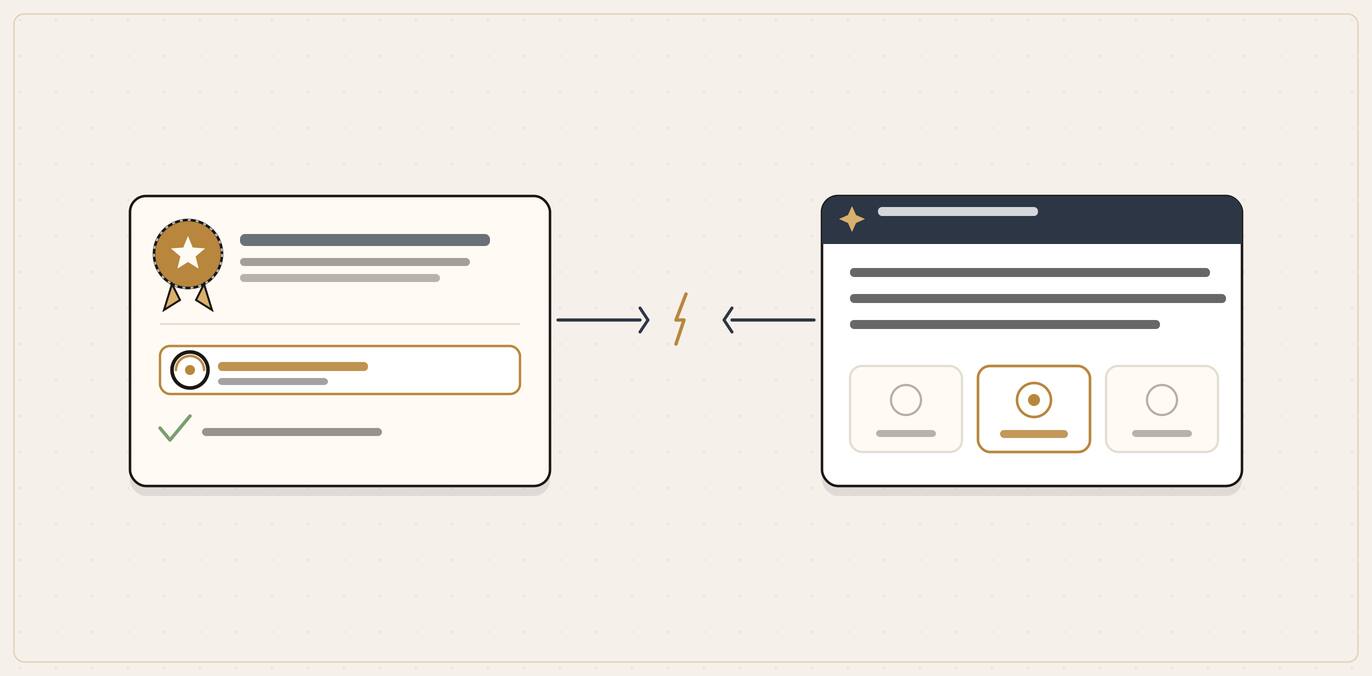
No. A number-one Google ranking does not carry over into ChatGPT. The two behave like separate search engines that pick winners by different rules: Google ranks authoritative pages, while ChatGPT assembles its answer from the most citable sources it can quote, which is often not the brand sitting top of Google. That is why the business at the top of the search results is frequently missing from the AI answer, and a competitor gets named instead. The way in is to earn it directly, by optimising for how AI engines choose sources (Answer Engine Optimisation), rather than waiting for your ranking to carry you.
You worked hard for that No.1 spot. The agency invoices, the months of waiting, the content calendar, all of it paid off, and now your business sits at the top of Google for the search that matters most to you.
So here is an uncomfortable question. Open ChatGPT, ask it the same question a customer would ask, and see whether your name comes up.
For a lot of businesses, it doesn't. The company sitting top of Google is nowhere in the AI answer. A competitor you have never heard of gets named instead. And the reason isn't bad luck or a glitch, it's that ChatGPT and Google are, for practical purposes, two different search engines that pick winners by different rules.
This is not a hunch. There is now hard data on how little a Google ranking and a ChatGPT citation have in common, and this guide walks through it: the evidence, why the gap exists, and what you can do about it.
The short version
- A top Google ranking and a ChatGPT recommendation barely overlap. When Ahrefs compared the 50 most-mentioned sites across Google's AI Overviews, ChatGPT and Perplexity, only 7 sites sat in the top 50 for all three.
- Even for the same query, these systems often cite completely different websites, because each one selects sources by its own rules rather than by Google's ranking order.
- Hundreds of millions of people now use ChatGPT every week, and most of its answers pull live information from the web. This is no longer a fringe channel.
- Meanwhile, Google's own AI answers are quietly taking the clicks your ranking used to earn.
- The fix is not to abandon SEO. It is to optimise for how AI engines actually choose sources, a discipline called Answer Engine Optimisation (AEO).
"Surely if I'm top of Google, ChatGPT will follow"
It is a natural assumption. Google has been the front door to the internet for two decades, so if you have earned the top position there, it feels obvious that any other system reading the web would reach the same conclusion. The data says otherwise.
Ahrefs measured the overlap directly with its Brand Radar tool. It compared the 50 most-mentioned websites on Google's AI Overviews, ChatGPT and Perplexity across roughly 76.7 million AI Overviews, 957,000 ChatGPT prompts and 953,500 Perplexity prompts in June 2025, and found that only 7 websites sat in the top 50 for all three engines.[1]
Read that back slowly. Across millions of answers, the sites that dominate one engine are mostly absent from the top of another. As Ahrefs puts it, "even for the same queries, these systems may cite completely different websites."[1] A ranking that wins on Google is no promise of a mention anywhere else.
The engines also lean in different directions on the kind of source they favour. Ahrefs found Google's AI Overviews "lean towards the same top sites we're used to seeing in search results," heavy on authoritative and Google-owned properties, while ChatGPT "leans more on publishers and non-Google media" it holds licensing deals with, and Perplexity "pulls from a broader international corpus" of local and regional sources the others miss.[1] Three engines, three different shortlists, drawn from the same web.
That gap has a mechanical cause. When Ahrefs studied 1.4 million ChatGPT prompts, it found ChatGPT "retrieves dozens of URLs to answer a single query" but cites only about half of them, and 88% of the URLs it does cite come straight from standard search results.[2] Ranking still gets a page into the candidate pool, but a second filter then decides which of those pages actually earns the citation. Winning the first stage does not win the second.
The mechanism
How a page becomes a ChatGPT citation
The query
A user asks ChatGPT a question it needs the live web to answer.
Pull the candidates
It retrieves dozens of URLs, most drawn straight from standard search results.
Keep the citable ones
Only about half of the retrieved URLs make it into the answer.
Name the source
The clearest, most citable page earns the mention, whatever its Google position.
A fair objection: those studies span national and commercial queries, not "best plumber in Leeds" or "accountant for a small limited company". True. But the mechanism they expose, that AI retrieval rewards different content from Google ranking, is not specific to any one vertical. It is how these systems are built. Which is the next thing worth understanding.
Why the two engines disagree
Google and ChatGPT feel similar from the outside: you type a question, you get an answer. Underneath, they decide what to show you in fundamentally different ways.
Side by side
Why the two engines disagree
| Google AI Overviews | ChatGPT | |
|---|---|---|
| Sources it favours | The same top, authoritative and Google-owned sites you see in search | Publishers and non-Google media it holds licensing with |
| Role of your ranking | Closely tied to your existing search position | Ranking gets a page into the pool, but only about half of retrieved URLs are cited |
| What wins the citation | A strong classic ranking still carries weight | A citable, specific answer the engine can lift a clear fact from |
Google ranks pages. ChatGPT assembles an answer. Google's job, historically, has been to hand you a ranked list of links and let you choose. Its signals reward pages that earn authority for a keyword: backlinks, on-page relevance, a strong domain. The brand that has invested in SEO for years tends to win.
ChatGPT, by contrast, retrieves and summarises. When it answers a live question, it pulls in text from the web, picks the passages it can most usefully quote, and writes them into a single reply. It isn't looking for the most "authoritative" homepage. It is looking for the most citable content: clear, specific, well-structured text that answers the exact question. That often means a thorough third-party review or a detailed explainer, not a polished brand page that is light on substance.
You can see the preference in what gets cited. When Ahrefs examined 26,283 cited URLs, "best of" list pages made up 43.8% of the page types ChatGPT drew from, and 79.1% of those lists had been refreshed during 2025.[7] That is a study of cited page types rather than a ranking factor, but the pattern is telling: a current, comparison-style page that names businesses tends to be more quotable than a static homepage, which is exactly the sort of source a No.1 ranking rarely lives on.
This matters more every month because of how much ChatGPT now leans on the live web. By OpenAI's own account, ChatGPT passed 400 million weekly active users in February 2025, up 33% from 300 million that December (source: CNBC, February 2025)[3]. And Ahrefs's citation study confirms how much of the answer is stitched from live search: 88% of the URLs ChatGPT cites come straight from standard search results.[2] A large and growing share of people are asking ChatGPT questions you used to win on Google, and most of those answers are built from live web sources, just not the same sources Google ranks.
There is a second engine quietly changing the rules, too: Google itself. Google's "AI Mode" breaks a single question into many sub-questions behind the scenes, a technique Google calls query fan-out, "breaking down your question into subtopics and issuing a multitude of queries simultaneously on your behalf" (source: Google, "AI in Search", May 2025)[6]. One search now triggers a fan of searches, each pulling its own sources. Your page ranking for the head term is no longer the whole game; the answer is stitched together from whatever satisfies each branch of the question.
So you are not optimising for one ranking any more. You are trying to be the source that a summarising machine reaches for, across several engines that each choose differently.
The quiet cost: even your Google ranking earns fewer clicks now
Even if you ignore ChatGPT entirely, the value of that No.1 Google position is being eroded inside Google's own results page.
The proof
A Google ranking is no promise of a ChatGPT mention
7
of the 50 most-mentioned sites appear in the top 50 of Google AI Overviews, ChatGPT and Perplexity
88%
of the URLs ChatGPT cites come straight from standard search results
15.49%
average drop in click-through when a keyword starts triggering an AI Overview
Ahrefs Brand Radar and citation studies; Amsive CTR study, 2025
Amsive analysed 700,000 keywords across finance, education, SaaS, healthcare and pets, focusing on the terms that already ranked organically and then started triggering an AI Overview. The pattern is clear:
- Keywords that now trigger an AI Overview saw a 15.49% drop in click-through rate on average. The summary routinely takes a real share of the clicks the ranking used to earn.
- Non-branded queries, the ones where a searcher does not already know your name, were hit harder, down 19.98%. And pages ranking outside the top three positions fell furthest of all, down 27.04%.
Source: Amsive, "Google AI Overviews: New CTR Study", 2025.[4]
Amsive also found the worst case is an AI Overview stacked with a Featured Snippet: keywords that triggered both lost 37.04% of their click-through rate, because the two together crowd the entire page above the fold.
Read that back in terms of your own ranking. You can still be No.1. But if Google now answers the question above your link with its own summary, a growing share of searchers read the answer and never scroll to you. The ranking is intact; the traffic it used to guarantee is leaking away.
This is the real shape of the shift. It isn't that Google "died" and ChatGPT replaced it. It is that both the new engine and the old one increasingly hand the answer to the user directly, and in both cases, the businesses that get named are the ones whose content is built to be cited, not just ranked.
"So is SEO a waste of time now?"
No, and any vendor telling you to bin your SEO is overselling. Strong, well-structured content is exactly what AI engines reach for. A genuinely useful page that ranks on Google is a good foundation. The point is not that SEO stopped working; it is that SEO alone no longer covers the whole map. There is a second discipline sitting next to it now.
That discipline is Answer Engine Optimisation (AEO): getting your business cited and recommended by AI answer engines (ChatGPT, Google's AI summaries, Perplexity, Gemini and the rest). It overlaps with SEO in places and diverges sharply in others. Start with the full playbook in our complete local guide.
A few practical differences, drawn from how these engines actually behave:
- Write to be quoted, not just to rank. AI engines favour text they can lift cleanly into an answer: clear definitions, direct answers to specific questions, well-labelled sections, plain bullet points. A page that buries the answer under brand copy gives the model nothing to cite.
- Answer the sub-questions, not only the headline. Because engines fan a single query out into many, the pages that win are the ones covering the whole question (the follow-ups, the comparisons, the "what about…" cases), not just the main keyword.
- Off-site mentions carry weight. AI engines lean heavily on third-party sources: reviews, discussion threads, editorial round-ups, directories. What other people and sites say about you can count for as much as your own pages, sometimes more.
- Your homepage is not the asset you think it is. Semrush's AI-visibility study found that AI models "trust community-edited sources more than official brand marketing," with Wikipedia and Reddit "consistently outranking corporate websites across all industries."[5] The polished page you are proudest of may be the one the AI passes over for a review site or a forum thread.
None of this throws away your existing work. It layers a new set of rules on top of it.
What this means if you're a local business
The studies above used national, commercial queries (stocks and running shoes). If you run a plumbing firm, a dental practice, a law firm or an accountancy, your first thought is reasonably: does any of this apply to me?
For a local business
Be citable, not just top-ranked
Write the most citable, most specific answer.Location-rich pages that answer the exact question a customer asks an AI.
Earn genuine off-site mentions.Reviews, directory listings and community discussion the engine can find and trust.
Do not rely on your polished homepage.Models trust community-edited sources over official brand marketing.
Check where you actually stand.Ask ChatGPT, Google AI Mode and Perplexity your customers' questions and see who they name.
It does, and arguably more so. Here is the encouraging part. An AI engine's preference for thorough, genuinely useful content over polished brand pages is an opening for smaller businesses. Semrush found that even household names lose this contest: "Microsoft's corporate blog generates fewer AI citations than Reddit threads about Microsoft products," and "Apple's marketing pages can't compete with Wikipedia's neutral product specifications" when a model needs a fact it can cite.[5] You do not need the biggest brand. You need the most citable, most specific, most genuinely helpful answer to the exact question your customers ask an AI.
When someone asks ChatGPT for "a reliable emergency plumber" or "a family solicitor near me", the engine assembles a recommendation from the signals it can find: location-rich pages, reviews, directory listings, genuine off-site mentions. A national competitor's glossy homepage doesn't automatically win that. The business that has done the groundwork to be citable does.
The catch is that almost no local business has done that groundwork yet, because almost no one has told them the rules changed. That is the gap, and right now it is wide open.
How to find out where you stand
Before you change anything, you need to know what the AI engines currently say about you. Most owners have never actually checked. The quickest first step costs nothing: open ChatGPT, Google's AI Mode and Perplexity, and ask them the questions your best customers would ask, "best [your service] in [your town]", "who should I use for [the job you do]". Track who the AI leans on for the answer, and whether your top-ranked page is anywhere in it.
That quick test shows whether your ranking is translating into AI mentions. It won't tell you why, or which of the dozens of possible signals is holding you back, whether it's your site being hard for AI crawlers to read, thin or un-citable content, weak off-site presence, or inconsistent business information across the web.
That is the gap a free QBiz Leads AI visibility check helps close. It scans your website in about thirty seconds and returns a clear pass or fail on the key signals that decide whether AI tools can find and recommend your business, so you get a clear, prioritised list of what to fix rather than a vague sense that "AI doesn't know me".
If you have ever wondered why a No.1 Google ranking hasn't translated into a single AI recommendation, the audit is the fastest way to get a straight answer.
Get your AI Visibility audit →
So where does that leave a No.1 ranking?
A top Google ranking is still worth having. But it is no longer proof that customers will find you, not when most searches now show an AI answer above your link, and not when one of the fastest-growing discovery channels, ChatGPT, picks its sources by rules that barely overlap with Google's.
The businesses that will be recommended in the AI era are not necessarily the ones winning today's search results. They are the ones who realised the rules changed, and got to work being citable before their competitors did.
The only question worth asking now is a simple one: when your customers ask AI, does it name you?
Frequently asked questions
What is the difference between Google ranking vs ChatGPT visibility?
A Google ranking is your position in the list of blue links. ChatGPT visibility is whether the AI names or recommends your business inside its written answer. They are earned in different ways: ranking rewards classic SEO signals, while ChatGPT builds its reply from the sources it trusts for that question, which may not include the site sitting at the top of Google.
Does SEO still help with ChatGPT?
It helps, but it is not enough on its own. AI engines read the same web ordinary search does, so a readable, well-structured site is a foundation. The extra work is making your business citable: accurate listings, genuine reviews, clear service pages and real mentions on the sources the AI actually reads.
Why isn't my business showing up in ChatGPT?
Usually because you are not in the sources it pulls from for that question. ChatGPT leans on a small set of sources it considers reliable, and your own homepage is rarely the main one. If competitors are named and you are not, the gap is normally in reviews, directory presence or third-party mentions, not your Google ranking.
Is there a way to buy my way into ChatGPT?
You cannot buy an organic AI recommendation. Be wary of anyone selling guaranteed placement in ChatGPT. You earn a mention through the same durable signals that build trust with customers: accurate information, genuine reviews and clear, plain pages. There is no paid placement option today. That could change if OpenAI opens a sponsored or ad-supported route in the future, but for now earned visibility is the only way in.
Will a number-one Google ranking eventually pull me into AI answers?
Not automatically. The two systems pick their sources by rules that barely overlap, so a top ranking is no guarantee of an AI mention. The reliable route is to work on being citable directly, rather than waiting for one to carry the other.
How long does it take to start showing up in ChatGPT?
There is no fixed timeline, and two people asking the same thing on the same day can get different businesses back. The quicker wins come from confirming an engine can read your site, allowing OAI-SearchBot, completing your listings and gathering recent reviews. Directory presence and third-party mentions build more slowly. Judge progress by the trend across repeated checks over a few weeks, not by a single answer today.
Do Google reviews help me get named by ChatGPT, or only on Google Maps?
Both, indirectly. Reviews are a recognised local prominence signal for Google, and that same prominence feeds the wider picture an answer engine forms about whether you are a real, active business. Genuine, recent reviews across the places customers actually leave them do more than any single glowing testimonial, and they help both surfaces at once.
Does the format of my content affect whether ChatGPT quotes it?
Yes. Engines lift self-contained answers, so a page that states the answer plainly near the top, uses clear question-style headings and puts comparisons or specifics into a readable structure is far easier to quote than a dense brand page. The words a customer would actually type, answered directly, are what a summarising machine reaches for.
Which businesses are hit hardest by the Google-to-ChatGPT gap?
The ones whose visibility rests almost entirely on a strong homepage and years of classic SEO, with little third-party presence. If competitors are named in AI answers and you are not, the gap is usually in reviews, directory listings and independent mentions rather than your Google position. A well-optimised site with thin off-site coverage is exactly the profile that ranks on Google yet stays invisible in ChatGPT.
How do I check where I actually stand in AI search?
Open ChatGPT, Google AI Mode and Perplexity and ask each the questions your best customers would ask, in their words, then note whether you are named, whether a competitor is named instead, and which sources the answer leans on. Repeat it over a few weeks so you are reading a pattern rather than one snapshot, because ChatGPT in particular can move its answer run to run.
Sources
- [1] Ahrefs Brand Radar, "86% of Top Mentioned Sources Are Not Shared Across ChatGPT, Perplexity, and AI Overviews" (2025): https://ahrefs.com/blog/top-mentioned-sources-are-not-shared-across-ai-assistants/
- [2] Ahrefs, "Why ChatGPT Cites One Page Over Another (Study of 1.4M Prompts)" (2025): https://ahrefs.com/blog/why-chatgpt-cites-pages/
- [3] CNBC, "OpenAI tops 400 million users despite DeepSeek's emergence" (20 February 2025): https://www.cnbc.com/2025/02/20/openai-tops-400-million-users-despite-deepseeks-emergence.html
- [4] Amsive, "Google AI Overviews: New CTR Study Reveals How to Navigate Negative SERP Impact" (2025): https://www.amsive.com/insights/seo/google-ai-overviews-new-research-reveals-how-to-navigate-click-drop-off/
- [5] Semrush, "How AI Search Really Works: Findings from Our AI Visibility Study" (2025): https://www.semrush.com/blog/ai-search-visibility-study-findings/
- [6] Google, "AI in Search: going beyond information to intelligence" (20 May 2025): https://blog.google/products/search/google-search-ai-mode-update/
- [7] Ahrefs, "We Analyzed 26,283 URLs to See What ChatGPT Cites" (best-of list pages = 43.8% of cited page types; 79.1% updated in 2025; study of cited page types, not a ranking factor): https://ahrefs.com/blog/best-lists-research/
Leave a comment
Thoughts on this post? Leave a comment below. Comments are moderated before they appear, so yours will not show on the page straight away.
Your email is used only to contact you about your comment if needed — it is never published.
Comments
No comments yet. Be the first to leave one above.