How AI Overviews Rank Dental Practices in 2026: Citation Source Shifts
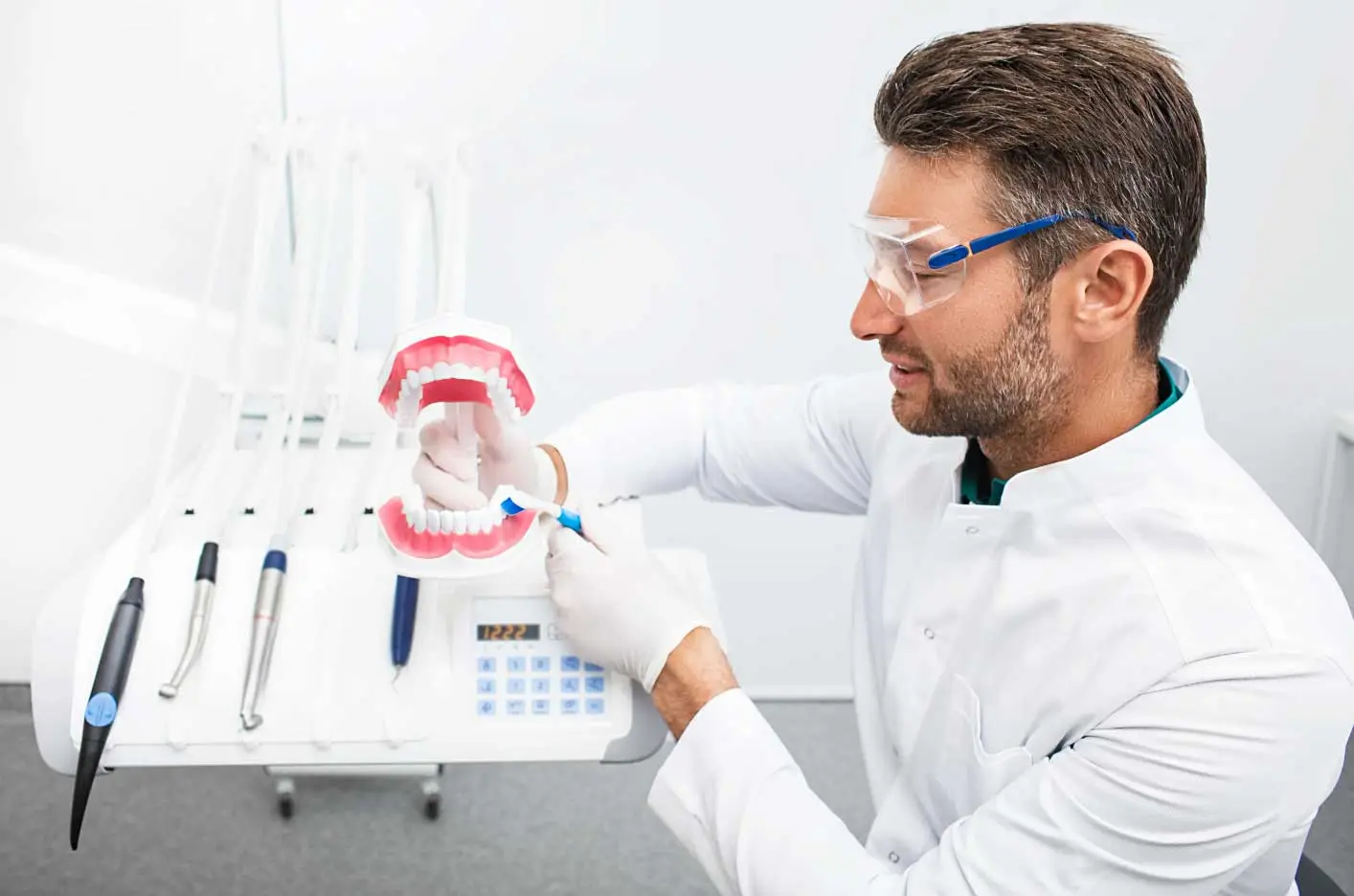
Google AI Overviews no longer rank dental practices on keywords. They name the one or two practices they can describe with confidence, judged on how clearly your site answers real patient questions, how consistent your business details are across the web, how much recent and detailed review evidence backs you up, and whether credible outside sources confirm you. Because nearly two-thirds of AI citations now come from sites outside the top 10 results, a well-structured practice site can be named ahead of a higher-ranking competitor that answers less clearly.
If your dental practice is not showing up when patients ask AI tools like AI Overviews for recommendations, there is a reason, and it is not about keywords anymore. Over 60% of AI citations now come from outside the traditional top 10 search results, which means the rules have changed.
The short version
- AI search platforms like Google AI Overviews no longer rank dental practices purely on keywords. They evaluate trust, conversational authority, and how clearly a website answers real patient questions.
- Nearly two-thirds of AI citations come from websites outside the traditional top 10 search results, which means a well-structured dental site can outperform a higher-ranking competitor if it answers patient queries more directly.
- Dentistry falls under YMYL (Your Money or Your Life) content guidelines, which means AI holds dental information to a higher credibility standard than most other industries, making trust signals non-negotiable.
- Google Business Profile, review volume, and clinician authority bios are now active inputs into AI recommendations, not just nice-to-haves. Schema markup earns its place separately, by making the page unambiguous to a crawler.
- The difference between being readable to AI and being recommended by AI comes down to off-page authority, a gap addressed in detail further below.
Search behavior has shifted faster than most dental practices have had time to notice. Patients who once typed "dentist near me" into Google are now asking ChatGPT, Perplexity, or Google's own AI Overviews something far more specific: "Which dentist in [city] is good with anxious patients, takes Delta Dental, and has Saturday appointments?" The answer they get is not a page of ten blue links. It is usually one or two practice names, and the criteria AI uses to pick them are fundamentally different from traditional SEO ranking factors.
Over 60% of AI Citations Come From Outside the Top 10 Search Results
Traditional SEO logic says that ranking in the top 10 results is everything. AI search is rewriting that rule. According to an Ahrefs analysis of 863,000 keyword SERPs and 4 million AI Overview URLs, only about 38% of pages cited in AI Overviews also rank in Google's top 10, down from roughly 76% a year earlier, meaning over 60% of citations come from sources that would be invisible in a conventional top-10 snapshot.[1]
The citation shift
Ranking in the top 10 is no longer everything
over 60%
of AI citations now come from sources outside the traditional top 10 results
38%
of pages cited in AI Overviews also rank in Google's top 10
76%
was that same figure roughly a year earlier, so the shift is recent and sharp
Ahrefs, analysis of 863,000 keyword SERPs and 4 million AI Overview URLs
What does that mean in practice? It means an AI Overview is not simply pulling from whoever has the most backlinks or the highest domain authority. It is pulling from whoever provides the clearest, most directly useful answer to the specific question being asked. For dental practices, that is a genuine competitive opening. A well-structured, answer-rich website from a mid-sized local practice can be cited ahead of a large dental group's generic homepage, simply because it spells out the things patients actually want to know before booking.
This shift in citation sourcing is the core reason why dental marketing in 2026 requires a fundamentally different approach. AI systems are essentially acting as a highly discerning research assistant, one that reads a website, cross-references reviews, checks business data for consistency, and then decides whether a practice is trustworthy enough to recommend to a patient who may be in pain or anxious about their care. QBiz Leads AI has built its AI SEO approach for dental practices specifically around the signals these systems evaluate, making practices legible and trustworthy to AI rather than simply optimized for older keyword-ranking models.
AI No Longer Ranks Keywords, It Ranks Answers
For roughly two decades, dental SEO was a keyword game. Get the right phrases on your pages, earn some local backlinks, keep the Google Business Profile updated, and watch appointment requests come in. That foundation still matters, but it is no longer the whole story.
How it decides
AI ranks answers, not keywords
Patient query
A patient asks an AI tool to recommend a dentist for a specific need.
Read the site
It reads how clearly your pages answer real patient questions.
Verify the details
It cross-references reviews and checks business data for consistency across the web.
Recommend one or two
It names the one or two practices it can describe with confidence.
AI search engines do not match keywords to pages. They evaluate whether a piece of content genuinely answers the question being asked, in the way it is being asked. The structure of the question, what researchers now call a "prompt," determines which sources an AI pulls from. A dental website that says "We provide comprehensive care in a warm, welcoming environment" gives an AI model almost nothing to work with. A site that says "We offer dental implants, Invisalign, and same-day emergency care, accept Delta Dental, Cigna, and United Healthcare, and have evening and Saturday appointments available" gives the AI exactly the kind of specific, indexable content it can match to a patient's detailed query.
The practical shift here is from Search Engine Optimization to what the industry is increasingly calling Answer Engine Optimization (AEO), structuring content so that it directly and thoroughly responds to the questions patients are already asking AI tools.
Dentistry Is YMYL: Why AI Holds Dental Content to a Higher Standard
Not all industries are treated equally by AI systems. Dentistry falls squarely into what Google classifies as YMYL, Your Money or Your Life content. This category covers any information that could significantly affect a person's health, financial wellbeing, or safety. Because a bad dental recommendation could lead someone to delay urgent care or choose an unqualified provider, AI platforms apply a much higher credibility filter before citing a dental source.
In concrete terms, that means a dental practice website needs to demonstrate genuine expertise and verifiable trustworthiness, not just keyword relevance. Vague claims about "experienced dentists" or "quality care" will not satisfy an AI evaluating YMYL content. What will satisfy it are detailed clinician profiles with real credentials, clearly structured treatment information that helps patients understand what to expect, and consistent trust signals across multiple platforms. The YMYL classification is not a penalty, it is a filter. Practices that clear it get recommended. Those that do not, get skipped.
How Patients Now Prompt AI to Find a Dentist
Understanding the shape of modern dental queries is the first step to showing up in them. Patients are no longer searching with two or three keywords. They are describing their situation in full sentences, the same way they would explain it to a friend. Instead of "dentist Salt Lake City," a patient might type: "I'm looking for a dentist in Salt Lake City who takes Delta Dental insurance, is good with anxious patients, and has availability on weekends."
AI is built to answer exactly that kind of detailed, contextual question, and it sources its answers from websites whose content actually contains that information. The practices that get recommended are those whose pages explicitly address insurance acceptance, patient comfort, appointment availability, procedure specifics, and location details. If a website does not contain those answers in a clear, crawlable format, an AI simply cannot recommend that practice with any confidence. It will point the patient somewhere else.
What AI Actually Evaluates When Recommending a Practice
AI Overviews and similar tools do not operate on a single ranking factor. They synthesize signals from multiple data sources simultaneously to form a recommendation. For dental practices, those signals cluster around five core areas, each one representing a specific gap most practice websites currently have.
What AI evaluates
The five signals behind a practice recommendation
Review volume and sentiment across platforms.Recent, detailed reviews on more than one platform, not just a single high star rating.
Consistent name, address and phone number.Inconsistent details confuse the models cross-referencing you across the web.
Conversational, answer-first content.Pages that answer the pre-booking questions patients actually ask, backed by off-page authority.
Off-page authority and digital PR.Third-party mentions and earned media from news outlets and health publications that verify a practice is genuinely trusted, not just self-described.
Presence beyond Google.A complete Google Business Profile plus a footprint the model can find on multiple platforms.
1. Review Volume and Sentiment Across Platforms
AI systems actively synthesize patient reviews to assess whether a practice is consistently described as high-quality, gentle, and reliable. But volume alone is not enough. The specificity of reviews matters enormously. A review that says "great service" is useful but limited. A review that describes exactly what procedure was performed, how the staff handled a nervous patient, and why the experience stood apart from a previous dentist? That is rich, indexed, queryable content.
When a patient asks an AI tool whether a specific practice is good with anxious patients, the AI can actually cross-reference review text across platforms to form its answer. Practices with hundreds of detailed, recent Google reviews, especially ones that mention specific procedures, specific staff members, and specific aspects of the experience, have a significant citation advantage over practices with a handful of generic five-star ratings. Responding to every review, positive or negative, also signals to AI systems that the business is active and accountable.
2. NAP Consistency and Local Proximity Signals
NAP stands for Name, Address, and Phone Number, and its consistency across every directory listing, review platform, and citation source is more important in 2026 than many practices realize. AI models cross-reference business information across the web when building local recommendations. Inconsistencies, such as a suite number missing in one listing, a phone number formatted differently on another, or an old address still appearing on a directory, signal untrustworthiness to AI systems.
Local SEO specialist BrightLocal puts it plainly: accurate NAP data can be the difference between citations that help a business and citations that actively harm it, because inconsistent details confuse both search engines and the people looking the business up.[2] That consistency is a signal AI Overviews weigh directly. The fix is not complicated: audit the top five directory listings (Google Business Profile, Yelp, Facebook, BBB, and your primary dental directory), verify that the business name, address, and phone number are exactly identical across all of them, and set a reminder to re-audit every six months, particularly after any move or contact change.
3. Conversational Content (Answer Engine Optimization)
AEO, Answer Engine Optimization, is the practice of structuring website content so that it directly answers the specific questions patients ask before booking. It is the single highest-impact content shift a dental practice can make for AI visibility, and most dental websites have not made it yet.
Think about what a patient actually wants to know before choosing a dentist: Does this practice accept my insurance? Are they good with nervous patients? What does an implant appointment actually involve? How much does Invisalign cost here? Do they take emergency walk-ins? A website that answers each of those questions explicitly, in plain language, in clearly structured sections, gives AI tools the raw material to match that practice to a wide range of patient queries. A website that says "comprehensive care for the whole family" answers none of them. FAQ sections are particularly valuable here because they are already in the question-and-answer format that AI systems are designed to consume.
4. Off-Page Authority and Digital PR
Being readable to AI is the entry requirement. Being recommended by AI requires something more: recognition from credible sources outside a practice's own website. AI models are trained on the broader web, and they treat third-party mentions, from regional news outlets, health publications, local business journals, and respected dental voices, as verification that a practice is genuinely trusted, not just self-described as trustworthy.
A single guest article in a regional health publication, an expert quote in a dental industry newsletter, or a feature in a local news outlet about a community dental initiative carries more AI citation weight than dozens of generic social media posts. Earned media represents an editorial judgment by someone outside the practice, exactly the kind of independent validation AI systems are calibrated to value. The goal is not raw quantity of mentions but genuine coverage in places that carry credibility with both human readers and AI crawlers.
5. Multi-Platform Presence Beyond Google
A common misconception is that AI search optimization is purely a Google problem. It is not. ChatGPT draws heavily from the Bing index, which means a verified Bing Places listing is directly relevant to whether a practice appears in ChatGPT-generated recommendations, a point we unpack in why dental practices don't show up in ChatGPT. Perplexity, Gemini, Claude, Grok, and Copilot each have their own crawl patterns and source preferences.
A practice that only optimizes for Google visibility is leaving meaningful AI recommendation surface area uncovered. Maintaining accurate business listings on Bing Places, keeping social profiles active on Facebook, Instagram, and LinkedIn, and ensuring that YouTube or podcast content is published under a consistent practice identity all contribute to the multi-platform footprint that modern AI systems use to triangulate which practices are genuinely active, trustworthy, and relevant to a patient's local area.
Your Website Must Be AI-Readable, Not Just SEO-Optimized
A dental website built for traditional local SEO, a few service overview pages, a contact form, some stock photos, and a generic homepage tagline, is structurally invisible to AI recommendation engines. It is not that the site ranks poorly. It is that the content does not give AI enough specific, structured information to confidently match the practice to a patient's detailed query. The upgrade required is not cosmetic. It is architectural.
Dedicated Service Pages That Answer Pre-Booking Questions
Broad service labels, "cosmetic dentistry," "restorative dentistry," "family dentistry," are too vague for AI to act on. A patient asking an AI tool about composite bonding near them needs a practice whose website has a dedicated composite bonding page that answers the questions they are implicitly asking: What is this treatment? Who is it suited for? What happens at the appointment? How long does it take? What does it cost, roughly? What aftercare is involved?
The same logic applies to every procedure a practice offers, implants, Invisalign, emergency care, whitening, sedation dentistry, and beyond. Each treatment deserves its own page, written in plain language, with real procedural detail rather than marketing generalities. AI systems are looking for the clearest match between a patient's question and a practice's content. Dedicated service pages written with pre-booking questions in mind are how that match gets made.
FAQ Sections That Match Real Patient Queries
A well-structured FAQ section is one of the most direct AI visibility tools available to a dental practice, and one of the most underused. AI Overviews are already in question-and-answer format, which means a clearly organized FAQ is almost purpose-built for AI citation. The key is specificity and placement.
Rather than a single catch-all FAQ page buried in the navigation, FAQ sections should live on every major service page, addressing the questions patients actually ask about that specific treatment. The format matters too: lead with the direct answer in the first sentence, then add context. For example: "Yes, this practice accepts Delta Dental insurance for most preventive and restorative treatments." That kind of direct, indexed answer is what an AI can pull and present to a patient who asked "Does [practice name] take Delta Dental?"
Schema Markup Makes Your Content Legible to AI
Schema markup is structured code added to a website's HTML that tells search engines and AI crawlers exactly what a piece of content is, not just what it says. Without schema, an AI model has to make educated guesses: Is this an FAQ? Is this a service description? Who wrote it? Is this a local business? With proper schema implementation, those questions are answered explicitly in the code itself.
For dental practices, the schema types that matter most are: FAQ Schema on all question-and-answer sections; Local Business Schema for practice location and contact data; MedicalBusiness or Dentist Schema to define the practice category; Person Schema for clinician profiles; and sameAs Schema to link the website entity to social profiles and directory listings. Schema is one of the higher-effort items on this list, and a technical error can cause Google to ignore it entirely. It also does not by itself move AI citation rates: a May 2026 Ahrefs controlled test tracking 1,885 pages that added schema found no major citation uplift on Google AI Mode or ChatGPT, and a small decline on Google AI Overviews.[3] What it does is remove ambiguity that helps a crawler read the page correctly, so implement it carefully, and don't expect it alone to change your citation rate.
Google Business Profile Is Now an AI Ranking Input
Google's own AI Overviews pull directly from Google Business Profile data when generating local recommendations. An incomplete, outdated, or sparsely reviewed profile is not a minor oversight in 2026, it is a direct liability in AI-generated local search. The profile that gets a practice named in an AI Overview is not the one that was set up three years ago and left untouched. It is the one that is actively maintained.
Claiming and verifying a profile is the baseline. From there, it is ongoing upkeep: selecting the most specific primary category available (not just "Dentist" if "Cosmetic Dentist" or "Emergency Dental Service" better fits the practice); uploading real photos of the team, treatment rooms, and exterior rather than stock imagery; posting regular updates about seasonal services, new team members, or community involvement; and keeping hours, phone number, website URL, and service area accurate at all times. AI systems treat a stale, incomplete profile as a signal of a practice that is not paying attention, and they recommend accordingly.
What Practices That Appear in Local AI Recommendations Have in Common
Across local AI recommendation patterns, the practices that consistently appear share a recognizable profile. They tend to have hundreds of recent, detailed Google reviews, not just high ratings, but reviews rich in procedural and experiential specifics. They have complete and accurate business information across their GBP and directory listings, with no NAP inconsistencies. They post regular updates to their profile, signaling an active, maintained presence. And they have authentic photos that reflect the actual practice environment, not a generic dental stock library.
None of these are expensive to implement. They require consistency and attention rather than budget. The practices pulling ahead in local AI recommendations in 2026 are often not the largest or the most heavily advertised, they are the most consistently maintained and the most specifically informative.
E-E-A-T: The Trust Framework AI Uses to Filter Healthcare Sources
Google's E-E-A-T framework, Experience, Expertise, Authoritativeness, and Trustworthiness, was developed as a quality guideline for human content reviewers, but it has become the underlying logic AI systems use to filter which healthcare sources are credible enough to cite. For dental practices, understanding E-E-A-T is not optional. It is the framework that determines whether a practice clears the credibility threshold AI sets for YMYL content.
Experience means content that reflects real, first-hand clinical knowledge, not generic copy that could have been written by anyone. Expertise means content tied to identifiable, credentialed clinicians. Authoritativeness means being recognized as a credible source by other credible sources, third-party media mentions, dental association references, and links from respected health publications. Trustworthiness means accurate, verifiable information with no misleading claims, consistent data across the web, and transparent authorship. Each of these dimensions has a practical implementation pathway on a dental website.
Clinician Profiles and Author Bios as Credibility Signals
One of the clearest E-E-A-T signals a dental website can send is connecting its content to real, named, credentialed human beings. An article about sedation dentistry written by "Admin" signals almost nothing to an AI evaluating healthcare content credibility. The same article authored by a named dentist with a GDC registration number, a headshot, a linked author page listing their qualifications and clinical experience, and a brief bio describing their area of focus signals genuine expertise, the kind AI systems are specifically calibrated to weight more heavily for YMYL content.
Clinician profile pages serve double duty here. They satisfy the E-E-A-T requirement for author credibility while also giving AI systems a structured entity, a named professional tied to specific treatments and a specific location, that can be matched to patient queries like "experienced implant dentist in [city]." Even a single well-developed clinician profile is meaningfully better than none.
Earned Media Mentions vs. Self-Published Claims
There is a fundamental difference, from an AI trust perspective, between a practice saying something about itself and a credible third party saying it. A homepage that reads "our dentists are highly experienced and trusted by thousands of patients" is a self-published claim. An article in a regional health magazine that profiles the practice's approach to treating nervous patients is earned coverage, and AI systems treat these very differently.
Earned media carries an implicit editorial endorsement. A journalist or editor chose to cover the practice. That choice is a verifiable signal of external trust, and AI models trained on the broader web have absorbed that signal as meaningful. A single placement in a respected local publication, a regional news outlet, a health and wellness blog with genuine editorial standards, a dental industry journal, does more for AI citation authority than a dozen well-written blog posts published on the practice's own domain. The self-published content builds the foundation; the earned coverage is what turns that foundation into a recommendation.
Readable Gets You Considered, Trusted Gets You Named
There is a distinction worth holding onto as a dental practice owner investing in AI visibility: being readable to AI and being recommended by AI are not the same thing. Every item covered above, structured service pages, FAQ sections, schema markup, NAP consistency, GBP optimization, clinician profiles, makes a practice legible. It ensures that when an AI crawler visits the site, it can understand what treatments are offered, who provides them, where the practice is located, and what patients have said about their experience.
Considered vs named
Readable gets you considered; trusted gets you named
Ask
Can AI both read your practice clearly and verify it is trustworthy?
It names you
Clear, structured pages plus consistent details and clinician credibility earn the recommendation.
It passes you over
A readable site with thin trust signals is considered but loses the named slot to a verified rival.
But once an AI can clearly read several nearby practices, it still has to choose which one or two to actually name in its response. That choice leans heavily on what the rest of the web has independently said about each of them.
A practice that has been written about by regional news, mentioned in dental health publications, quoted in expert roundups, and discussed in patient community spaces carries a layer of external credibility that a practice only described on its own website simply does not have. The two sides, on-page AI readability and off-page earned recognition, hold each other up. A spotless, perfectly structured website with no outside recognition stays a practice the model can read but never feels confident enough to put first.
The shift happening in 2026 is ultimately good news for dental practices that genuinely care about their patients. Being helpful online, truly helpful, with real information about real treatments for real people, is now the most powerful dental marketing strategy available. AI is not rewarding budget. It is rewarding trust, clarity, and usefulness. Practices that treat their website as a genuine patient resource, maintain their digital presence with consistency, and earn recognition from credible outside sources are the ones AI will recommend, not because they gamed a system, but because they built something genuinely worth recommending.
To find out how AI-readiness applies specifically to your practice's setup and patient mix, QBiz Leads AI works with dental practices to identify and close the gaps between how their site is currently seen and how AI recommendation engines actually evaluate dental sources. For a deeper look at the dental-specific approach, see our guide to answer engine optimisation for dentists and clinics and our AI SEO for dentists service overview.
Listen to the podcast here: How AI Overviews Rank Dentists 2026 Podcast
For the broader practical playbook, read answer engine optimisation for dentists and clinics. For the service-page view of how QBiz applies it, see AI SEO for dentists. If you want a regional example of the same shift in practice marketing, read AI marketing tools for Texas dental practices.
Get your AI Visibility audit →
Frequently asked questions
Do AI Overviews rank dental practices the way Google's ten blue links did?
No. AI Overviews do not return a ranked list of ten results. They name one or two practices they can describe with confidence, chosen on how clearly a site answers a patient's specific question, how consistent the business data is, and how much outside recognition backs it up. A high classic ranking helps but does not guarantee a mention, since nearly two-thirds of AI citations now come from sites outside the top 10.
What does "over 60% of AI citations come from outside the top 10" actually mean for my practice?
It means the citation is not reserved for whoever has the most backlinks or the highest domain authority. AI pulls from whoever answers the specific question most clearly. A mid-sized local practice with an answer-rich site can be cited ahead of a large dental group's generic homepage. It is a genuine opening for practices that spell out what patients want to know before booking.
What is Answer Engine Optimization (AEO), and how is it different from SEO?
AEO is structuring your content so it directly and thoroughly answers the questions patients ask before booking, rather than matching keywords to pages. Instead of "comprehensive family care," an AEO page states which insurance you accept, what a specific treatment involves, what it roughly costs, and when you are open. It gives an AI the exact, indexable answers it can match to a detailed patient query.
Why does AI hold dental content to a higher standard?
Dentistry falls under YMYL, Your Money or Your Life, content, because a poor dental recommendation could affect someone's health or finances. AI applies a stricter credibility filter before citing a dental source. Vague claims about "experienced dentists" will not clear it; detailed clinician profiles with real credentials, clearly structured treatment information, and consistent trust signals across platforms will.
Does adding an FAQ section get my practice cited by AI?
Not on its own. Question-style headings do not lift citations by themselves, and the evidence does not support treating FAQs as a ranking trick. FAQs earn their place by answering the questions patients actually ask about a specific treatment, in plain language, which improves coverage and reader value. Lead each answer with the direct response, then add context.
How important is NAP consistency for AI recommendations?
Very. AI cross-references your Name, Address, and Phone number across directories, review platforms, and citation sources. A missing suite number in one listing or an old address on another signals untrustworthiness. Audit your top listings (Google Business Profile, Yelp, Facebook, BBB, and your primary dental directory), make the details exactly identical, and re-check every six months.
Is AI search just a Google problem?
No. ChatGPT draws heavily from the Bing index, so a verified Bing Places listing directly affects whether you appear in ChatGPT recommendations. Perplexity, Gemini, Claude, Grok, and Copilot each have their own source preferences. A practice that only optimizes for Google leaves meaningful AI recommendation surface uncovered.
What schema markup should a dental website use?
The types that matter most are FAQ schema on question-and-answer sections, Local Business schema for location and contact data, MedicalBusiness or Dentist schema to define the category, Person schema for clinician profiles, and sameAs schema to link the site to social profiles and listings. Schema is higher-effort and a technical error can cause it to be ignored, so implement it carefully.
What is the difference between being readable to AI and being recommended by AI?
Readable means an AI crawler can understand what you offer, who provides it, where you are, and what patients have said, achieved through service pages, FAQs, schema, NAP consistency, and a maintained Google Business Profile. Recommended means the model chooses to name you, which leans on what the wider web has independently said about you. On-page readability and off-page earned recognition hold each other up.
Can I pay to appear in an AI Overview for dental searches?
No. There is no paid slot inside an AI Overview recommendation and no vendor who can insert your practice. The recommendation is assembled from public signals the engine can verify: your site content, your business listings, your reviews, and third-party mentions. Getting named comes down to making those signals clear, consistent, and credible, not buying a placement that does not exist.
Sources
- [1] Ahrefs, "Update: 38% of AI Overview Citations Pull From The Top 10" (analysis of 863K keyword SERPs and 4M AI Overview URLs)
- [2] BrightLocal, "Local Citations: Why NAP Data Accuracy is Key"
- [3] Ahrefs, Linehan & Guan, "We Tracked 1,885 Pages Adding Schema. AI Citations Barely Moved." (May 2026, matched difference-in-differences test)
Leave a comment
Thoughts on this post? Leave a comment below. Comments are moderated before they appear, so yours will not show on the page straight away.
Your email is used only to contact you about your comment if needed — it is never published.
Comments
No comments yet. Be the first to leave one above.