AI Only Searches the Web on the First Question: Why That Changes Your Content Strategy
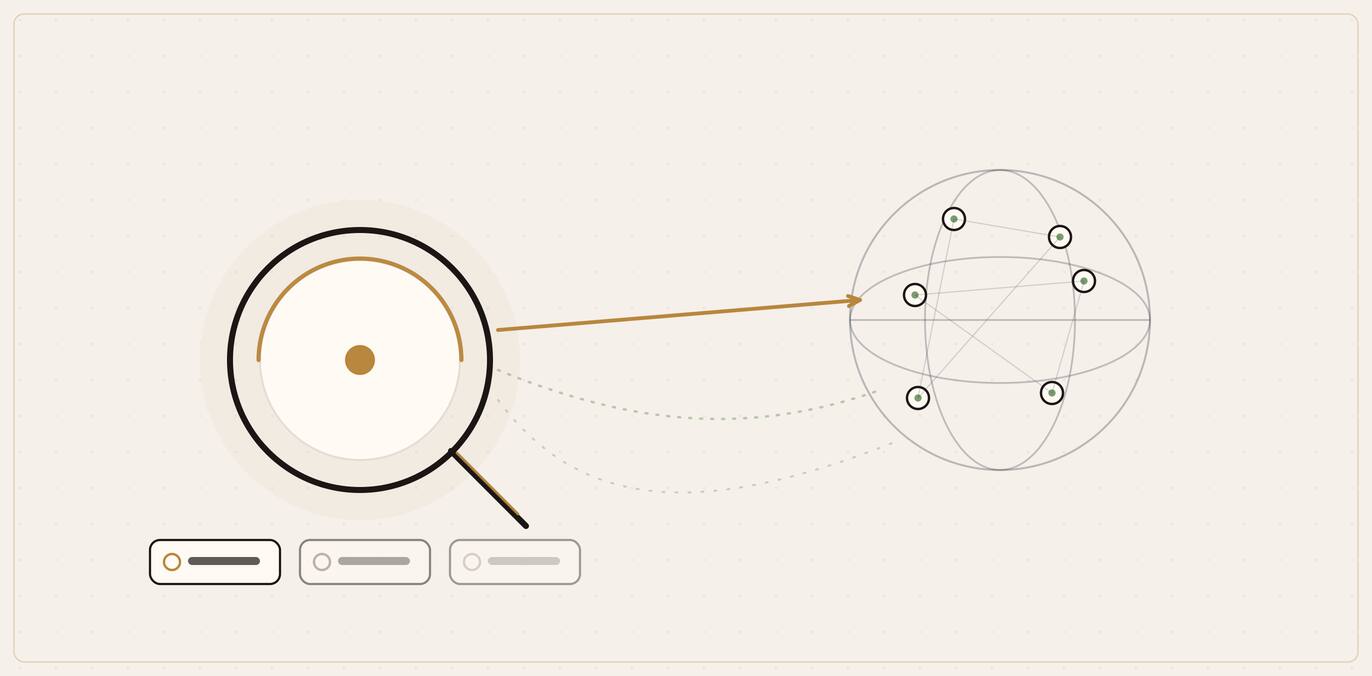
ChatGPT does not search the web for most answers; it replies from its training and only runs a live search when a question would genuinely benefit from fresh information. When it does search, that almost always happens on the first question of a conversation: measured citation rates fall from about 12.6% on turn one to 4.5% by turn 10 and 3.0% by turn 20.
For a local business the practical takeaway is to own the broad, problem-first opening question in your category (the "best plumber in [town]", "how much does a rewire cost" query someone types before they know exactly what they want), because the sources read on that first search become the foundation of the whole conversation, and it reads several sources at once, so you need to be one of the handful it trusts, not the single winner.
Key takeaways
- Most answers never search the web. The model replies from training and only reaches out live when a question needs fresh or specific facts.
- Search concentrates on the first question. Citation share drops from 12.6% on turn one to 4.5% by turn 10, so the opening query is where you get read.
- The first answer shapes the whole chat. Later turns rarely search again; they reshuffle the sources pulled in on turn one, so missing that turn means missing the journey.
- Own the problem-first opener. Nobody opens with your business name; they open with their problem, so build a clean, direct page for each broad opening question in your category.
- Aim for the cluster, not a solo win. The model reads several sources per search, so being one of the small handful it trusts, on your own pages and the directories it reaches for, is the realistic target.
Most people assume that when they ask ChatGPT something, it goes off and reads the web before answering. It usually does not. A large share of answers come straight from the model's training, with no live search at all. And on the occasions it does reach out to the web, the timing is far more predictable than you would expect: it almost always happens on the very first question, and the chance of a live search drops away sharply with every follow-up.
That single fact reshapes how a local business should think about getting cited. If citations cluster on the opening question of a conversation, then the prize is not being mentioned somewhere in a long back-and-forth. It is being one of the sources ChatGPT pulls in at the exact moment a real research journey begins, when someone types the first thing that comes to mind about a problem you can solve.
If you are completely new to all of this, start with our complete guide to Answer Engine Optimisation for local businesses and come back, because this is an intermediate tactic that builds on the basics.
When ChatGPT actually searches the web
ChatGPT does not consult the web every time it answers. It has a vast amount of information baked into the model already, and for a great many questions it simply answers from that. It only goes out to a live search when the question looks like it needs fresh or specific information that its training cannot supply.
OpenAI describes the trigger in plain terms in its own help documentation: "ChatGPT will automatically search the web if your question might benefit from information on the web" (OpenAI Help Center, ChatGPT Search)[2]. That is the whole mechanism in one sentence. The model makes a judgement, question by question, about whether a live look at the web would improve the answer. When it decides yes, it runs a search, reads a set of pages and may cite some of them. When it decides no, it answers from what it already knows and cites nothing.
That same documentation explains a second detail that matters for local businesses. ChatGPT does not pass your words to a search engine unchanged. It "typically rewrites your query into one or more targeted queries," and it folds in your general location from your IP address, so "What are some good restaurants near me?" can become a search for "top restaurants San Francisco" (OpenAI Help Center)[2]. The question you type is not the question it searches. We cover how that rewriting works, and which parts of a question survive it, in our guide to query fan-out. The short version for here: location almost always survives, which is good news for anyone selling to a local market.
So two things are true at once. First, a live web search is the exception, not the rule. Second, when it does happen, it is the moment your content has a chance to be read and cited. The question is: when does that moment arrive? The data gives a clear answer.
The data: search happens early, then drops off
Start with the primary account. OpenAI's own logic already tells you most answers will not search: ChatGPT reaches for the web only when a question "might benefit from information on the web," which means a live search is the exception rather than the rule, and the majority of replies come straight from the model's training with no citation at all (OpenAI Help Center)[2]. The useful question is when that exception fires within a conversation.
One published measurement puts numbers on it. The AI-visibility firm Profound, which sells tracking software and so has a commercial stake in the figures, analysed roughly 700,000 US, English-language conversations on ChatGPT.com between October and December 2025 and recorded the share of turns that carried citations at each stage of a chat. Treat the exact percentages as one vendor's read, but the shape below matches OpenAI's account of when search triggers, and you can watch the same pattern in any long session of your own (Profound, How ChatGPT sources the web, 2026)[1]:
| Turn in the conversation | Share of turns that carry citations |
|---|---|
| Turn 1 | 12.6% |
| Turn 2 | 8.98% |
| Turn 3 | 7.53% |
| Turn 5 | 6.2% |
| Turn 10 | 4.5% |
| Turn 20 | 3.0% |
Source: Profound, 2026 (vendor data).
The curve only goes one way. On these figures the opening turn is roughly two and a half times more likely to carry a citation than turn 10, and close to four times more likely than turn 20. The opening question is where live search, and therefore citation, concentrates.
Citation decay
Live search concentrates on the opening question
12.6%
of turns carry a citation on turn one
4.5%
by turn 10
3.0%
by turn 20
Profound, 2026 (vendor data), ~700,000 ChatGPT conversations.
The reason for the decay is worth understanding, because it tells you what kind of question wins a search. Opening questions usually need factual grounding: the "what is X," "how does Y work" or breaking-news type of query that genuinely calls for fresh information. Follow-up turns tend to be clarifications, deeper dives or creative tasks that do not need fresh web data.
This lines up with OpenAI's own rule that ChatGPT searches only when a question would benefit from the web (OpenAI Help Center)[2]. The first question is usually the one with real research intent. The model searches to ground its first answer, then keeps working from those same sources, plus its own knowledge, for the rest of the conversation.
One more point stops "win the first question" from being a single-winner game. When ChatGPT does search, it does not crown one source and stop; it reads and triangulates across a small handful of sources for a given answer, as OpenAI's own description of sending "one or more targeted queries" and returning multiple cited sources makes clear (OpenAI Help Center)[2]. So owning the first question does not mean beating every rival to a single slot; it means being one of the small handful of sources the model reaches for when that opening search fires.
What the first-question rule changes for you
This is more than a quirk of how a chatbot works, because of where AI answers now sit in everyday searching, and because of how the first answer shapes everything that follows.
Start with reach. A Pew Research Center analysis of real browsing data found that about six in ten US adults (58%) ran at least one Google search in March 2025 that returned an AI-generated summary, and that when a summary appeared, people clicked through to a traditional result link in just 8% of visits (Pew Research Center, July 2025)[3]. This is independent data, not vendor marketing, and although it measures Google rather than ChatGPT, it tells you the same thing about the wider shift: the AI answer is now the destination for a large share of searches. People read what the machine assembled and stop there.
Now combine that with the first-question finding. When a potential customer opens ChatGPT and asks the first thing on their mind about a problem you solve, the model may run a single web search, read a few sources, and build its answer from them. The sources it pulls in at that moment become the foundation of the whole conversation.
Later turns mostly reshuffle and expand what the first answer already established, because later turns rarely search again. If you were not among the sources read on turn one, you were not just left out of one reply. You were left out of the entire research journey that followed, and the customer may never have seen a reason to look further.
That is the real stake. The opening question is not one opportunity among many in a conversation. For a large share of chats it is the only opportunity, because it is the only turn that reaches for the live web.
Side by side
Why the opening question behaves differently from the rest
| The opening question | Later follow-up turns | |
|---|---|---|
| Does it search the web? | Most likely to; this is where live search concentrates Read here | Rarely searches again; reshuffles the turn-one sources |
| The intent behind it | Broad, problem-first, needs factual grounding | Clarifications, deeper dives and creative tasks |
| What it means for you | Own the broad opener and you found the whole journey | Cover the follow-ups on the same page to stay in the chat |
What an "opening question" looks like in your category
To own the first question, you first have to know what it is. Opening questions share a recognisable shape. They are broad, they are the kind of thing someone asks before they know exactly what they want, and they map onto the factual-grounding intent that triggers a search: the "what is," "how to" and "best way to" queries a person types at the start of working out a problem.
For a local business, opening questions tend to fall into a few groups:
- The "best [service] in [place]" question. "Best emergency plumber in Norwich." "Good family solicitor in Sheffield." "Top-rated dentist taking new patients near me." These start a search for a provider and they carry strong local intent, which, as we saw, survives the rewrite.
- The "how do I solve [problem]" question. "My boiler keeps losing pressure, what should I do?" "How do I dispute a will?" "Do I need an accountant to file my first company accounts?" These start a research journey that often ends in hiring someone, and they are exactly the factual-grounding queries the model searches for.
- The "what is / how much" question. "How much does a full rewire cost?" "What is conveyancing?" "What does a bookkeeper actually do?" These look educational, but the person asking is frequently a buyer at the very start of working out whether they need you.
- The "should I" judgement question. "Should I repair or replace my boiler?" "Should I use a solicitor or do probate myself?" These reward genuinely balanced content, the kind that helps the reader decide rather than just selling.
The unifying thread is that opening questions are problem-first, not brand-first. Nobody opens ChatGPT by typing your business name; they type their problem. Your job is to be one of the sources the model trusts when it searches to answer that problem.
How to own the first question
Owning the opening question is a content job and an off-site job at the same time. You need pages that answer those questions cleanly, and you need to be present on the sources the model already reaches for when it searches. Ordered roughly by impact for a typical local business:
The method
How to own the opening question
Find the real openers
Put ten to fifteen genuine opening questions to ChatGPT and note which trigger a search and who gets cited.
A page for each
Answer the opening question directly, in the customer's words, near the top, with real detail to quote.
Cover the follow-ups
Answer the obvious next questions on the same page so the model keeps drawing on you through the chat.
Be on its sources
Show up on the directories, review platforms and communities the model reaches for on that first search.
1. Map the real opening questions, do not guess them
Spend an afternoon being your own customer. Write down ten to fifteen genuine opening questions in the plain words a person actually uses, drawn from the four groups above and from the questions your customers ask you on the phone every week. Then put each one to ChatGPT yourself, with web search active, and note two things: whether it triggered a search at all, and which sources it cited when it did. That tells you which opening questions in your category are live-search questions, and who currently owns them. It is the same manual method we set out in how to check whether AI mentions your business, pointed specifically at first questions.
2. Build a dedicated page for each opening question
For the questions that trigger a search, give each one a page that answers it directly, in the customer's words, near the top. Not a keyword-stuffed landing page; a genuine answer. If the opening question is "how much does a full rewire cost in [your area]," the page should answer that in the first paragraph, with real ranges and the factors that move the price, before it does anything else. Pages that answer the exact opening question give the model something clean to quote and an easy reason to cite you. Vague, salesy pages give it nothing to grab.
3. Cover the follow-ups on the same page
Here is the subtle part. The model rarely searches again after turn one, but the conversation does continue, and it continues from the sources it already read. So a page that also answers the obvious next questions, the clarifications and deeper dives a person asks after the opening one, gives the model material to keep drawing on you through the rest of the chat.
If your rewire-cost page also covers "how long does it take," "do I need to move out," and "how do I find a qualified electrician," you are feeding the whole journey from a single trusted source, not just the first reply. This is how query fan-out and the first-question rule work together, and we go deeper on the writing method in query fan-out explained.
4. Be present on the sources the model searches
Winning the first question is not only about your own pages. When ChatGPT searches, it leans on a familiar set of trusted sources, and being named on those is often how you get into the answer at all. Because the model reads and triangulates across several sources for a single answer rather than picking one, the directories, review platforms and community sites it trusts for your topic are routes into the answer alongside your own site. Which sources matter varies by engine and topic; our guide to how each AI engine picks its sources breaks down the patterns, and how to get your business mentioned in ChatGPT covers the off-site work in detail.
5. Aim for your cluster, not a solo win
Because the model pulls several sources on that first search, the realistic goal is to be in the group it assembles, not to knock everyone else out. The businesses and platforms that keep appearing together for your kind of question form a cluster, and getting into yours is a tactic in its own right. We cover it fully in how AI recommends businesses in clusters. For the first-question strategy, the point is simply that "own the opening question" means "be one of the small handful of sources read when it searches," which is a far more achievable target than sole ownership.
What this does not mean (so you do not overclaim to yourself)
A few important caveats, because the first-question finding is easy to over-read.
It does not mean every opening question triggers a search. A large share of conversations never search the web at all, and many first questions are answered from the model's training with no live citation. You are optimising for the share of opening questions that do search, which is where your control lies, not guaranteeing a citation on every chat.
It does not mean later turns never search. The decay is a steep slope, not a cliff: a small share of even the twentieth turn still carried citations in the data above. Follow-ups can and do trigger fresh searches, especially when the topic shifts to something new and factual. The first question is where search concentrates, not the only place it ever happens.
It does not mean being cited once wins the conversation. The model reads you as one source among several it triangulates, not the sole owner of the answer. Being read on turn one is the start, not the finish.
And the turn-by-turn figures are one vendor's measurement. Profound has a commercial interest in showing that AI visibility is trackable, so the precise percentages are its numbers, not settled fact. The direction is what carries the argument, and that is anchored in OpenAI's own primary description of when ChatGPT searches and in independent Pew data on how common AI answers have become.
Common mistakes
Avoid these
Where the first-question strategy goes wrong
Write for the problem, not your brand name.Customers open with their problem, never your name; a page built around "[your business], the best in town" answers a question nobody asks first.
Do not ignore the broad opener for niche pages.The live search concentrates on the broad first question; narrow-only pages miss the turn that actually searches.
Cover the follow-ups on the same page.The conversation continues from the turn-one sources; a page that answers only the opener drops out after the first reply.
Do not forget the off-site half.Your page is one of about four sources the model pulls; absent from the directories and communities it trusts, you may never make the shortlist.
Read the decay curve as a tendency, not a rule.Some first questions never search and some twentieth questions do; build for the pattern, do not bet on any single chat.
- Writing for your brand name instead of the opening question. Customers open with their problem, never your name. A page built around "[your business], the best plumber in town" answers a question nobody asks first.
- Optimising deep, niche pages and ignoring the broad opener. The specific, long-tail page is useful, but the live search concentrates on the broad first question. If you only have narrow pages, you miss the turn that actually searches.
- Assuming ChatGPT reads your site every time. Most answers never search the web. You are competing for the minority of conversations that do, which makes the opening-question slot more valuable, not less.
- Treating the first answer as the only thing that matters and stopping there. The conversation continues from the sources read on turn one. A page that answers only the opener, and none of the follow-ups, drops out of the journey after the first reply.
- Forgetting the off-site half. Your own page is one of about four sources the model pulls. If you are absent from the directories and communities it also trusts, you may never make the first-search shortlist at all.
- Reading the decay curve as a guarantee. It is a strong tendency, not a rule. Some first questions never search; some twentieth questions do. Build for the pattern, do not bet the business on any single chat behaving exactly to the average.
Frequently asked questions
Does ChatGPT search the web every time I ask it something?
No. Most answers come from the model's existing training with no live search. OpenAI says ChatGPT "will automatically search the web if your question might benefit from information on the web" (OpenAI Help Center)[2], and published tracking suggests only a minority of conversations trigger a web search at all. A live search is the exception, which is exactly why the moment it happens is worth optimising for.
Why does the first question matter so much more than later ones?
Because that is where live search and citation concentrate. One published analysis by Profound, an AI-visibility vendor whose exact figures reflect its own sample, measured citations on 12.6% of first turns, falling to 4.5% by turn 10 and 3.0% by turn 20, so the opening turn is several times likelier to carry a citation than a late one (Profound, 2026)[1]. Opening questions tend to need fresh facts; follow-ups tend to be clarifications that do not.
What counts as an opening question for my business?
The broad, problem-first query someone types before they know exactly what they want: "best [service] in [town]," "how do I fix [problem]," "how much does [job] cost," "should I repair or replace [thing]." Nobody opens with your business name; they open with their problem. Those problem-first openers are what you want to own.
If the model only searches once, how can my small business ever get in?
By being one of the small set of sources it reads on that single search. When ChatGPT searches it sends one or more targeted queries and returns several cited sources rather than picking a single winner, as OpenAI's own description of search confirms (OpenAI Help Center)[2]. For a local question, the field is your town, not the whole country, so being the clearest answer plus present on the directories and communities it trusts is a realistic way in. The groundwork is in our local AEO guide.
How do I know which of my opening questions actually trigger a search?
Test them. Put each opening question to ChatGPT yourself with search active, and note which ones produce live citations and who gets cited. That shows you which questions are live-search opportunities and who currently owns them. The free manual method is in our guide to tracking whether AI mentions your business.
Should I still answer the follow-up questions if the model rarely searches again?
Yes, on the same page. The conversation keeps going from the sources read on the first turn, so a page that also answers the obvious next questions keeps feeding the model your content through the rest of the chat, without it needing to search again.
Does my content have to be brand new for ChatGPT to search and cite it?
No, but it has to answer the opening question cleanly and be findable. The model searches because a question needs grounding, not because a page is freshly published, so a clear, accurate page that directly answers a common first question can be read and cited long after you wrote it. What loses is a vague or salesy page that gives the model nothing precise to lift.
Does the same first-question pattern apply to Perplexity and Google's AI Mode?
The exact figures here are measured on ChatGPT, so treat them as specific to it. The broader logic (a live search triggered by a factual, problem-first opening question, then an answer built from a small set of sources) is common across the answer engines, though each decides when to search and which sources to trust in its own way. Our guide to how each AI engine picks its sources covers where they differ.
My town is small: is it easier or harder to own the first question here?
Usually easier. When ChatGPT rewrites a "near me" query it keeps your location, so the field it searches for "best [service] in [your town]" is your local competitors, not the whole country. A clear page that answers the local opening question, plus a presence on the directories and review sites the model trusts for your area, is a realistic way to be one of the sources it reads.
If most answers come from training, should I still worry about my live pages?
Yes, for two reasons. First, the minority of conversations that do search live are the ones where a new customer is actively researching, which is exactly when you want to be found. Second, being read and cited on the live web over time is part of how a business becomes something the model knows well enough to mention even without searching. Clear, findable pages feed both, so they are worth the effort even though most single answers never search.
Where to start
If you do one thing this week, map your opening questions. Write down the ten to fifteen problem-first questions your customers actually start with, test each in ChatGPT to see which trigger a live search, and note who gets cited. That list is your target: the first questions in your category that reach for the web, and the sources that currently own them.
If you would rather have this checked for you, a free QBiz Leads AI visibility check scans your website in about thirty seconds and returns a clear pass or fail on the key signals that decide whether AI tools can find and recommend your business, with a prioritised list of the pages and off-site work that would put you in the answer.
Get your AI Visibility audit →
Sources
- [1] Profound, "How ChatGPT sources the web" (chatgpt-citation-sources), 2026: https://www.tryprofound.com/blog/chatgpt-citation-sources
- [2] OpenAI Help Center, "ChatGPT Search": https://help.openai.com/en/articles/9237897-conducting-your-searches-on-search (Primary source: OpenAI's own description of how ChatGPT search behaves. "ChatGPT will automatically search the web if your question might benefit from information on the web." ChatGPT search "typically rewrites your query into one or more targeted queries" sent to search partners, and folds in general location from IP, e.g. rewriting "good restaurants near me" into "top restaurants San Francisco." Used here as the primary, non-vendor anchor for when and how ChatGPT decides to search.)
- [3] Pew Research Center, "Google users are less likely to click on links when an AI summary appears in the results," 22 July 2025: https://www.pewresearch.org/short-reads/2025/07/22/google-users-are-less-likely-to-click-on-links-when-an-ai-summary-appears-in-the-results/ (Independent; analysis of 900 US adults' browsing data covering 68,879 Google searches. 58% ran at least one Google search in March 2025 that produced an AI-generated summary; users clicked a traditional result link in 8% of visits when an AI summary appeared. Used here for the macro shift to AI answers as the destination, corroborating the stakes of the first-question finding; measures Google AI summaries, not ChatGPT, and is framed as such.)
Leave a comment
Thoughts on this post? Leave a comment below. Comments are moderated before they appear, so yours will not show on the page straight away.
Your email is used only to contact you about your comment if needed — it is never published.
Comments
No comments yet. Be the first to leave one above.