I Paid an SEO Agency and Nothing Happened. What Now?
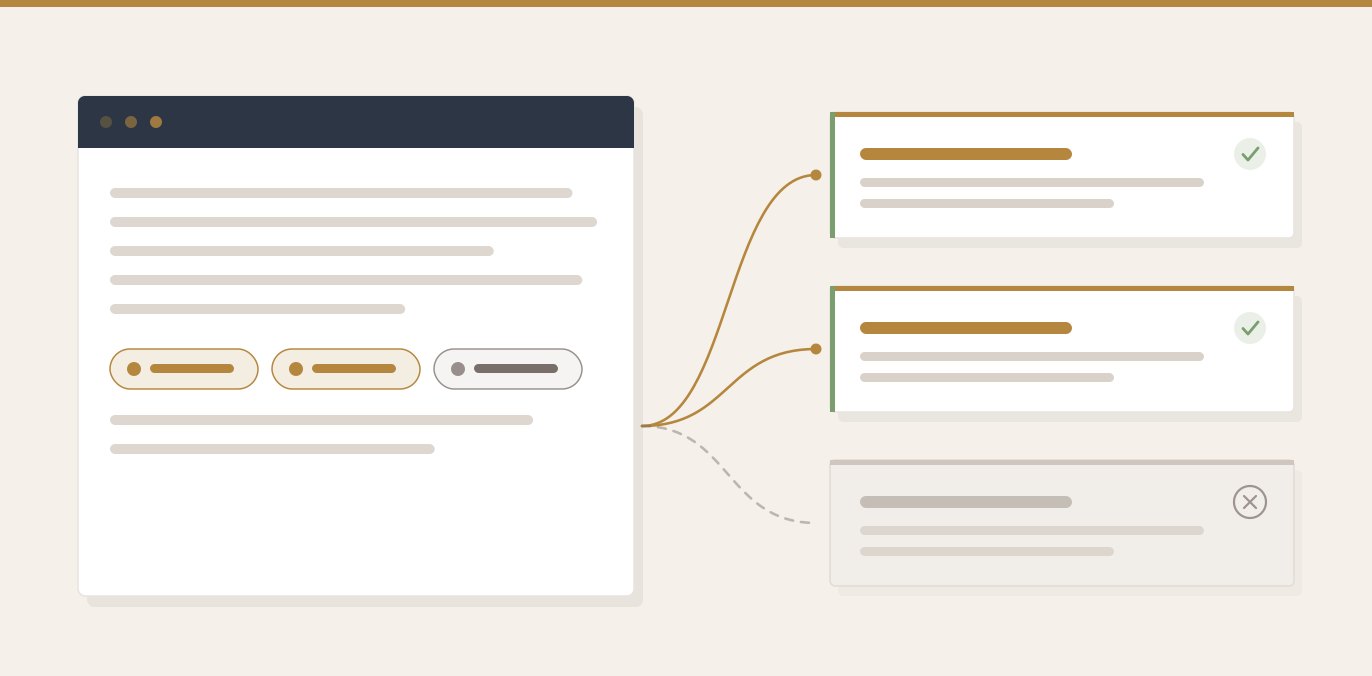
You paid an agency, the invoices went out on time, and you cannot point to anything that changed. Before deciding the money was wasted, it helps to know what an AI answer engine actually looks at when it recommends a business. We checked, across eight UK trade-and-city searches, which page type of a business's own website gets cited when an AI assistant answers. Of 115 citations pointing at a business's own site, not one was a blog post: the recurring content deliverable that shows up in a monthly SEO report as a new URL. That is not proof your agency did nothing. It is a specific, checkable question you can now put to them, or answer yourself on your own site.
Short version
- A vendor-run survey of 1,200 small business owners found only 30% would recommend their current SEO provider, and 25% said they weren't sure what they were actually paying for, so the frustration itself is common, not a sign you were singled out.
- We measured which page type of a business's own site gets cited by an AI engine recommending a local business: across eight UK trade-and-city checks, 0 of 115 own-site citations were a blog post.
- Google's organic results for the same eight searches carried the only two article-page results in either data set, so the split is specific to this engine and these questions, not proof that blog content is worthless everywhere.
- One firm holds two long-form guides in Google's top 20 for its search term; the AI engine cited its homepage and its about page instead, and named neither guide.
- Before deciding the retainer failed, check whether it was ever scoped to cover AI visibility at all.
- You can run a rough version of this check yourself, without the agency, in a few prompts.
I paid an SEO agency and nothing happened. What should I check first?
Start with a narrower question than "did it work": which of the pages that retainer produced does an AI engine actually name when it recommends a business like yours? Rankings and traffic are the numbers an agency report puts in front of you, but neither one tells you what an AI assistant reads out loud to a customer who never visits Google at all. That is a different fact, and it is the one this article measures.
What follows is a measurement, on our own data, of exactly one thing: when an AI assistant recommends a local business, which page of that business's own site does it cite.
Which retainer deliverable is easiest to check?
The blog post is the deliverable that turns up in a monthly report as a new URL with a word count attached, which makes it the easiest to point at and the hardest to judge.
A blog post can read well, be properly optimised, and still never be the page an AI engine chooses to cite.
Which of those pages does an AI engine actually cite?
We ran the same question through two channels on 5 September 2026: Perplexity, asked to recommend a local business for eight UK trade-and-city pairs (an emergency locksmith in Coventry, a pest controller in Derby, driveway resurfacing in Swansea, damp proofing in Ipswich, a tree surgeon in Wakefield, carpet cleaning in Preston, a plasterer in Plymouth, and a window fitter in Stoke-on-Trent), and Google's organic top 20 for the identical eight searches. No business name or brand was included in any prompt. Every cited or ranked URL was classified by hand into a business's own site, or a directory and aggregator such as Checkatrade, Yell or Bark, and then by page type: homepage, service or location page, about or contact page, or blog post and article.
How the check was run
Four steps behind the figure
Unbranded prompt
Eight trade-and-city pairs put to an AI assistant, with no business name anywhere in the wording.
Same eight on search
The identical searches run against Google's organic top 20, so the two channels can be read side by side.
Own site or directory
Own website on one side, aggregator listing on the other, with every URL placed by hand.
Which page type
Every own-site result marked as a homepage, a service or location page, an about or contact page, or an article.
Scroll to see the full figure
The eight runs returned 158 Perplexity citations in total: 115 pointed at a business's own site and 43 at a directory or aggregator, a 27.2% directory share. That share is from eight queries on one day, and we are not trending it against any other measurement. Of those 115 own-site citations, covering 95 distinct businesses, 67 were homepages (58.3%), 42 were service or location pages (36.5%), 6 were about, contact or other pages (5.2%), and none were a blog post or article.
| Page type | AI (Perplexity), 115 own-site citations | Google organic top 20, 101 own-site results |
|---|---|---|
| Homepage | 67 (58.3%) | 57 (56.4%) |
| Service or location page | 42 (36.5%) | 42 (41.6%) |
| About / contact / other | 6 (5.2%) | not classified |
| Blog post or article | 0 (0.0%) | 2 (2.0%) |
Google's organic results for the same eight searches returned 160 results, 101 of them a business's own site (63.1%) and the rest a directory or aggregator (36.9%). The homepage share is close to identical between the two, 58.3% against 56.4%, so that part is not a meaningful difference between the engines. The gap is the blog row: Google's own-site results carried the only two article pages in either data set; the AI answers carried none.
The clearest single case in the data is a driveway resurfacing firm whose site holds two long-form guide pages in Google's organic top 20 for its own service and city, both carrying proper article publication dates. Asked the identical question the same day, the AI engine cited that firm twice, its homepage and its about page. Neither guide was named.
How far this check goes
The result is specific to Perplexity, on one day, across eight queries. It says nothing about why the engine chose the pages it did, does not cover ChatGPT, Gemini or Claude, and is not a verdict on content marketing, since Google's results for the same searches carried two article-page citations.
Is this unusual, or is this what SEO retainers generally look like?
Dissatisfaction with SEO spend is not rare. Backlinko's SEO Services Report, a vendor-run survey of 1,200 small business owners conducted with Northstar Research Partners, found that only 30% of respondents would recommend their current SEO provider. Within the same panel, 25% agreed with the statement "I am not sure what I am really paying for with SEO," and 27% agreed they find SEO "confusing and unclear about what services they offer."[1] Among the respondents who had already left an SEO provider, a subset rather than the full 1,200-person panel, 82% cited dissatisfaction with business results as a factor in that decision.[1]
Buyer sentiment, for context
You are not the only one asking
1,200
small business owners answered the survey these figures come from
30%
would recommend the SEO provider they were using at the time
25%
agreed they were not sure what their spend was really buying
27%
found the services on offer confusing and unclear
Backlinko, "The SEO Services Report", a vendor-run survey conducted with Northstar Research Partners.
None of that tells you whether your specific retainer covered the ground this article measures. It does mean that not being able to point to a clear result is a common experience among buyers of SEO services generally.
Is this an AI-visibility gap, or a different job entirely?
This article assumes the money is already spent and asks a narrower, later question: what did it buy, and which of those pages does an AI engine cite. A separate, earlier question is whether your existing SEO work already covers AI visibility. If your retainer was scoped purely around traditional Google rankings, the absence of a blog citation here is not a failure of that scope, it is simply outside it.
Before you judge the retainer
Was this ever the job you paid for?
Ask
Did the scope of work ever cover AI visibility?
Then ask to see it
Request something in writing about citations rather than rank positions, because a ranking report cannot answer which page an assistant named.
Then this sits outside it
An agreement drawn up around traditional rankings may never have priced this ground in at all, which makes it a gap rather than a failure.
What to check on your own site this week
- Ask an AI assistant to recommend your service, without naming your business. Use the phrasing a real customer would use ("emergency locksmith in [your town]"), not a branded search, and read which page, if any, gets named.
- Run it more than once. Answers can vary between runs on the same engine; a single response is a data point, not a pattern.
- Note the page type, not just whether you appear. If your homepage or a service page gets named, that matches what we measured and is a reasonable place to keep investing. If nothing on your site is named at all, that is a more basic problem than page type.
- Check whether the retainer's scope ever mentioned AI visibility. A contract written before AI answer engines were part of the conversation may simply never have priced this in.
- Ask your agency what they can show you, in writing, about citations, not just rankings. A report built around rank positions will not answer a question about which page an AI answer named.
Do this yourself
Five checks, no agency required
Leave your business name out.Use the wording a customer would type for your service and your town.
Ask more than once.Replies shift between runs, so treat a single answer as a data point rather than a pattern.
Read which page gets named.A homepage or a service page matches what this check found; nothing at all is a more basic problem.
Reread the scope of work.Confirm whether being visible to AI assistants was ever something the retainer covered.
Ask for citations, not positions.Put the question to your agency in writing and see what evidence comes back.
FAQ
I paid an SEO agency and nothing happened. What should I check first?
Check which pages on your own site actually get named when an AI assistant recommends a business like yours, rather than judging the retainer by rankings alone.
Does this mean blog content is a waste of money?
No. The finding is narrower than that: on this engine, on this date, for these questions, a blog post was not the page an AI answer named. Ordinary search behaved differently in the same data set.
Is this the agency's fault, or is it normal?
The Backlinko survey figures put this complaint in context rather than settling it. What they cannot tell you is which of your own pages an AI answer names, which is what this article measures.
Can I run a version of this check myself?
Yes. Ask ChatGPT, Perplexity or Gemini to recommend a business like yours for your actual service and area, with no business name in the prompt, and read which page of your site, if any, gets named or linked. Run it a few times, since answers can vary between runs, and note the page type as well as whether you appear at all.
Where do I go from here?
That depends on what the check actually returned. A homepage or service page appearing needs no further action beyond what's already working; nothing on your site being named at all is a different, more basic problem than page type.
Short version, restated
A retainer with nothing to show for it is a common complaint, and the data on buyer satisfaction backs that up. The more useful move than judging the whole retainer at once is checking one specific fact: which of the pages you paid for actually gets named when an AI assistant answers on your behalf. In our own check, that page was the homepage or a service page, never a blog post. Whether that matches your own site is something you can check today, before you decide what the money bought.
See which of your own pages an AI assistant actually names.
Check whether AI platforms can find and cite your business →
Sources
- [1] Backlinko, "The SEO Services Report." https://backlinko.com/seo-services-statistics
Leave a comment
Thoughts on this post? Leave a comment below. Comments are moderated before they appear, so yours will not show on the page straight away.
Your email is used only to contact you about your comment if needed — it is never published.
Comments
No comments yet. Be the first to leave one above.