Claude vs ChatGPT for SEO Content: Which Helps You Earn Visibility?
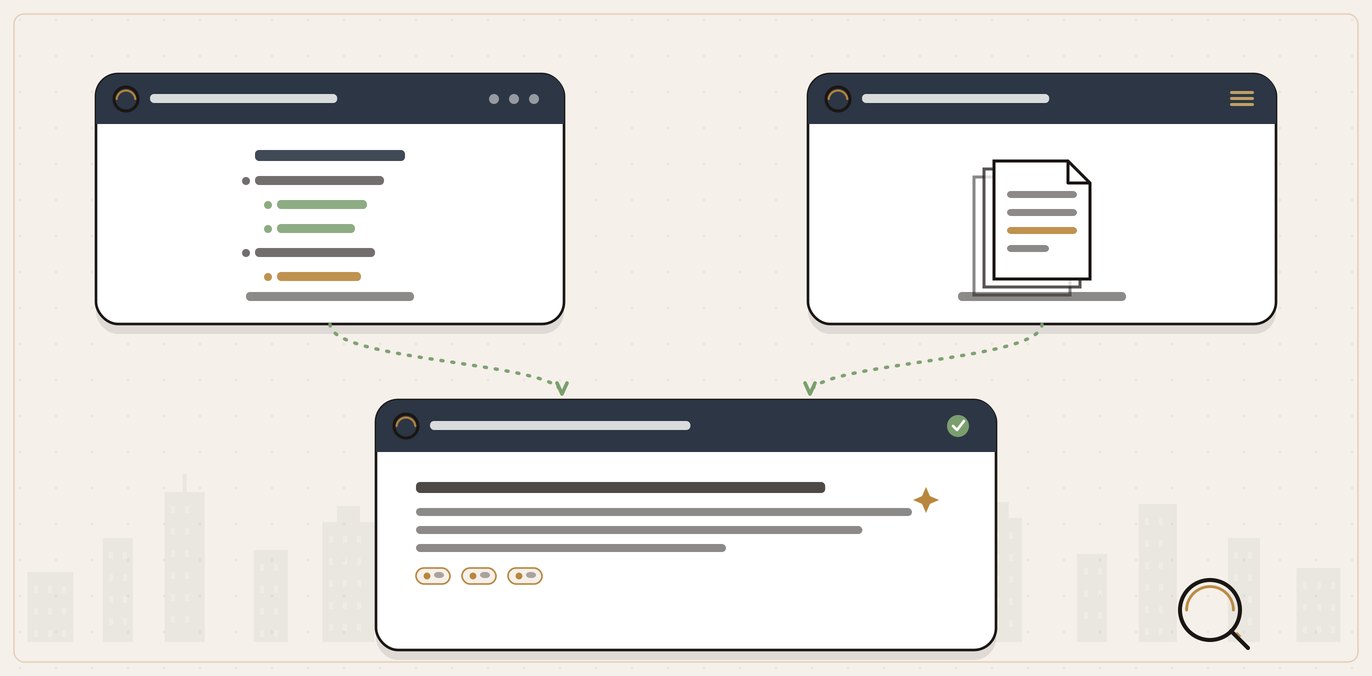
Use ChatGPT for fast ideation, briefs, outlines, comparison angles and structured sections. Use Claude for long drafts, source-heavy editing and large-document synthesis. Neither tool earns visibility by itself. A page earns visibility when it is useful, verifiable, based on real experience and easy for Google and AI answer engines to extract.
That is the point most Claude versus ChatGPT SEO comparisons miss. They compare prose quality, speed and integrations. Those matter inside a workflow, but they do not decide whether the finished page ranks on Google or gets cited by ChatGPT, Perplexity, Gemini or Google's AI answers. The visibility layer is stricter: helpful content, clear sourcing, first-hand proof, entity clarity and answer-ready structure.
ChatGPT is usually better at building the SEO and AEO skeleton. Claude is usually better at processing long inputs and keeping a long draft coherent. The winning workflow uses both, then adds human evidence, first-hand examples, source checking and clean HTML structure before publishing.
Quick answer
- ChatGPT plans, Claude processes. Reach for ChatGPT to build outlines, intent maps, comparison tables and FAQ coverage; reach for Claude to read long source packs and keep a multi-thousand-word draft consistent.
- Neither tool ranks a page on its own. Google states it rewards content quality, not how the content was produced, so the deciding factor is what the finished page proves, not which model drafted it.
- First-hand evidence is the part AI cannot supply. The job you saw, the customer you spoke to, the audit you ran: that is what turns a competent draft into something worth citing.
- Structure decides whether AI answer engines can quote you. Answer-first paragraphs, question-shaped headings, named entities, tight definitions and source-backed facts make a page extractable.
- Verify before you publish. Every number, model claim and vendor claim needs a URL and a quote that can be rechecked, because AI drafts confident-sounding facts that are sometimes wrong.
Which is better for SEO content, Claude or ChatGPT?
For SEO content that needs to earn visibility, the better tool depends on the job inside the workflow. ChatGPT is stronger when you need options quickly: search-intent maps, content angles, FAQ coverage, comparison tables, schema drafts and sections that follow a predictable structure. Claude is stronger when the input is large: competitor pages, transcripts, long briefs, product documentation, interview notes and draft revisions that need consistency across several thousand words.
That difference is real, but it is not the ranking mechanism. Google says its ranking systems aim to reward original, high-quality content that demonstrates E-E-A-T, and that its focus is on content quality rather than how the content was produced.[1] The real test is whether your workflow helps you publish a page with enough originality, evidence and structure to deserve the citation. Nicer prose does not earn that on its own.
On that test, the safest answer is a split workflow. Let ChatGPT help define what needs to be answered. Let Claude help digest the messy material. Then have a person add the parts neither model can fabricate: actual experience, judgment, customer language, source verification and the decision about what should be said at all.
Does AI content hurt SEO?
No, not because it is AI-assisted. Google states that appropriate use of AI or automation is not against its guidelines, as long as the content is not generated primarily to manipulate search rankings.[2] That means an article can use Claude or ChatGPT and still be eligible to rank if the final page is genuinely useful.
The risk starts when AI becomes a substitute for substance. A model can summarize page-one results, imitate a format and produce a plausible answer. It cannot personally test the product, visit the clinic, inspect the roof, talk to the customer, run the audit or verify whether the claim is true. Google's helpful-content guidance asks whether the page demonstrates first-hand expertise and depth of knowledge, such as expertise from actually using a product or service or visiting a place.[3]
So the damage comes from what gets stripped out: when AI removes the proof a page needed, the page loses the thing that made it worth ranking. Used the other way, to organize real proof into something readers and machines can follow, the same assistance helps.
Why is AI content bad for SEO when it fails?
Bad AI content fails because it looks complete while adding little. It restates common advice, uses vague examples, pads sections to hit a target length and claims expertise without showing any evidence. That is weak for readers, and it is weak for answer engines because there is nothing distinctive to extract.
Google's helpful-content page gives the diagnostic. It asks whether content provides original information, reporting, research or analysis; whether it adds substantial additional value rather than copying or rewriting other sources; and whether it leaves someone feeling they have learned enough to achieve their goal.[4] Thin AI pages usually fail those checks.
The AEO failure is similar. Answer engines need clean facts they can lift into a response: who you serve, what you do, what evidence supports the claim, what the answer is, what the exceptions are and where the source comes from. A generic AI draft gives them sentences. A strong page gives them extractable facts.
What does each tool do best in a visibility workflow?
Side by side
What each tool does best in a visibility workflow
| Task | ChatGPT | Claude | Visibility rule |
|---|---|---|---|
| Ideation | Fast angles, title options, FAQ coverage and content maps. | Useful for fewer, more developed angles when given source material. | Pick the angle that adds information missing from page one. |
| Long-form drafting | Good for section-by-section drafting and alternate phrasings. | Strong for coherent long drafts and editing large source packs. | Do not publish either draft until claims, examples and experience are added. |
| Context window | Depends on the model and product surface, so check the current OpenAI model documentation before planning a large input. | Anthropic documents context windows up to 1M tokens on several current Claude models and 200k tokens on Haiku 4.5.[5] | Use the larger window to analyze evidence, not to make a longer article. |
| Structure for extraction | Strong at answer-first blocks, tables, FAQ drafts and schema shapes. | Strong at preserving structure across a long draft once the template is set. | Use question-shaped headings, direct answers, named entities and source-backed facts. |
| Fit in visibility workflow | Best as the planner and structure builder. | Best as the long-input reader and editor. | The ranking asset is the final verified page, not the model output. |
How good is Claude for SEO?
Claude is good for SEO when the task depends on reading a lot of material and keeping the argument consistent. That includes turning interview notes into a service page, comparing several competitor articles, condensing an audit, finding repeated gaps across reviews or revising a long article without losing the brief.
Its context advantage matters most when you already have evidence. Anthropic's model documentation lists large context windows for current Claude models, including 1M tokens for several models in its comparison table.[5] That makes Claude useful when you need to load a source pack and ask: what can we say that is supported, what is missing, and where does the draft repeat itself?
Claude is weaker when you ask it to turn thin inputs into authority. A long context window does not create first-hand experience. If all you give Claude is page-one content and a keyword, it can produce a polished imitation of the SERP. That may read well, but it will not give Google or AI answer engines a fresh reason to cite you.
How good is ChatGPT for SEO?
ChatGPT is good for SEO when the task needs speed, structure and option generation. It is useful for finding missing PAA questions, drafting comparison tables, building outlines, creating schema starters, grouping search intent and turning a messy idea into a clean brief.
OpenAI's model documentation positions its current models for text and image input, text output, multilingual capabilities and vision, with models available through its API and SDKs.[6] In practice, that makes ChatGPT a flexible planning surface for content teams that need to move from query to brief to structured draft quickly.
The risk is confidence. ChatGPT can produce clean-looking facts and citations that still need checking. Use it to ask better questions and structure the answer. Do not let it become the source of record.
What should AI-assisted SEO content include for E-E-A-T?
E-E-A-T means experience, expertise, authoritativeness and trustworthiness. Google says trust is the most important of those aspects, with the others contributing to trust.[7] For AI-assisted content, that should change the production process.
Before you publish
What the final page needs for E-E-A-T and extraction
Add first-hand experience.Show that someone actually used the product, visited the place or ran the audit.
Provide original information.Add substantial value rather than copying or rewriting other sources.
Make it extractable.Question-shaped headings, direct answers, named entities and source-backed facts.
Verify every claim.Trust is the most important part of E-E-A-T, so give each fact a URL and a re-checkable quote.
- Experience: add what a person actually saw, tested, measured or decided. For a local service business, that can mean job photos, real timelines, common customer mistakes, pricing ranges and the situations where the advice changes.
- Expertise: show the method. Explain how the recommendation was reached, which sources were checked and what criteria mattered.
- Authoritativeness: connect the page to the wider web: reviews, citations, directories, named credentials, press and relevant internal pages such as Citations for AEO.
- Trustworthiness: cite primary sources, avoid unsupported numbers, mark limitations and keep claims narrow enough to verify.
Neither Claude nor ChatGPT can supply those signals on its own, because they come from work a model never did: the job you saw, the customer you spoke to, the audit you ran. The tools can help you arrange that evidence once it exists, but they cannot invent it for you.
How do you make AI content easier for answer engines to cite?
Answer engines cite pages that make the answer easy to extract. That overlaps with SEO, but it changes the writing shape.
- Put the answer near the top.
- Use question-shaped headings.
- Name the entity rather than relying on pronouns.
- Keep definitions tight.
- Use tables where comparisons matter.
- Add source-numbered claims.
- Link related pages so the engine can see the topical cluster.
If you want to go deeper on any part of this, a few related reads cover the pieces this page touches on: how ChatGPT and Google organic traffic compare when you measure results, how ChatGPT and Perplexity surface content differently, where Google rankings and ChatGPT visibility overlap as sources, and whether SEO is dead in the wider shift.
If you would rather have this checked or handled for you, the QBiz AI visibility check reviews how your current content is set up to be cited by AI answer engines. For the implementation itself, AI visibility services, answer engine optimization and ChatGPT SEO services cover the work.
What is the best Claude and ChatGPT workflow for SEO content?
Start with the visibility outcome, not the model. The goal is a page that can rank, satisfy the reader and be quoted by an AI answer engine. The workflow should look like this:
The workflow
Start with the visibility outcome, not the model
Plan with ChatGPT
Intent, PAA questions, headings, comparison table, FAQ list and likely extraction blocks.
Source pack with Claude
Competitor pages, official docs, call notes, reviews, audit material and rough drafts.
Human evidence
First-hand examples, product details, customer language, limits, trade-offs and source snippets.
Edit for extraction
Answer-first paragraphs, clean headings, tables, internal links, schema and in-body citations.
- 1. Use ChatGPT for the map: intent, PAA questions, headings, comparison table, FAQ list and likely extraction blocks.
- 2. Use Claude for the source pack: competitor pages, official docs, call notes, reviews, audit material and rough drafts.
- 3. Add human evidence: first-hand examples, product or service details, customer language, limits, trade-offs and source snippets.
- 4. Edit for extraction: answer-first paragraphs, clean headings, short definitions, tables, internal links, schema and in-body citations.
- 5. Verify before publishing: every number, model claim, Google claim and vendor claim must have a URL and a quote that can be rechecked.
If a sentence could have been written without knowing the business, the source or the customer, it is probably not doing enough for SEO or AEO. Add proof, cut it, or turn it into a direct answer.
Should you choose Claude, ChatGPT or both?
Choose both if you publish regularly and care about visibility. ChatGPT is the better planning tool for fast structure. Claude is the better reading and editing tool when the evidence pile is large. A person is still the editor who decides what is true, useful and worth saying.
Which to choose
Claude, ChatGPT, or both?
Ask
Do you publish regularly and care about earning visibility?
Use both
ChatGPT plans the structure fast; Claude reads and edits the large evidence pile. A person stays the editor.
Keep it simple
Pick the one that fits your main task, and put the saved effort into first-hand evidence and verification.
If you must choose one, choose based on your bottleneck. If you struggle to generate angles, outlines and structured answers, start with ChatGPT. If you struggle to process long notes, source packs and long-form drafts, start with Claude. If your problem is that your content is generic, neither tool fixes that. You need stronger evidence and a clearer visibility strategy.
A QBiz AI visibility check gives you that starting point. It checks whether your pages are readable, specific, citable and connected to the signals AI answer engines use when they decide who to name.
Get your AI Visibility audit →
Frequently asked questions
Does AI content hurt SEO?
No, not by default. Google says appropriate use of AI or automation is not against its guidelines. AI content becomes a problem when it is created mainly to manipulate rankings or when it lacks originality, evidence, usefulness and human review.
Why is AI content bad for SEO?
AI content is bad for SEO when it is generic, unsupported and built from summaries of other pages. It often fails because it adds no first-hand experience, no original analysis and no reason for a search engine or answer engine to trust it.
How good is Claude for SEO?
Claude is strong for long-form drafting, editing and analyzing large source packs. It is useful for turning real evidence into coherent content. It is not a replacement for first-hand expertise, source checking or a clear SEO strategy.
Can I use AI for SEO?
Yes. Use AI for research support, briefs, outlines, structure, draft sections, tables, FAQs and editing. Keep humans responsible for experience, claims, sources, judgment and final publication quality.
What is E-E-A-T?
E-E-A-T stands for experience, expertise, authoritativeness and trustworthiness. Google says trust is the most important part, with the others contributing to it. For AI-assisted content, that means you need real evidence, clear sourcing, accurate authorship and useful first-hand detail.
How good is ChatGPT for SEO?
ChatGPT is strong for the planning half of SEO work: generating angles, finding People Also Ask questions, drafting outlines, building comparison tables, grouping search intent and creating schema starters. It moves fast and gives you options. The catch is that it can produce clean-looking facts and citations that still need checking, so treat it as a structure builder rather than a source of record.
Should I use Claude or ChatGPT, or both?
If you publish regularly, use both: ChatGPT as the planner and structure builder, Claude as the long-input reader and editor. If you have to pick one, choose by your bottleneck. Struggling to generate angles and structured answers points to ChatGPT; struggling to process long notes and source packs points to Claude. If the real problem is generic content, neither tool fixes it and you need stronger evidence instead.
Will Google penalize my site for using Claude or ChatGPT?
No. Google has stated that appropriate use of AI or automation is not against its guidelines, and that its focus is on content quality rather than how content is produced. Penalties relate to content made mainly to manipulate rankings, not to the tool that helped write it. A well-sourced, genuinely useful page remains eligible to rank regardless of whether AI assisted the draft.
How do I make AI-assisted content easy for answer engines to cite?
Give the engine facts it can lift cleanly. Put the answer near the top, use question-shaped headings, name the entity instead of using pronouns, keep definitions tight, use tables where comparisons matter, back claims with numbered sources, and link related pages so the engine can see the topical cluster. Extractability is what separates a page that gets quoted from one that merely reads well.
Does a bigger context window make Claude better for SEO?
Only when you already have evidence to feed it. A large context window lets Claude read a full source pack, competitor set or audit and keep a long draft consistent, which is genuinely useful. It does not manufacture first-hand experience. Load it with real material and ask what is supported and what is missing; give it only a keyword and page-one summaries and you get a polished imitation of the SERP, not a citable page.
Sources
- [1] Claim: Google rewards quality and E-E-A-T rather than banning AI-assisted content by authorship. URL: https://developers.google.com/search/blog/2023/02/google-search-and-ai-content. Exact quote: "Google's ranking systems aim to reward original, high-quality content that demonstrates qualities of what we call E-E-A-T: expertise, experience, authoritativeness, and trustworthiness." Also: "Our focus on the quality of content, rather than how content is produced, is a useful guide that has helped us deliver reliable, high quality results to users for years."
- [2] Claim: Appropriate AI use is not against Google Search guidelines, but using automation to manipulate rankings is spam. URL: https://developers.google.com/search/blog/2023/02/google-search-and-ai-content. Exact quote: "Appropriate use of AI or automation is not against our guidelines. This means that it is not used to generate content primarily to manipulate search rankings, which is against our spam policies."
- [3] Claim: Google asks creators to show first-hand expertise and depth of knowledge. URL: https://developers.google.com/search/docs/fundamentals/creating-helpful-content. Exact quote: "Does your content clearly demonstrate first-hand expertise and a depth of knowledge (for example, expertise that comes from having actually used a product or service, or visiting a place)?"
- [4] Claim: Helpful content should add original value rather than copy or rewrite other sources. URL: https://developers.google.com/search/docs/fundamentals/creating-helpful-content. Exact quote: "Does the content provide original information, reporting, research, or analysis?" Also: "If the content draws on other sources, does it avoid simply copying or rewriting those sources, and instead provide substantial additional value and originality?"
- [5] Claim: Anthropic documents large context windows for current Claude models. URL: https://docs.anthropic.com/en/docs/about-claude/models/overview. Exact quote: "Context window" with table entries including "1M tokens" for Claude Fable 5, Claude Opus 4.8 and Claude Sonnet 5, and "200k tokens" for Claude Haiku 4.5.
- [6] Claim: OpenAI documents current models as multimodal and API available. URL: https://platform.openai.com/docs/models. Exact quote: "All latest OpenAI models support text and image input, text output, multilingual capabilities, and vision. Models are available via the Responses API and our Client SDKs."
- [7] Claim: Trust is the most important part of E-E-A-T in Google's guidance. URL: https://developers.google.com/search/docs/fundamentals/creating-helpful-content. Exact quote: "Of these aspects, trust is most important. The others contribute to trust, but content doesn't necessarily have to demonstrate all of them."
- [8] Gap-analysis note, not cited as authority: SE Ranking, Ryze AI, HubSpot and Stratedia page-one articles mostly compare tool strengths such as speed, long-form drafting, context handling, integrations and writing quality. This article's spine is different because it judges both tools by whether the final page can earn Google rankings and AI-answer citations.
Leave a comment
Thoughts on this post? Leave a comment below. Comments are moderated before they appear, so yours will not show on the page straight away.
Your email is used only to contact you about your comment if needed. It is never published.
Comments
No comments yet. Be the first to leave one above.