I Rebranded, Moved or Opened a Second Location, and AI Still Names My Old Business
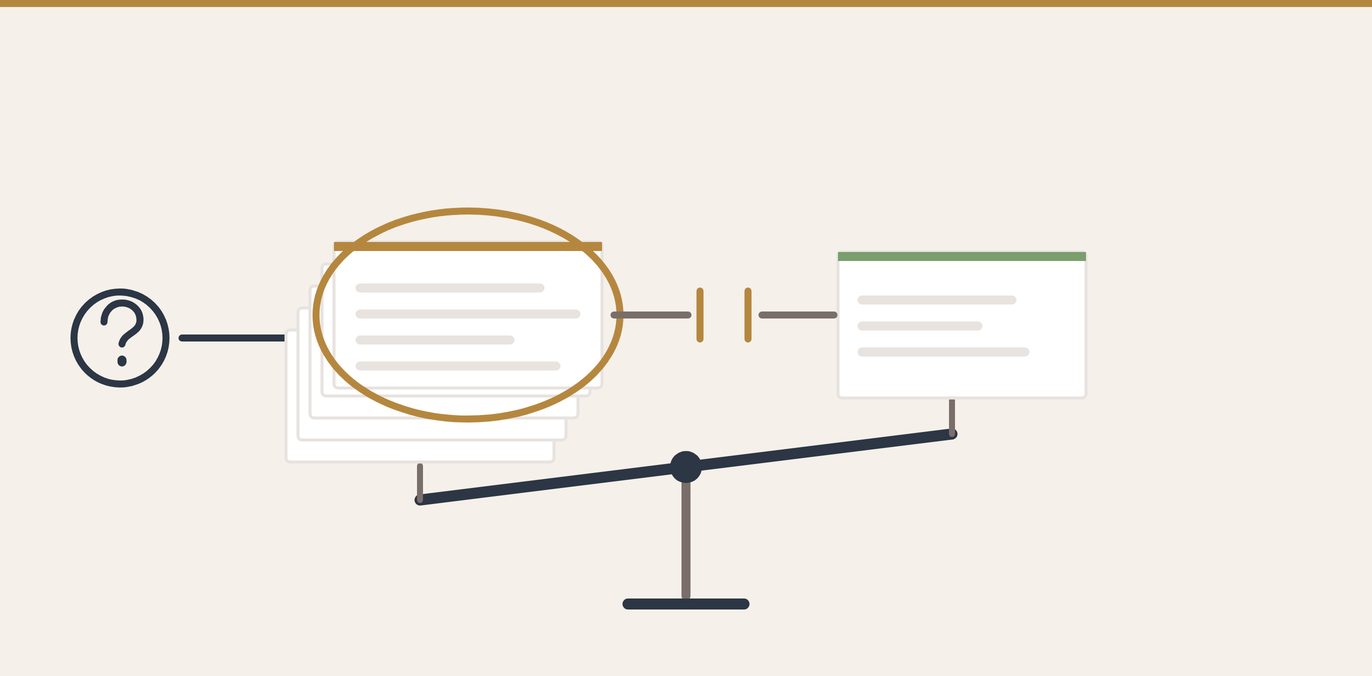
A rebrand, a move, or a second location is a matter of public record: Companies House logs the exact date a UK company changes its registered name. An AI assistant answering a question about that business doesn't automatically catch up. We tested 14 UK companies with a verified, dated name change on the public register, and asked one AI assistant a simple question about each: is the old name still trading under a different one now? In 13 of the 14, the answer did not give the current registered name, and in five of those thirteen the assistant had the company's own register page open, listing the new name, at the time it answered. The old identity is still winning against the new one.
Short version
- A rename, a move or a second location creates two competing records of one business, not zero records. That's a different problem from a brand-new business starting from nothing.
- We tested 14 UK companies with a verified register name change: 13 of the 14 AI answers didn't give the current registered name.
- In 5 of those 13, the assistant had the company's own Companies House page open, showing the new name, and still answered with the old one.
- Asked about the new name directly, the same assistant got the registration number right for 6 of the 14, so this is specifically a failure to link old and new, not blanket invisibility.
- The one case that resolved cleanly did so because the business itself published its old brand and current company number together on its own site.
- The fix is redirects held for the long term, consistent structured data and listings under the new identity, and enough independent mentions that the new record stops reading as the weaker one.
Why does AI still name my old business after I rebranded, moved or opened a second location?
Because the change didn't erase the old record, it added a new one next to it. Before the change, an engine answering a question about the business had one identity to work with. After a rebrand, a move to a new address, or a second location opening, it has two: an older record with history, reviews, links and mentions behind it, and a newer one that is thin by comparison. Given a choice between an established record and a fresh one, an engine keeps returning the established record, even after the underlying business has moved on.
That's a different starting point from a business that has never been indexed anywhere. Cold-Start AEO: Getting Recommended by AI When You're Brand New covers the zero-records case: nothing to correct, only a presence to build from scratch. This article is about the opposite situation, where there's too much history rather than none, and the fix is about which of two records wins, not about creating one from nothing. It is also narrower than getting a business's facts described correctly in general. How to Become an Entity AI Recognises covers what it takes for an engine to treat scattered mentions as one confirmed business, and that groundwork still applies here. What follows measures one specific consequence of not having it in place after a real change: how often the old identity keeps winning.
Which situation applies
How many records does an engine hold for the business?
Ask
Before the change, was this business already described somewhere an engine reads?
A rename, move or second site
Correction work: the current identity has to gather enough weight to become the one an answer reaches for.
A business starting out
Cold-start work: a presence has to be built from scratch, with nothing on file to compete against.
We tested it: how often does an AI catch up with a real name change?
Rather than ask an AI model to judge our own copy, we built a test around a source of verified, dated fact that neither we nor the AI provider controls: the UK company register. Companies House publishes the exact date a company's registered name changed and what it changed from, which means a "did the record update" question has a checkable right answer.
We read 799 UK company records sampled across twenty everyday local-service search terms (trades, dental, veterinary, accountancy and similar categories), and found 160 recorded previous names across 133 of them. Filtering to companies still active, with a genuine name change (not a punctuation correction) completed at least 30 days before the test, and with names distinctive enough that a match couldn't be coincidental, left 14 companies. For each, we asked one AI assistant, on 5 September 2026, whether the old name was still trading under a different name now. As a separate control, we asked about the new name directly: is it a real UK company, and what's its registration number? That splits "can't resolve this business at all" from "can't connect the old identity to the new one".
How the sample was cut
From 799 register records down to 14 usable cases
799
company records read across twenty everyday local-service search terms
160
previous names found on the public register within that set
133
companies carrying those earlier names between them
14
left once dormant companies, punctuation edits, recent changes and ambiguous names were removed
Companies House register data [2]; QBiz Leads AI measurement [1].
Scroll to see the full figure
| Test | Result | What it shows |
|---|---|---|
| Asked about the old name | 13 of 14 didn't give the current registered name | The old record still wins the comparison |
| Of those 13, register page was retrieved | 5 of 13 | Retrieval isn't the failure; connecting the two records is |
| Control: asked about the new name directly | 6 of 14 gave the correct registration number | Under its current name alone, the business was findable in 6 of the 14 cases |
The gap between the main test and the control is what separates the two failure modes. If the business were simply invisible under its new identity, the control would fail as often as the main test does. It doesn't: asked directly about the new name, the assistant got the registration number right for 6 of 14. The failure in the main test is specifically the link from old to new, not a blanket inability to find the business.
What the failures looked like
One company in the sample changed its registered name in July 2026. Asked whether its old name was still trading under a different one, the assistant answered that none of the results it had "show a name change or a 'previous name' entry", while citing that company's own filing history page as a source. The page it had open was the one recording the change; the answer said no change was recorded.
A second company in the sample failed differently. Asked the same question, the assistant concluded that the old name "was later reused by a different company," effectively deciding the business's own former identity now belonged to someone else. In that case the business was told a stranger owns its own history.
The single case that resolved correctly did so for a specific, checkable reason: the business's own current website still displayed its previous trading name alongside its current company number. Asked about the old name, the assistant found that bridge on the business's own site and made the connection. It was the only one of the 14 that resolved.
How two records appear
Where the second version of a business comes from
The change is logged
The public register timestamps the switch and keeps the former title on file beside the current one.
History stays put
The earlier identity keeps the reviews, links and mentions it gathered before anything changed.
A thin second entry
The current identity starts with little behind it, however accurate the register entry is.
The stronger one wins
Weighing the two, an engine returns the established entry and the old identity carries into the answer.
What this test actually measures
It shows that on one date, with one assistant, a small but carefully verified sample of genuine UK renames mostly kept losing to their own history, and that being findable under a new name and having that name correctly linked to the old one are two separate things. Fourteen companies sampled from a name search, not drawn at random from the register, make this a controlled test rather than a survey of UK businesses in general, a claim about rankings, traffic or leads, or a result that would necessarily repeat on another engine, another model, or a week later.
The fix sequence
None of the following is unique to AI visibility. It's the same groundwork Google recommends for a conventional site move and profile update, applied with the AI-answer version of the problem in mind.
- Redirect the old presence to the new one, and keep the redirects up. Google's own guidance for moving a site recommends keeping redirects in place "for as long as possible, generally at least 1 year," to let signals transfer fully. A short-lived redirect removed too early reopens the exact gap this test measured.
- Set expectations in weeks, not days. The same guidance notes that for a medium-sized site, "it can take a few weeks or more for Google to gradually start showing the new URLs instead of the old ones," and longer for larger sites. Treat an AI answer catching up on a similar or longer timescale as normal, not as evidence the fix failed.
- State the current identity in structured data, not just in prose. Google's documentation on site names in Search advises adding
WebSitestructured data to the home page to indicate a name preference, since automated systems otherwise infer the name from page content and can't be manually overridden. The one case in our test that resolved did so because the current identity was published, plainly, on the business's own site. - Update every claimed profile to the current name and address. Google's own help documentation for a Business Profile states that changes "usually take about 10 minutes to show up" and "in some cases, it can take up to 30 days," which is a useful floor for how quickly a corrected profile feeds back into an answer.
- Build enough independent mentions under the new identity that it stops being the thinner record. The mechanism throughout this test is comparative: an engine is choosing between two records, and the newer one needs enough independent weight, not perfection, to stop losing by default.
What the guidance says to expect
The three waiting times, shortest first
| What you change | Published wait |
|---|---|
| A claimed profile | about 10 minutes, and up to 30 days |
| Search showing the new URLs | a few weeks or more, longer for larger sites |
| Redirects left in place | at least 1 year |
Google Search Central site move [3] and site names [4]; Google Business Profile Help [5].
FAQ
Why does AI still name my old business after I rebranded, moved or opened a second location?
Because a rename, a move or a second site creates two competing records of the same business rather than removing the old one. The engine has both, and in our own test it kept choosing the older, more established record in 13 of 14 verified cases, even when the current registered name was a matter of public record.
Is this the same problem as a brand-new business not showing up in AI at all?
No, and the fix is different. A new business has zero records for an engine to find, which is a cold-start problem. A rebranded or relocated business has too many records: an old one that is well established and a new one that is thin by comparison. The engine has something to work with either way; the difference is which record wins.
How did you test this?
We sampled UK companies with a recorded name change, kept only genuine renames at least 30 days old, and put the old name to one AI assistant on one date. A separate control question asked about the new name directly.
Does this mean the engine can't find the business at all?
Not quite. Asked directly about the new name, the same engine gave the correct company registration number for 6 of the 14 businesses. What breaks is the join between the two identities, not the engine's ability to see the current one.
What actually fixes this?
Three things, in order: keep the old URLs pointing at the new ones for at least a year, per Google's own guidance; update structured data and Business Profile listings to the current name and address; and get the new identity stated in enough independent places that it stops reading as the weaker of two competing records.
How long before an AI answer catches up with the change?
There's no fixed timeline, and our test only measured a single date rather than tracking recovery over time. Google's own documentation for a site move sets expectations in weeks rather than days for a normal-sized site, and Business Profile edits can take up to 30 days to show. Treat both as a floor, not a guarantee, for how quickly an AI answer follows.
Short version, restated
A rebrand, a move or a second location doesn't erase the record an AI assistant already has; it adds a newer, thinner one beside it. In our test, the older record won 13 times out of 14, and the one exception won because the business itself published the bridge between its old and current identity. That bridge, plus redirects held for as long as Google's own guidance recommends, is the actual fix.
Find out whether AI still recommends your old identity or your current one.
Check whether AI platforms can find and cite your business →
Sources
- [1] QBiz Leads AI (2026). Identity-resolution measurement: verified UK company renames vs. AI assistant answers.
- [2] Companies House (Find and Update Company Information service). https://find-and-update.company-information.service.gov.uk/
- [3] Google Search Central, "Move your site with URL changes." https://developers.google.com/search/docs/crawling-indexing/site-move-with-url-changes
- [4] Google Search Central, "Site names in Google Search." https://developers.google.com/search/docs/appearance/site-names
- [5] Google Business Profile Help, "Manage your business address." https://support.google.com/business/answer/2853879
Leave a comment
Thoughts on this post? Leave a comment below. Comments are moderated before they appear, so yours will not show on the page straight away.
Your email is used only to contact you about your comment if needed — it is never published.
Comments
No comments yet. Be the first to leave one above.